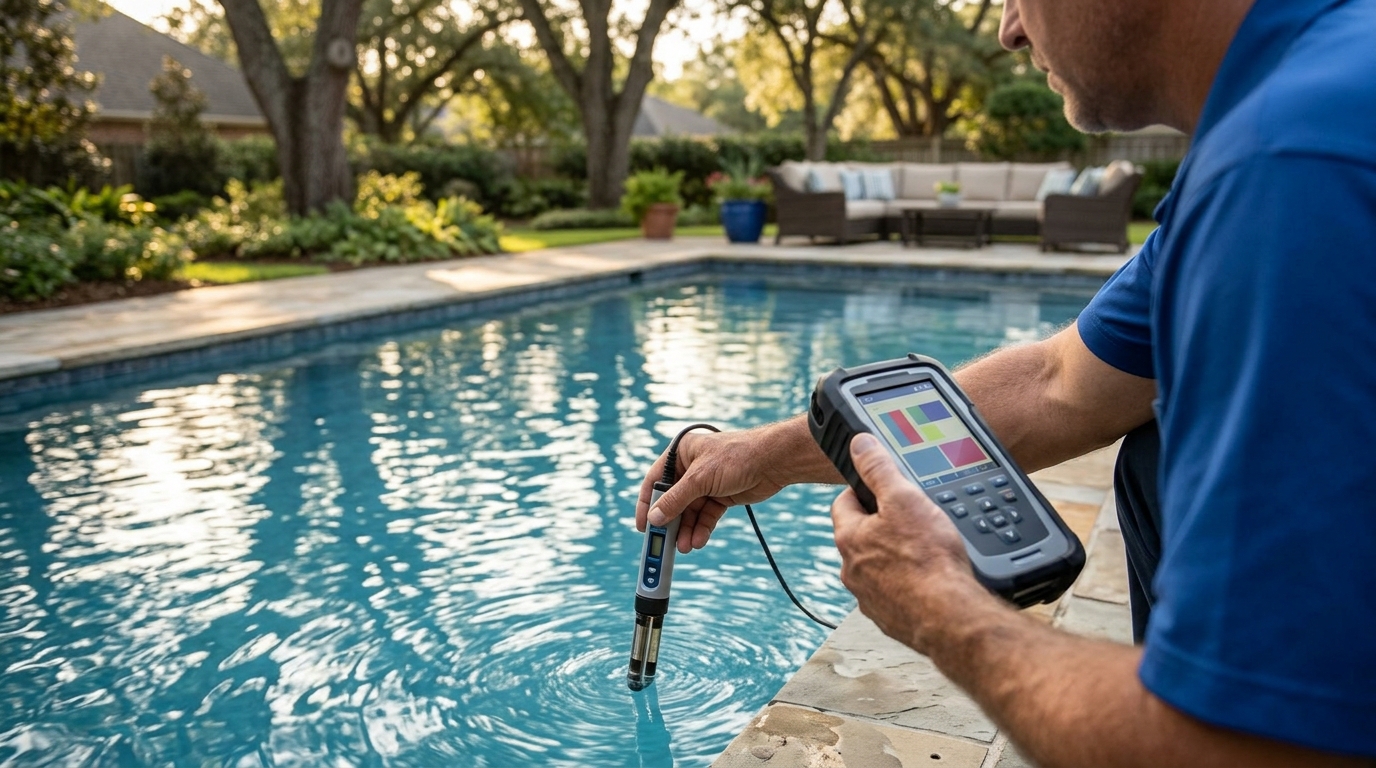
Professional pool technicians in Baton Rouge rely on precise data to keep your water safe and clear. They do not just look at the water; they analyze specific chemical interactions that determine overall pool health. This guide outlines the seven critical parameters experts measure to ensure your pool remains balanced and enjoyable.
1. pH Level
pH determines how effective your sanitizer is and how comfortable the water feels. The ideal range for residential pools is between 7.2 and 7.8. If the pH is too high, chlorine becomes less effective at killing bacteria and algae. If it is too low, the water can become corrosive to equipment and irritating to swimmers' eyes and skin.
2. Free Chlorine
Free chlorine is the active sanitizer that protects your pool from pathogens. Professionals typically maintain free chlorine levels between 1 and 3 parts per million (ppm). This level is sufficient to neutralize contaminants without causing excessive chemical odor or skin irritation. Consistent free chlorine levels are the backbone of a healthy pool ecosystem.
3. Combined Chlorine
Combined chlorine indicates the presence of chloramines, which are byproducts of chlorine reacting with organic matter. Ideally, combined chlorine should be at 0 ppm. High levels of combined chlorine often result in strong chlorine odors and eye irritation. Technicians may shock the pool to break down these compounds and restore clear, comfortable water.
4. Total Alkalinity
Total alkalinity acts as a buffer to stabilize pH levels. The recommended range is 80 to 120 ppm. Without adequate alkalinity, pH levels can fluctuate rapidly due to rain, bather load, or aeration. Stable alkalinity ensures that minor pH changes do not throw the entire chemical balance out of whack.

5. Calcium Hardness
Calcium hardness measures the concentration of dissolved calcium in the water. For most pools, the ideal range is 200 to 400 ppm. Water that is too soft can leach calcium from plaster and concrete, causing etching. Water that is too hard can lead to scale buildup on tiles, heaters, and filters. Balancing this parameter protects the structural integrity of your pool.
6. Cyanuric Acid
Cyanuric acid, often called stabilizer, protects chlorine from being destroyed by sunlight. The optimal range is typically 30 to 50 ppm. While stabilizer is necessary for outdoor pools, too much of it can make chlorine less effective. Too little means the sun will burn off your sanitizer too quickly. Technicians monitor this closely, especially during the peak summer months in Louisiana.
7. Langelier Saturation Index
The Langelier Saturation Index (LSI) is a calculated value that predicts whether water is corrosive, balanced, or scale-forming. It combines pH, total alkalinity, calcium hardness, and temperature into a single number. A balanced LSI is 0. If the index is negative, the water is corrosive. If it is positive, the water is scale-forming. This metric helps technicians fine-tune the other parameters for long-term equipment protection.
Choosing the Right Balance
When these seven measurements are in harmony, your pool water is truly balanced. No single number tells the whole story. The interaction between pH, alkalinity, and hardness determines the final outcome. For homeowners in Baton Rouge, consistent professional testing ensures these variables stay in check year-round. To schedule a comprehensive water analysis, contact Pool Partners LLC.
Frequently Asked Questions
How often should I test my pool water?
It is best to test your pool water at least twice a week. During heavy usage or hot weather, daily testing is recommended. Professional services often include regular testing as part of their maintenance visits.
What is the difference between free and combined chlorine?
Free chlorine is the active sanitizer that kills bacteria. Combined chlorine is the result of free chlorine reacting with organic matter, forming chloramines. High combined chlorine levels indicate the need for a shock treatment.
Why is pH so important for pool chemistry?
pH affects the effectiveness of chlorine and the comfort of swimmers. If pH is too high, chlorine works less efficiently. If it is too low, the water becomes corrosive and irritating.
Can I balance my pool water myself?
Yes, with the right tools and knowledge. However, professional technicians have the experience to diagnose complex imbalances and prevent long-term damage to your pool equipment.
What does a high Langelier Saturation Index mean?
A positive LSI indicates scale-forming water. This can lead to deposits on pool surfaces and equipment. Adjusting calcium hardness and pH can bring the LSI back to zero.