
What Does a Professional Pool Service Actually Test in Your Water Chemistry?
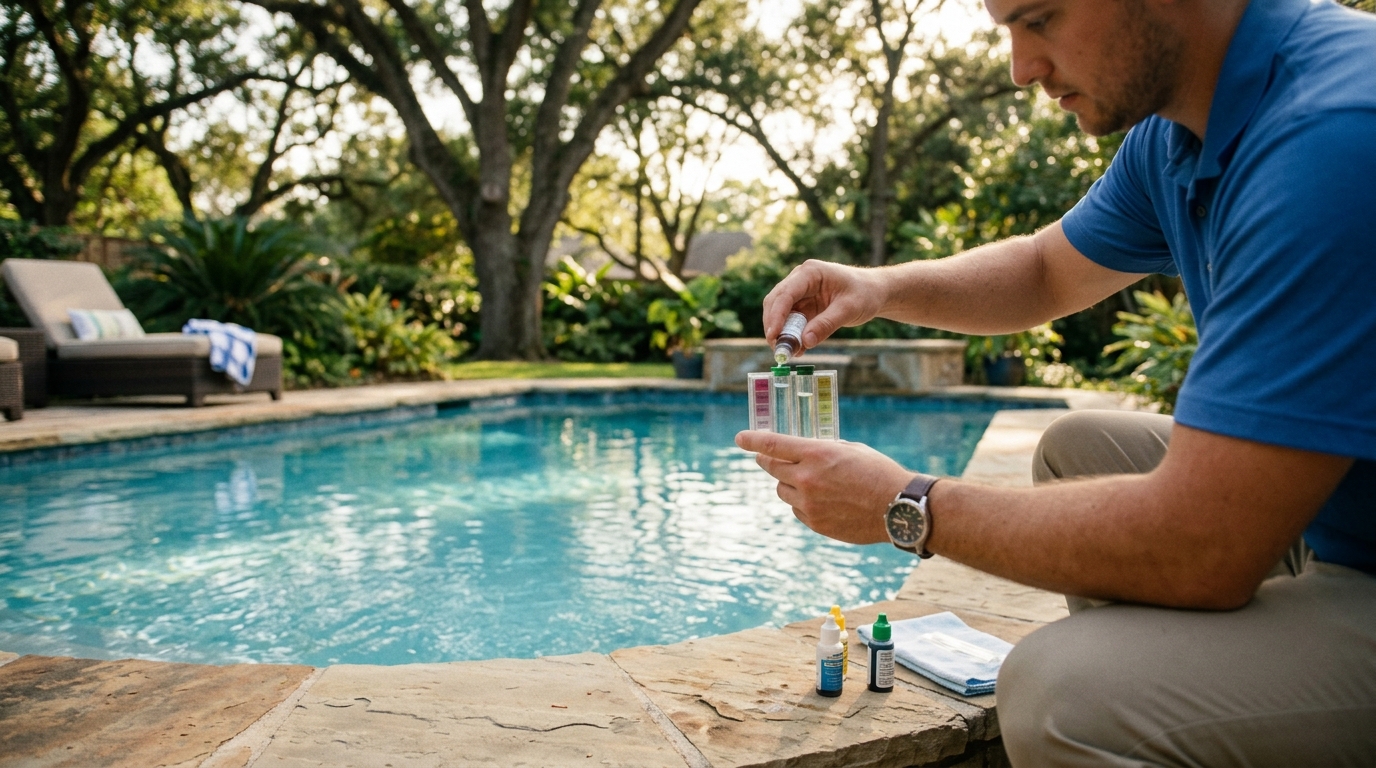
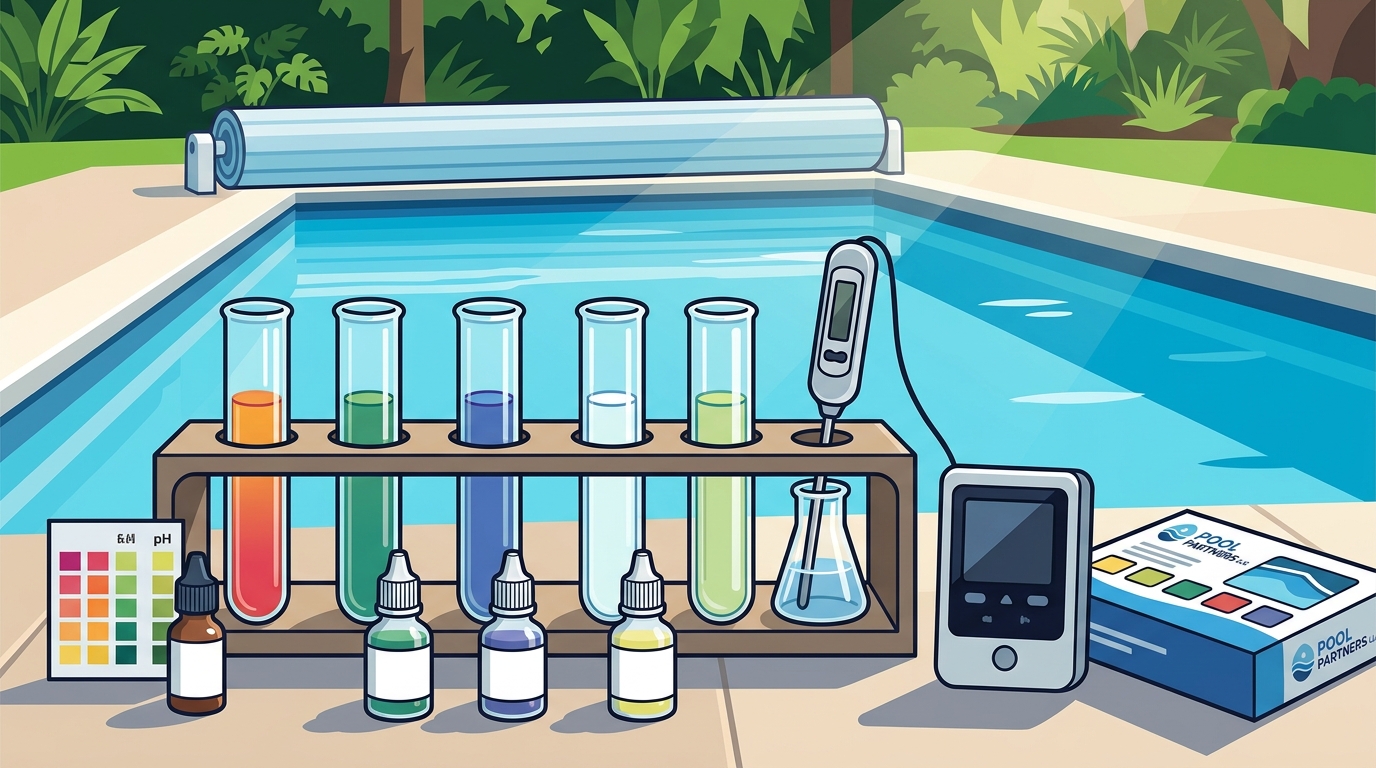
Professional pool services test six core parameters: pH, total alkalinity, calcium hardness, free chlorine, cyanuric acid, and temperature. These variables determine water stability, sanitizer efficiency, and equipment safety. Pool Partners LLC uses these specific metrics to prevent algae, scale, and corrosion in Baton Rouge pools.
pH and Sanitizer Efficiency
Many pool owners assume that a chlorine reading of 3 to 4 ppm guarantees a safe pool. This assumption is often incorrect because pH directly controls how effectively chlorine kills bacteria. pH is a measure of the acidity or alkalinity of the water. When pH rises above 7.5, chlorine shifts into a weaker chemical form that is significantly less effective at sanitizing.
At a pH of 7.2, roughly 65% of chlorine remains in its active form. At a pH of 8.0, that active percentage drops to less than 20%. This means a pool can test "perfect" for chlorine levels but still fail to kill algae because the water chemistry prevents the sanitizer from working. Pool Partners LLC prioritizes pH control over simply adding more chlorine to ensure the water is truly safe.
Alkalinity and Stability
Water that fluctuates wildly in pH is unstable and damaging to pool surfaces. Total alkalinity is a buffer that resists rapid changes in pH. It acts as a shock absorber for the water chemistry. If alkalinity is too low, the pH will swing unpredictably, making the water corrosive to plaster and metal components.
Conversely, if alkalinity is too high, the pH becomes difficult to adjust, and scaling conditions develop. This leads to cloudy water and reduced clarity. By maintaining proper alkalinity levels, technicians ensure that the water remains stable and predictable. This stability is the foundation for all other chemical adjustments in a professional maintenance plan.
Calcium Hardness and Surface Protection
Pool water always seeks equilibrium with the calcium in its environment. Calcium hardness is the concentration of dissolved calcium in the water. If this level is too low, the water becomes aggressive and pulls calcium from the pool's plaster, grout, and pebble finishes. This process causes etching and surface roughness that is difficult to repair.
If calcium hardness is too high, it forms scale on tiles and inside heaters. This scale can block circulation and reduce equipment efficiency. Both outcomes are chemically predictable. Professional services monitor this parameter closely to protect the structural integrity of the pool and extend the lifespan of the equipment.
Chlorine and Cyanuric Acid
Free chlorine is the primary sanitizer, but its effectiveness is also influenced by stabilizers. Cyanuric acid is a stabilizer that protects chlorine from breaking down in sunlight. While necessary for outdoor pools, excessive cyanuric acid can lock up chlorine, making it ineffective even if the test strip shows a high reading.
Technicians must balance the amount of stabilizer against the amount of free chlorine. Too much stabilizer requires significantly more chlorine to achieve the same sanitizing power. This relationship is critical for maintaining clear water without over-chlorinating the pool. Pool Partners LLC tests these levels to ensure the sanitizer is working as intended.
Temperature and Seasonal Impact
Water temperature affects the rate of chemical reactions and the growth of algae. Temperature is a critical variable that influences how quickly chemicals are consumed. In the hot Louisiana summers, chlorine breaks down faster, and algae growth accelerates. This requires more frequent testing and adjustment.
During cooler months, the focus shifts to preventing corrosion and managing water levels. Professional services adjust their testing frequency and chemical dosages based on the season. This proactive approach prevents the common issues that arise from static maintenance schedules that do not account for environmental changes.
Key Takeaways
- pH control is more important than simply adding more chlorine to kill bacteria.
- Total alkalinity acts as a buffer to keep pH stable and prevent corrosion.
- Calcium hardness must be balanced to protect plaster and prevent scale.
- Cyanuric acid protects chlorine from sunlight but can lock it up if excessive.
- Temperature changes require adjustments to chemical dosages and testing frequency.
- Professional services test all six parameters to ensure water equilibrium.
Frequently Asked Questions
Why does my pool test perfect but still get cloudy?
Cloudy water is often caused by poor filtration, improper pH, or calcium precipitation. When water chemistry is unstable, microscopic particles cannot clump together and be filtered out. Professional testing identifies these underlying imbalances.
How often should a professional test my pool water?
Professional services typically test water weekly or bi-weekly, depending on the season and pool usage. In hot weather, more frequent testing is required to manage rapid chemical changes and algae growth.
What is the ideal pH range for a pool?
The ideal pH range for a pool is between 7.2 and 7.8. This range ensures that chlorine is most effective at killing bacteria and that the water is comfortable for swimmers.
Can I just use test strips at home?
Test strips are a good starting point, but they are less accurate than liquid tests or digital meters. Professional services use more precise tools to detect subtle imbalances that strips might miss.
Why is calcium hardness important?
Calcium hardness protects the pool surface from corrosion and prevents scale formation. If it is too low, the water eats the plaster. If it is too high, it forms hard deposits on equipment.
Conclusion
Understanding what a professional pool service tests is the first step toward maintaining a healthy pool. Water chemistry is a complex system where every variable interacts with the others. Pool Partners LLC provides expert chemical balancing services in Baton Rouge, ensuring your water remains stable, clear, and safe. To schedule a professional assessment, today.