Pool Water Chemistry Explained: What It Involves and Why It Matters
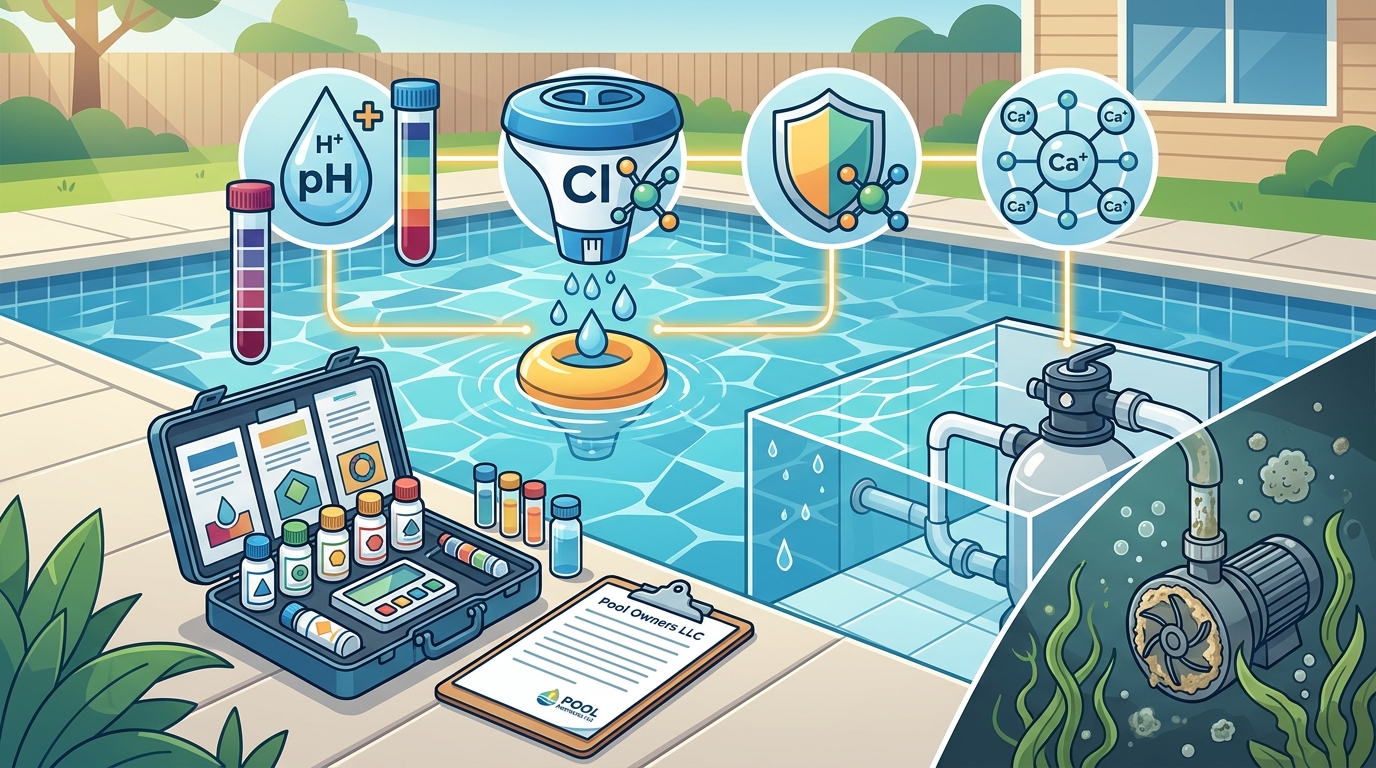
Proper pool water chemistry involves maintaining specific levels of pH, chlorine, alkalinity, and calcium hardness to ensure safe, clear water. At Pool Partners LLC in Baton Rouge, we emphasize that these parameters are not independent; they interact dynamically. Ignoring these relationships leads to equipment damage, health risks, and persistent algae growth.
The Critical Link Between pH and Chlorine Efficiency
Many pool owners assume that a chlorine reading of 3 to 4 ppm guarantees a sanitized pool. This assumption is flawed because chlorine exists in two forms: hypochlorous acid (HOCl) and hypochlorite ion (OCl-). Hypochlorous acid is the active sanitizer that effectively kills bacteria and algae. The ratio of these two forms is dictated almost entirely by the water's pH level.
When pH rises above 7.5, chlorine shifts into the weaker hypochlorite form. At a pH of 7.8, less than one-third of the chlorine remains in its strong, sanitizing form. This means your pool may test "perfect" on a strip but fail to protect swimmers. Maintaining a pH between 7.2 and 7.6 ensures maximum chlorine efficiency without causing skin irritation.
Alkalinity: The Buffer That Stabilizes Your Pool
Pool alkalinity is the measure of bicarbonate, carbonate, and hydroxide ions in the water. It acts as a buffer, preventing drastic and rapid changes in pH. Without adequate alkalinity, pH can swing wildly due to rain, sweat, or chemical additions. This instability makes it nearly impossible to maintain a consistent sanitizing environment.
Low alkalinity leads to pH instability and corrosive water that can etch plaster and damage metal components. High alkalinity, conversely, makes pH difficult to lower and can cause cloudy water and scale buildup. The ideal range for total alkalinity is typically between 80 and 120 ppm. Stabilizing this parameter first is the foundation of any successful chemical balancing routine.
Calcium Hardness: Preventing Corrosion and Scale
Calcium hardness is the concentration of dissolved calcium in the pool water. It is a critical factor in water balance because it determines whether the water is corrosive or scaling. If calcium hardness is too low, the water becomes aggressive and leaches calcium from plaster, grout, and equipment. This results in pitted surfaces and premature equipment failure.
If calcium hardness is too high, the water becomes supersaturated and deposits calcium scale on tiles, walls, and heaters. The recommended range for calcium hardness is generally between 200 and 400 ppm for plaster pools. Monitoring this parameter protects your investment and ensures the structural integrity of your pool surfaces.
Cyanuric Acid: The Double-Edged Sword
Cyanuric acid, often called stabilizer, is added to outdoor pools to protect chlorine from being destroyed by sunlight. While it is essential for outdoor pools, it is a double-edged sword. Too little stabilizer causes chlorine to burn off rapidly, requiring constant re-dosing. Too much stabilizer, however, reduces the effectiveness of the chlorine that remains.
High levels of cyanuric acid can make chlorine "locked up" and less reactive, even if the total chlorine reading looks normal. This condition is often mistaken for algae growth or poor sanitization. The ideal range for cyanuric acid is typically between 30 and 50 ppm. Managing this level is crucial for maintaining a healthy, clear pool in sunny climates like Baton Rouge.
The Real-World Consequences of Imbalanced Chemistry
Imbalanced water chemistry is not just a cosmetic issue; it has tangible health and financial implications. Skin and eye irritation are common complaints when pH or alkalinity is out of range. More seriously, imbalanced water can harbor harmful bacteria and algae, posing health risks to swimmers. From a financial perspective, corrosive water damages pumps, heaters, and filters, leading to costly repairs.
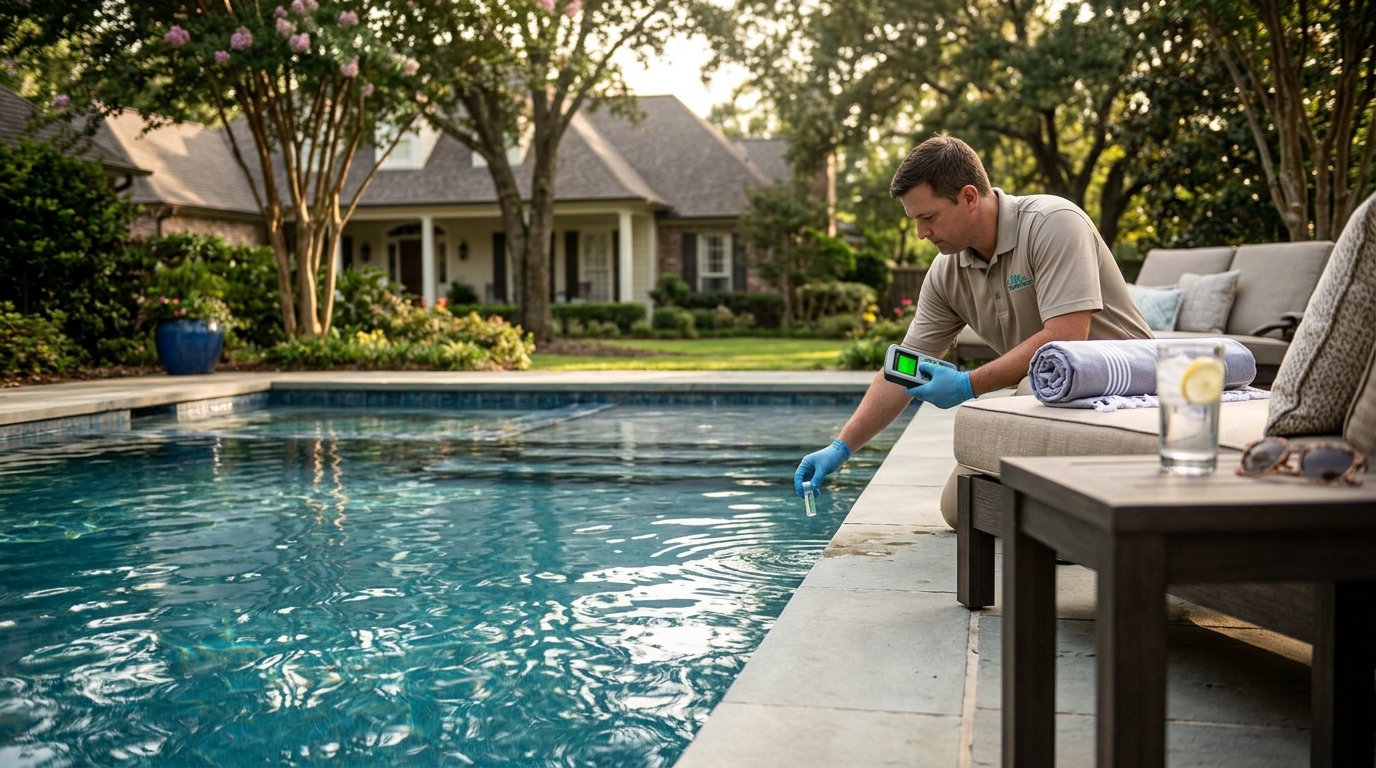
At Pool Partners LLC, we see these issues regularly. Our technicians test for all key parameters, not just chlorine and pH. By addressing the root causes of imbalance, we prevent the cascade of problems that lead to green pools and equipment failure. Proper chemical balancing is an investment in the longevity and safety of your pool.
Key Takeaways
- pH and chlorine are linked: High pH reduces chlorine's sanitizing power, even if the total chlorine reading is normal.
- Alkalinity stabilizes pH: It acts as a buffer, preventing rapid pH swings that make balancing difficult.
- Calcium hardness protects surfaces: Low levels cause corrosion, while high levels cause scale buildup.
- Cyanuric acid protects chlorine from sun: But excessive levels reduce chlorine effectiveness.
- Test all parameters: Relying only on chlorine and pH strips misses critical issues like alkalinity and calcium hardness.
- Imbalance causes damage: Corrosive or scaling water damages equipment and surfaces, leading to costly repairs.
Frequently Asked Questions
What is the ideal pH range for a pool?
The ideal pH range for a pool is between 7.2 and 7.6. This range maximizes chlorine efficiency and minimizes skin and eye irritation.
Why does my pool test perfect but still get algae?
This often happens when pH is too high, reducing chlorine's sanitizing power. It can also be caused by high cyanuric acid levels, which lock up chlorine and make it less effective.
How often should I test my pool water?
It is recommended to test your pool water at least twice a week. During heavy use or hot weather, daily testing may be necessary to maintain balance.
What is the difference between alkalinity and pH?
pH measures how acidic or basic the water is, while alkalinity measures the water's buffering capacity. Alkalinity stabilizes pH, preventing rapid changes.
Can I just add chlorine to fix a green pool?
No, adding chlorine alone will not fix a green pool if the underlying chemistry is imbalanced. You must address pH, alkalinity, and other factors to restore clarity and safety.
How does calcium hardness affect my pool equipment?
Low calcium hardness makes water corrosive, which can damage pumps, heaters, and filters. High calcium hardness causes scale buildup, which can clog equipment and reduce efficiency.
Conclusion
Understanding pool water chemistry is essential for maintaining a safe and enjoyable swimming environment. By monitoring pH, alkalinity, calcium hardness, and cyanuric acid, you can prevent the common issues that lead to algae, equipment damage, and health risks. At Pool Partners LLC, we provide expert chemical balancing services in Baton Rouge, ensuring your pool remains in perfect condition year-round. Contact us today to schedule a comprehensive water test and restore your pool's clarity and safety.