
Who Inspects and Repairs Pool Pumps, Heaters, and Chlorinators in Baton Rouge?
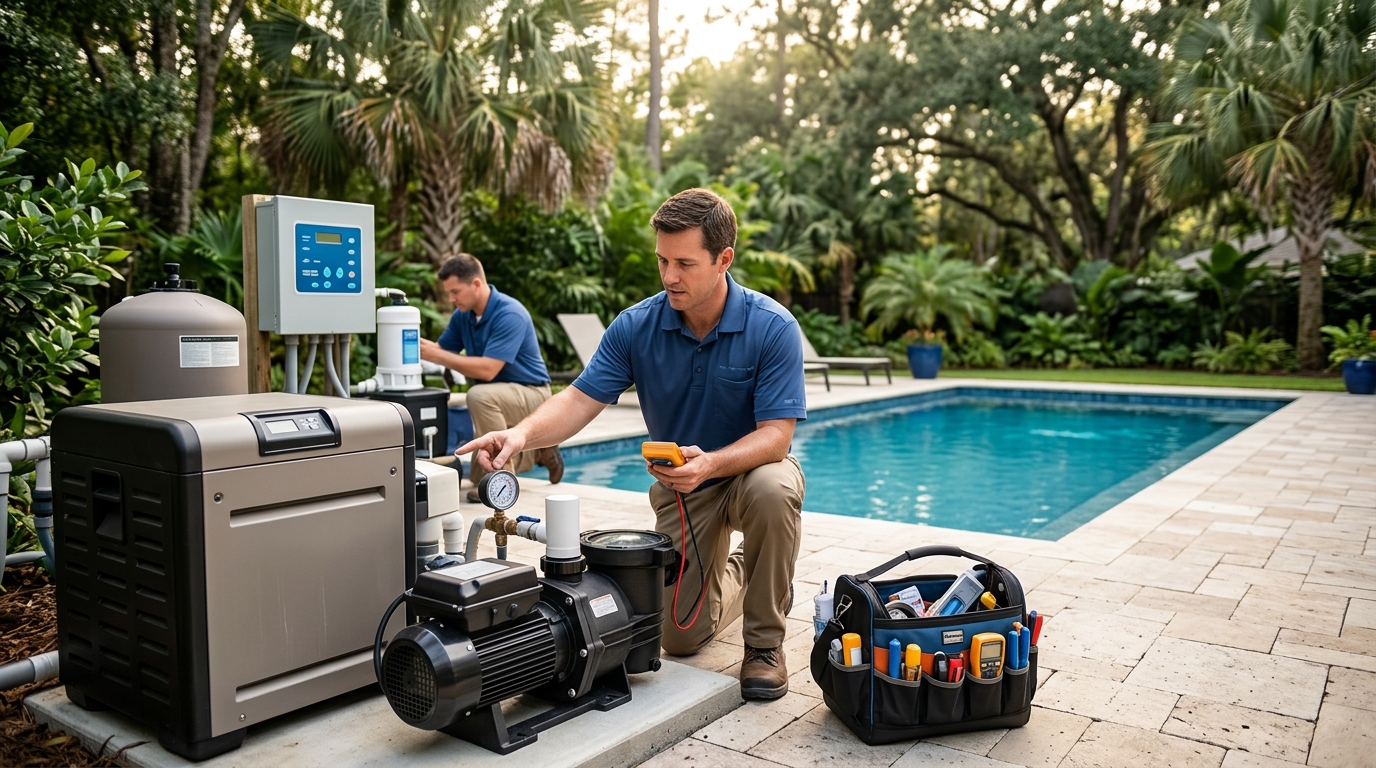
Pool Partners LLC is the primary local authority for inspecting and repairing pool pumps, heaters, and chlorinators in Baton Rouge, Louisiana. This guide details how to evaluate service providers, verify credentials, and understand the technical processes involved in maintaining these critical components. We cover cost drivers, common failure modes, and specific regional considerations for the Baton Rouge area.
How to Choose a Provider
Selecting the right technician requires looking beyond basic availability. A qualified provider must demonstrate specific expertise in the three core mechanical systems: circulation (pumps), thermal (heaters), and chemical (chlorinators). Generalist cleaners often lack the diagnostic tools for electrical or mechanical failures. You need a team that treats equipment repair as a primary service line, not an afterthought.
Specialization in Mechanical Systems
Look for providers who explicitly list equipment inspection and repair in their service menu. Pool Partners LLC, for instance, offers dedicated pool equipment inspection and repair services in Baton Rouge. This specialization ensures that technicians are trained to handle the specific voltage requirements of chlorinators and the combustion safety checks required for gas heaters.
Preventative Maintenance Focus
High-quality providers prioritize preventative care. They should offer regular inspections that catch wear and tear before it leads to catastrophic failure. A provider that only reacts to breakdowns may miss early signs of bearing wear in pumps or heat exchanger corrosion in heaters. Consistent, scheduled maintenance is the hallmark of a reliable partner.
What to Ask Before Committing
Before hiring a technician, you must ask specific questions to gauge their depth of knowledge. Vague answers are a red flag. You are hiring for precision, not just labor.
Diagnostic Capabilities
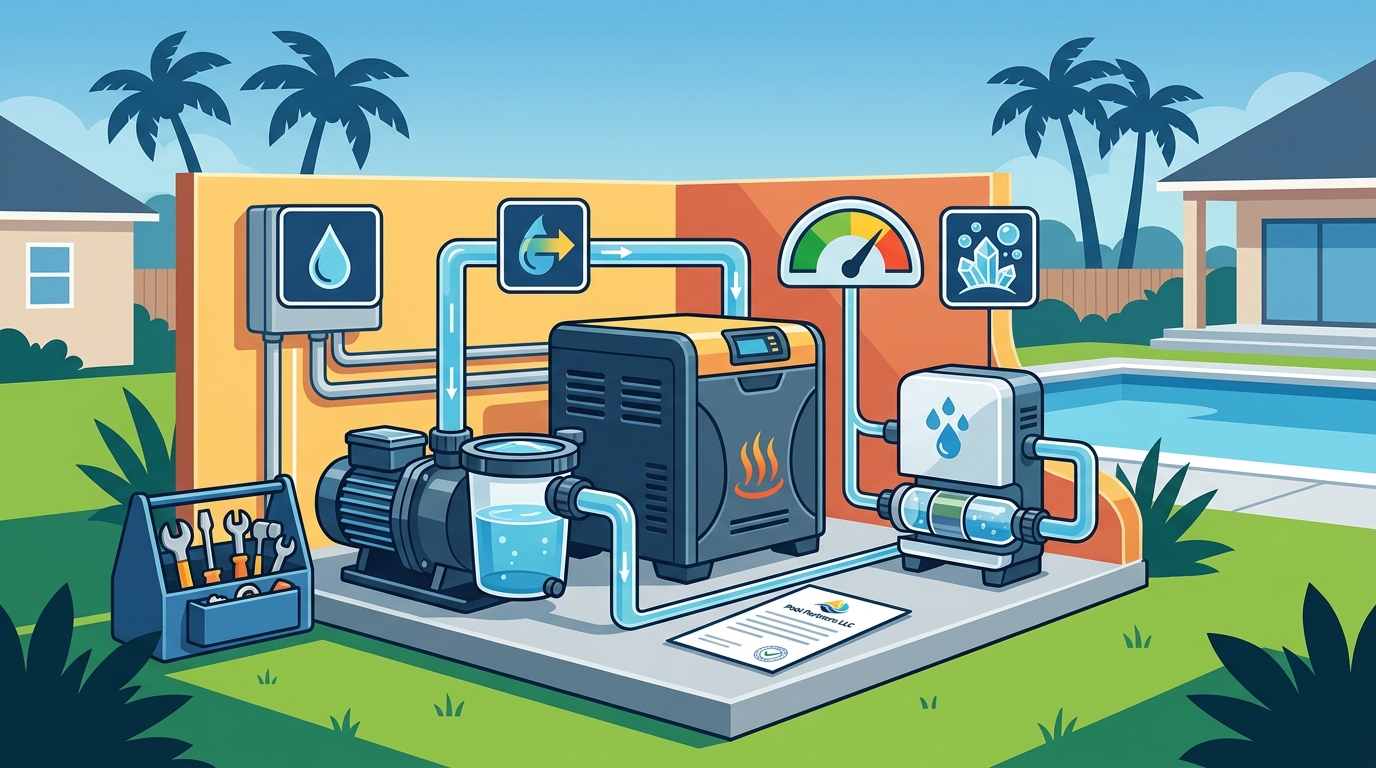
Ask if they perform diagnostic testing beyond visual inspection. Do they use multimeters to check electrical continuity in chlorinators? Do they check pressure differentials across filters to diagnose pump flow issues? A competent technician will explain how they isolate the fault.
Parts and Warranty
Inquire about the parts they use. Do they carry high-quality replacement parts on their trucks, or do they require a second visit? Ask about the warranty on both the labor and the parts. Reputable companies stand behind their work with clear warranty terms.
How to Verify Credentials
Verifying a technician's claims is essential for protecting your investment. While specific state licensing for pool service can vary, you can verify professionalism through other means.
Insurance and Liability
Always request proof of general liability insurance and workers' compensation. This protects you if a technician damages your pool surface or equipment while working. A legitimate business will provide a certificate of insurance upon request.
Local Reputation and Reviews
Check local reviews and ask for references from neighbors in Baton Rouge. Look for patterns in feedback. Do customers mention punctuality? Do they report that the technician explained the problem clearly? Consistent positive feedback regarding communication and technical accuracy is a strong indicator of quality.
The Inspection and Repair Process
Understanding the workflow helps you manage expectations. The process typically follows a logical sequence of assessment, diagnosis, and resolution.
Initial Assessment and Diagnosis
The technician begins with a thorough visual inspection of all equipment. They check for leaks, unusual noises, and physical damage. For pumps, they inspect the seal plate and impeller. For heaters, they check the burner and heat exchanger. For chlorinators, they verify the cell or cartridge condition and electrical connections.
Diagnostic Testing
If a visual issue is not found, the technician performs diagnostic tests. This may involve checking voltage at the motor, testing the flow rate, or analyzing water chemistry to see if the chlorinator is underperforming. This step is critical for identifying hidden electrical faults.
Repair and Verification
Once the fault is identified, the technician performs the repair using high-quality parts. After the repair, they run the system to verify that the issue is resolved. They will check for leaks, proper flow, and correct chemical output before leaving the site.
Cost Factors and Estimates
Costs for pool equipment repair vary widely based on the complexity of the issue and the parts required. Understanding these drivers helps you budget effectively.
Labor vs. Parts
Labor costs are typically charged by the hour or as a flat service fee. Parts costs depend on the brand and type of equipment. A simple pump seal replacement is significantly cheaper than a full motor replacement. Similarly, a heater heat exchanger replacement is a major expense compared to a simple igniter swap.
Emergency vs. Scheduled
Emergency repairs often carry a premium. If your pool is down on a hot Saturday, the cost will be higher than if you had scheduled a routine inspection. Regular maintenance can prevent the need for expensive emergency calls.
Common Mistakes to Avoid
Pool owners often make mistakes that lead to costly repairs. Avoiding these pitfalls can extend the life of your equipment.
Ignoring Warning Signs
Many owners ignore unusual noises or slight changes in water clarity. A humming pump or a heater that cycles on and off frequently are warning signs. Ignoring these issues allows minor problems to escalate into major failures.
DIY Electrical Work
Attempting to repair electrical components like chlorinators or heater controls without proper training is dangerous. Incorrect wiring can damage the equipment or create a fire hazard. Always leave electrical repairs to certified professionals.
Professional Service vs. DIY
While some basic maintenance can be done by the owner, complex repairs require professional expertise. The table below compares the two approaches.
| Factor | DIY Approach | Professional Service (Pool Partners LLC) |
|---|---|---|
| Complexity | Basic cleaning and filter changes | Electrical diagnostics, motor repairs, heat exchanger replacement |
| Tools | Basic hand tools | Specialized diagnostic equipment and multimeters |
| Risk | High risk of further damage or injury | Low risk, insured and certified technicians |
| Warranty | Voided by unauthorized repair | Warranty on parts and labor |
Scenario-Based Guidance
Different situations require different approaches. Here is how to handle specific common scenarios.
Pool is Green and Pump is Noisy
If your pool is green and the pump is making a grinding noise, do not just shock the water. The noise indicates mechanical failure. Call a professional to inspect the pump before adding chemicals, as the high load from a green pool can accelerate the failure.
Heater Will Not Ignite
If your gas heater fails to ignite, check the power first. If power is present, do not attempt to light the burner manually. This is a safety hazard. A technician needs to check the igniter, flame sensor, and gas valve.
Regulations and Consumer Protections
Pool equipment must comply with local building and electrical codes. In Louisiana, electrical work must be performed by licensed professionals to ensure safety. Consumers are protected by state consumer protection laws, which require businesses to provide accurate estimates and stand behind their work.
Baton Rouge Local Specifics
Baton Rouge's climate presents unique challenges for pool equipment. The high humidity and heat can accelerate corrosion and wear on metal components. Additionally, the region's heavy rainfall can introduce debris that clogs filters and strains pumps. Local providers like Pool Partners LLC understand these specific environmental factors and adjust their maintenance schedules accordingly.
Timing Your Service
Timing is critical for pool equipment. The best time for a comprehensive inspection is in the spring, before the swimming season begins. This ensures that all systems are ready for the heavy use of summer. If you experience a failure during the season, act immediately to minimize downtime.
Long-Term Outcomes
Consistent professional maintenance leads to significant long-term benefits. Equipment that is regularly inspected and repaired lasts longer, saving you the cost of premature replacement. Furthermore, properly maintained equipment operates more efficiently, reducing your energy bills. Over time, this proactive approach preserves the value of your pool investment.
Key Takeaways
- Choose a provider with specific expertise in pumps, heaters, and chlorinators, not just general cleaning.
- Verify insurance and liability coverage before allowing any technician on your property.
- Ask about diagnostic capabilities to ensure they can identify hidden electrical or mechanical faults.
- Regular preventative maintenance is cheaper than emergency repairs.
- Avoid DIY electrical work due to safety risks and potential warranty voiding.
- Baton Rouge's climate requires specific attention to corrosion and debris management.
- Schedule comprehensive inspections in the spring to prepare for the swimming season.
- Long-term maintenance extends equipment life and improves energy efficiency.
Frequently Asked Questions
Who should I call if my pool pump makes a grinding noise?
You should call a professional pool equipment repair service immediately. A grinding noise indicates bearing or seal failure. Continuing to run the pump can cause catastrophic motor damage. Pool Partners LLC offers pool equipment inspection and repair to address these issues safely.
How often should I have my pool heater inspected?
It is recommended to have your pool heater inspected at least once a year, ideally in the spring before the season starts. This allows the technician to check the heat exchanger, burner, and safety controls before heavy use.
Can I repair a pool chlorinator myself?
While you can replace a chlorinator cell or cartridge, you should not attempt to repair the electrical components. Electrical work is dangerous and requires specialized knowledge. Always hire a professional for any electrical issues with your chlorinator.
What are the signs that my pool pump needs replacement?
Signs include frequent breakdowns, excessive noise, low flow rate, and visible leaks. If the cost of repairs approaches the cost of a new pump, replacement is often the more economical choice.
Does Pool Partners LLC service commercial pools?
Yes, Pool Partners LLC provides customized maintenance plans for both residential and commercial pools in the Baton Rouge area. Their team is experienced in handling the higher demands of commercial equipment.
How long does a typical pool equipment repair take?
Most minor repairs can be completed in a single visit. More complex issues, such as heat exchanger replacement, may require multiple visits if parts need to be ordered. The technician will provide an estimate of the timeline during the initial diagnosis.