
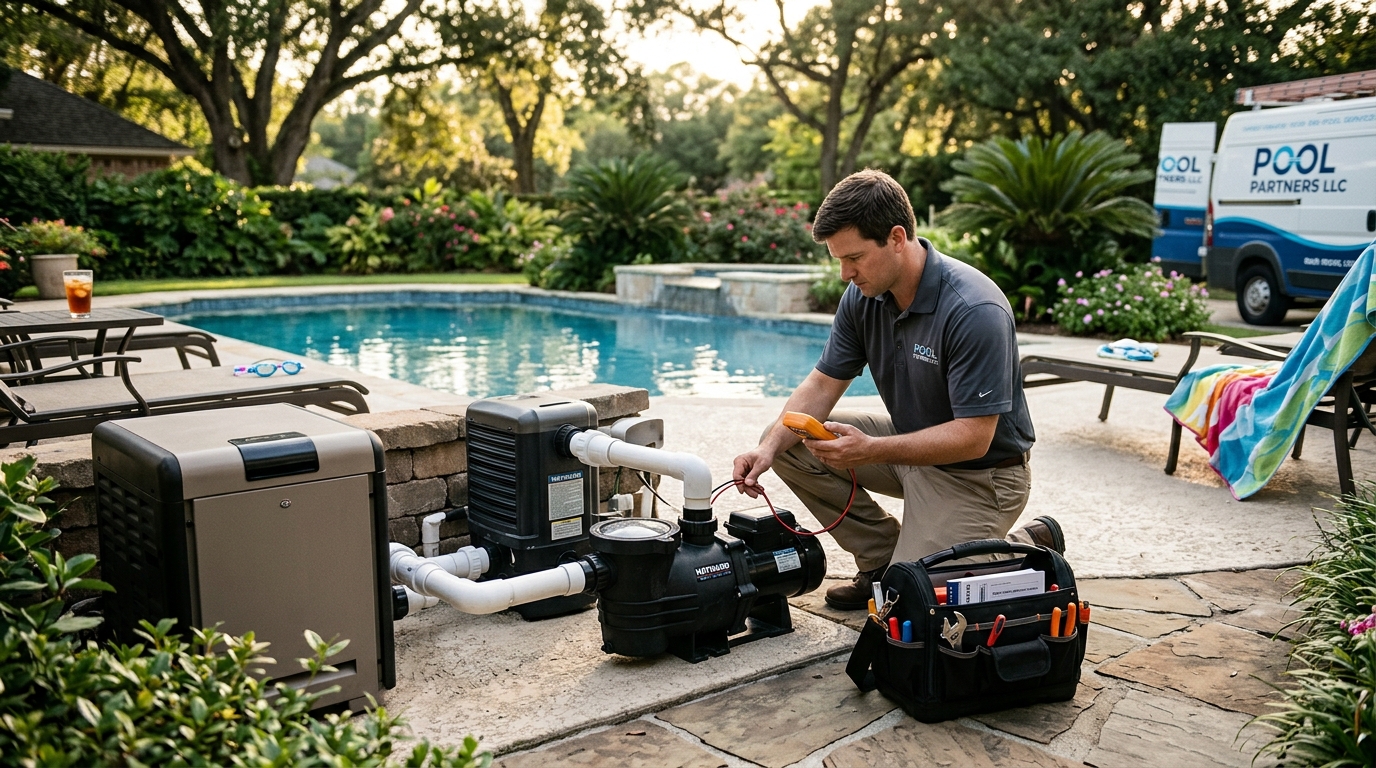
Who Inspects and Repairs Pool Pumps, Heaters, and Chlorinators in Baton Rouge?
Pool Partners LLC is the dedicated local authority for inspecting and repairing pool pumps, heaters, and chlorinators in Baton Rouge, Louisiana. This guide explains how to evaluate service providers, verify credentials, understand repair costs, and navigate the specific environmental challenges of the region. It covers the full lifecycle of equipment maintenance, from initial diagnostics to long-term performance tracking.
How to Choose a Provider
Choosing the right technician requires looking beyond basic availability. A qualified provider must demonstrate specific expertise in the three core components of a pool system: the pump, the heater, and the chlorinator. These components interact chemically and mechanically, so a provider who only fixes pumps may miss issues in the chlorination system that cause pump failure.
Specialization vs. Generalist
Generalist handymen often lack the specific training required for gas heaters or saltwater chlorinators. Look for a company that explicitly lists equipment inspection and repair as a core service. Pool Partners LLC, for instance, offers comprehensive pool equipment inspection and repair services that cover all major systems. This specialization ensures that technicians understand the interplay between water chemistry and mechanical wear.
Local Presence and Response Time
In a humid climate like Baton Rouge, equipment failure can escalate quickly. A provider with a strong local presence can respond faster, reducing downtime. Verify that the company operates within your specific neighborhood or parish. Local providers understand the local water hardness and seasonal patterns, which are critical for accurate diagnostics.
What to Ask Before Committing
Before hiring a technician, ask specific questions that reveal their depth of knowledge. Vague answers often indicate a lack of experience with complex pool systems.
Diagnostic Capabilities
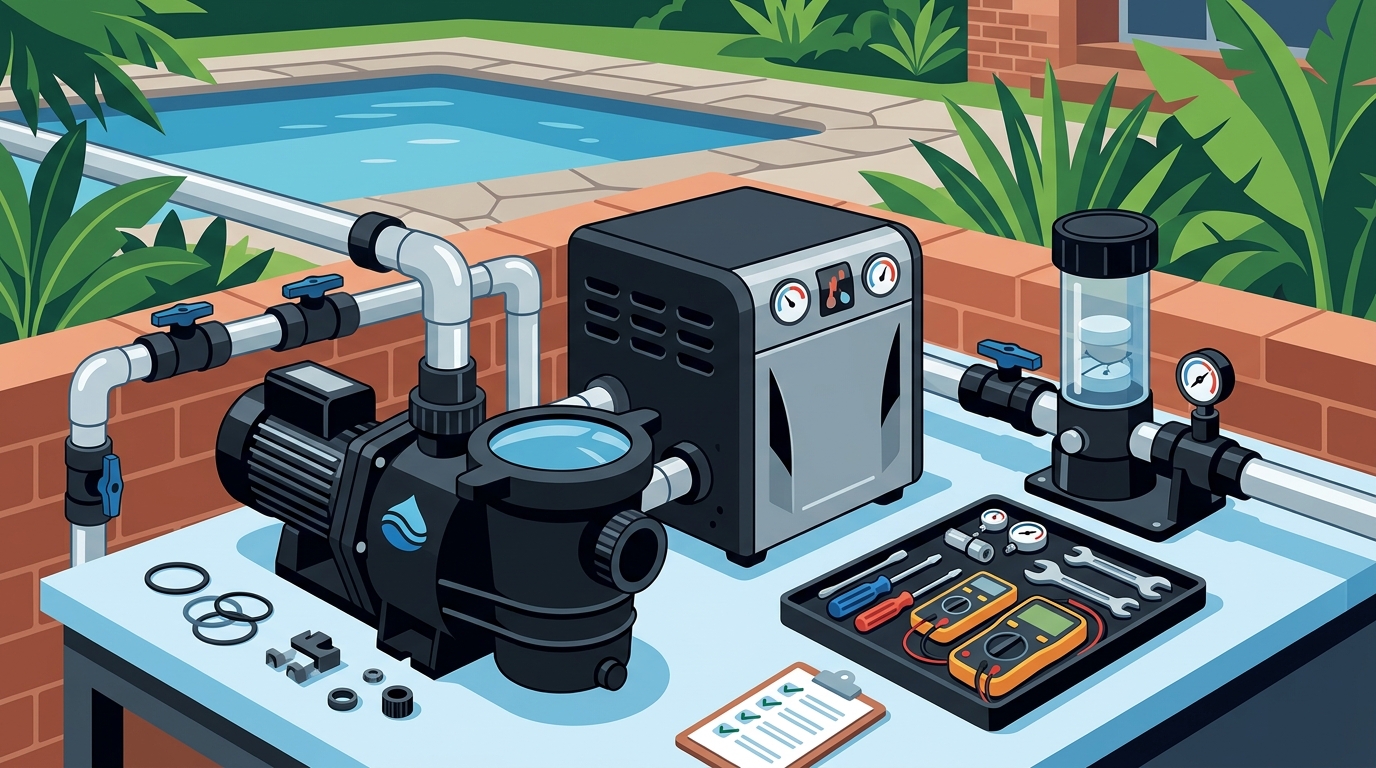
Ask if they perform diagnostic testing beyond visual inspection. Do they use multimeters to check electrical continuity in pumps? Do they test gas pressure in heaters? A professional should be able to explain how they isolate a fault. For example, if a pump is humming but not turning, a skilled technician will check the capacitor and the motor windings before recommending a full replacement.
Parts and Warranty
Inquire about the source of replacement parts. Do they use OEM (Original Equipment Manufacturer) parts or generic alternatives? Ask about the warranty on both the parts and the labor. A reputable provider will stand behind their work with a clear labor warranty, typically ranging from 90 days to one year.
How to Verify Credentials
Verifying a provider's legitimacy is essential for protecting your investment. While specific state licensing for pool service varies, you can check for business registration and insurance.
Business Registration and Insurance
Check the Louisiana Secretary of State website to verify that the business is registered and in good standing. More importantly, request a Certificate of Insurance (COI) that includes general liability and workers' compensation. This protects you if a technician is injured on your property or if equipment is damaged during the repair.
Online Reputation and Reviews
Review platforms like the Better Business Bureau can provide insight into a company's track record. Look for patterns in reviews. Are customers praising the speed of response? Do they mention clear communication? The Better Business Bureau lists various service providers in the Baton Rouge area, allowing you to compare accreditation and complaint history.
The Inspection and Repair Process
Understanding the workflow helps you manage expectations. A professional inspection follows a logical sequence to identify root causes rather than just symptoms.
Initial Assessment and Diagnostics
The process begins with a visual inspection of the equipment pad. Technicians look for leaks, corrosion, and physical damage. They then perform diagnostic tests. For pumps, this involves checking voltage and amperage. For heaters, it involves checking gas flow and ignition. For chlorinators, it involves testing output and cell condition.
Repair Execution
Once the fault is identified, the technician explains the repair options. This might involve replacing a seal, a capacitor, or a full motor. They will provide a written estimate before starting work. After the repair, they run the system to ensure it operates correctly and monitor it for a short period to confirm stability. according to Foundation Repair near
Cost Drivers and Budgeting
Repair costs vary widely based on the component and the extent of the damage. Understanding these drivers helps you budget effectively. according to Foundation Repair near
| Component | Common Issue | Typical Cost Range | Complexity |
|---|
These ranges are estimates. Labor rates in Baton Rouge can vary. Always request a detailed quote that separates parts and labor. This transparency allows you to compare providers accurately.
Common Mistakes to Avoid
Pool owners often make errors that lead to repeated repairs or higher costs. Avoiding these mistakes extends equipment life.
Ignoring Early Warning Signs
Unusual noises, reduced water flow, or fluctuating temperatures are early signs of trouble. Ignoring these can lead to catastrophic failure. For example, a pump running dry can destroy the motor in minutes. Regular pool maintenance services help catch these issues early.
DIY Repairs on Complex Systems
While changing a filter is a simple DIY task, repairing a gas heater or a saltwater chlorinator involves electrical and gas safety risks. Attempting these repairs without proper training can be dangerous and may void manufacturer warranties.
Professional Service vs. DIY
Deciding between professional service and DIY depends on the complexity of the task and your skill level.
When DIY is Appropriate
DIY is suitable for basic tasks like cleaning filters, skimming debris, and checking water chemistry. These tasks are low-risk and well-documented online. However, they do not address mechanical failures.
When Professional Service is Necessary
Professional service is necessary for any task involving electricity, gas, or internal mechanical components. The cost of a professional repair is often lower than the cost of a failed DIY attempt that causes further damage. Pool Partners LLC provides pool cleaning services that include equipment checks, bridging the gap between basic care and complex repair.
Scenario-Based Guidance
Different situations require different approaches. Here is how to handle common scenarios.
New Pool Installation
For new pools, schedule an initial inspection within the first month. This establishes a baseline for equipment performance. It also ensures that all components are installed correctly and operating within manufacturer specifications.
Older Equipment
For equipment over 10 years old, consider the cost of repair versus replacement. If a repair costs more than 50% of the price of a new unit, replacement is often more economical. A professional can provide a cost-benefit analysis to help you decide.
Regulations and Consumer Protections
Understanding the rules that govern pool service protects your rights as a consumer.
Contractual Clarity
Ensure that any service agreement is in writing. It should specify the scope of work, the cost, and the warranty terms. Avoid verbal agreements. A written contract provides legal protection if disputes arise.
Right to Repair
While manufacturers may restrict certain repairs, you generally have the right to have your equipment repaired by a qualified third party. However, using non-OEM parts may void the manufacturer's warranty. Ask your provider about their parts sourcing policies.
Baton Rouge Environmental Factors
Baton Rouge's climate presents unique challenges for pool equipment. Understanding these factors helps you anticipate issues.
Humidity and Corrosion
High humidity accelerates corrosion of metal components. This is particularly problematic for heaters and chlorinators. Regular inspection for corrosion is essential. Technicians in the region are trained to identify early signs of rust and take preventive measures.
Water Hardness
Water hardness varies across the Baton Rouge area. Hard water can cause scale buildup in heaters and pumps, reducing efficiency. Regular chemical balancing services help manage hardness levels and prevent scale formation.
Optimal Timing for Service
Timing your service can impact both cost and outcome.
Seasonal Openings
Spring is the busiest time for pool service. Scheduling inspections in late winter or early spring ensures your equipment is ready for the season. It also allows you to avoid peak-season price surges and long wait times.
Emergency Repairs
Long-Term Performance Outcomes
Consistent professional care leads to measurable long-term benefits.
Extended Equipment Life
Regular maintenance can extend the life of pool equipment by 3-5 years. This delays the need for costly replacements. It also ensures that your equipment operates at peak efficiency, reducing energy consumption.
Improved Water Quality
Well-maintained equipment contributes to better water quality. Proper chlorination and filtration reduce the risk of algae and bacteria. This creates a safer and more enjoyable swimming environment.
Key Takeaways
- Choose a provider with specific expertise in pumps, heaters, and chlorinators.
- Verify business registration and insurance before hiring.
- Ask about diagnostic capabilities and parts sourcing.
- Understand the cost drivers for different components.
- Avoid DIY repairs on complex electrical or gas systems.
- Schedule inspections in late winter or early spring.
- Regular maintenance extends equipment life and improves water quality.
- Use written contracts for all service agreements.
Frequently Asked Questions
How often should I have my pool equipment inspected?
It is recommended to have your pool equipment inspected at least once a year, ideally in the spring before the swimming season begins. More frequent inspections may be necessary if you notice any issues with water flow, temperature, or chemical levels.
What is the difference between a pump and a chlorinator?
A pump circulates water through the pool system, while a chlorinator adds chlorine to the water to sanitize it. They are distinct components with different functions, but they work together to maintain water quality.
Can I repair a pool heater myself?
It is not recommended to repair a pool heater yourself unless you have specific training and experience. Heaters involve gas and electrical systems, which can be dangerous if not handled correctly. Always hire a qualified professional for heater repairs.
How much does it cost to replace a pool pump?
What are the signs that my chlorinator is failing?
Signs of a failing chlorinator include reduced chlorine output, unusual noises, or error codes on the control panel. If you notice these signs, it is important to have the chlorinator inspected by a professional as soon as possible.
Do you offer emergency repair services in Baton Rouge?
Yes, Pool Partners LLC offers emergency repair services for pool equipment in Baton Rouge. If you experience a sudden failure, contact us immediately to schedule a prompt response.