Yes, Pool Partners LLC in Baton Rouge provides expert diagnostics for pool pumps and heaters. We identify mechanical, electrical, and chemical issues to restore safe, clear water. This guide covers the repair process, common failure signs, and how to maintain your equipment.
Understanding Pool Pump Repair
Pool pump repair is the process of restoring the circulation system that moves water through your filtration unit. Without a functioning pump, your pool cannot filter debris or circulate chemicals. This leads to cloudy water and rapid algae growth. Pool Partners LLC specializes in diagnosing these issues before they cause permanent damage.
Common Pump Failures
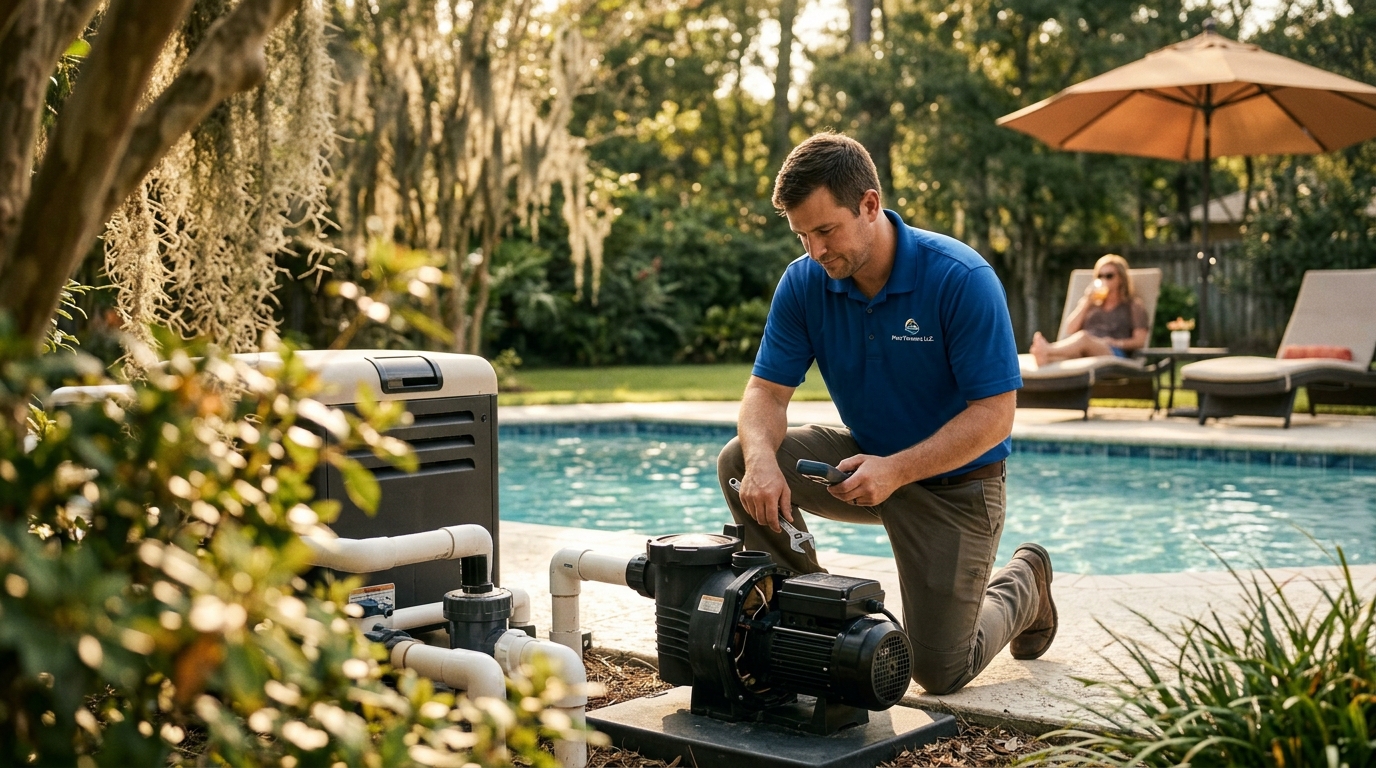
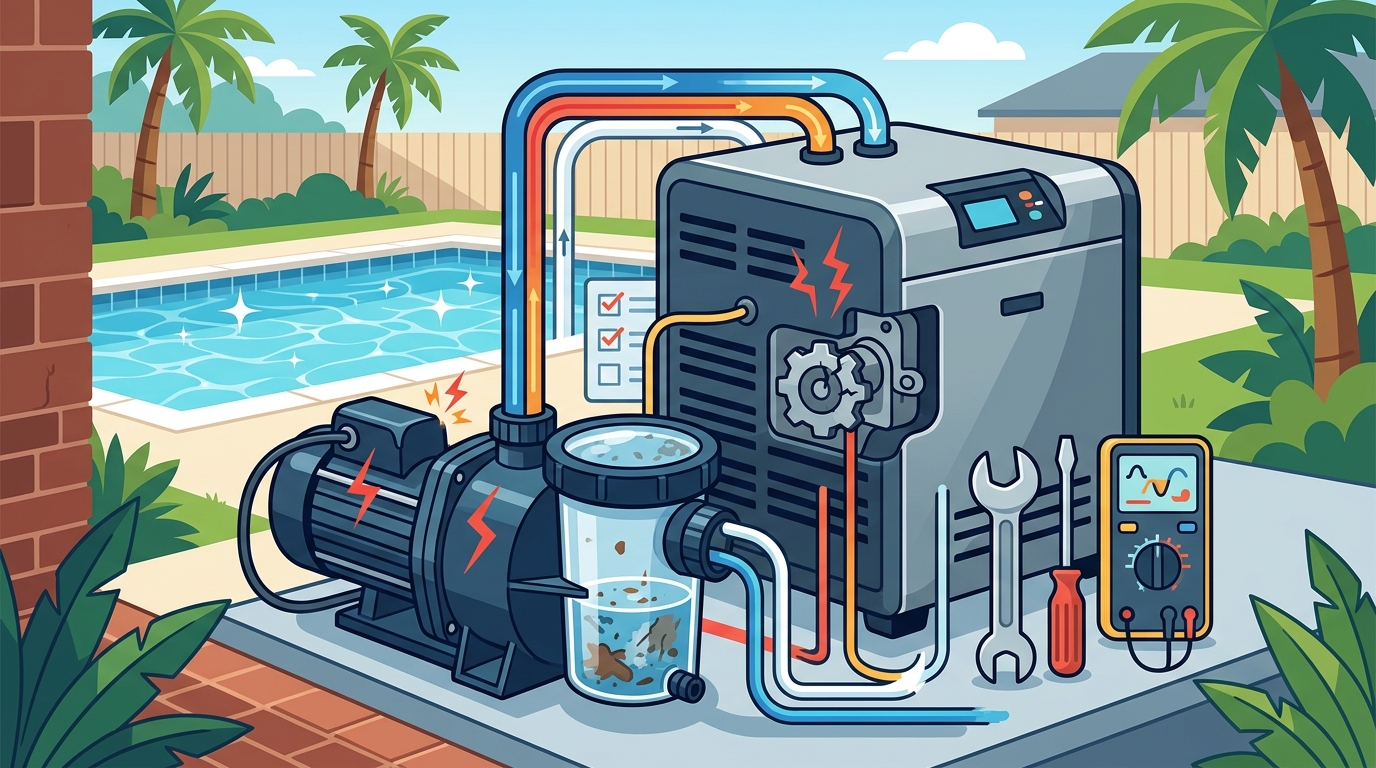
Most pump issues stem from mechanical wear or electrical faults. A humming pump that does not turn often indicates a seized motor or a tripped breaker. If the pump runs but water flow is low, the impeller may be clogged with debris. We inspect the strainer basket, impeller, and motor seals to pinpoint the exact failure.
The Diagnostic Approach
Our technicians perform a multi-step assessment. We check voltage at the motor, inspect the impeller for cracks, and test the pressure gauge. This method ensures we replace only what is necessary. You avoid the cost of a full pump replacement when a simple seal or capacitor fix is all that is needed.
Pool Heater Repair Process
Pool heater repair involves troubleshooting the combustion, electrical, and water flow systems that warm your pool. Heaters are complex units that require precise calibration. A malfunctioning heater can waste energy or shut down entirely. Pool Partners LLC uses diagnostic tools to identify sensor errors, ignition failures, and heat exchanger issues.
Ignition and Sensor Issues
Modern pool heaters rely on electronic sensors to ensure safe operation. If the flame sensor is dirty or the thermocouple is faulty, the heater will not ignite. We clean these components and test their resistance. This restores the safety interlocks that prevent gas leaks or overheating.
Heat Exchanger and Flow Problems
Low water flow can trigger a heater shutdown to prevent damage. We check the pump pressure and ensure the filter is clean. If the heat exchanger is corroded, we assess whether it can be repaired or if a replacement is required. This protects your investment and ensures efficient heating.
Diagnostic Signs of Equipment Failure
Recognizing early warning signs can save you money. Pool equipment rarely fails without notice. Listening for unusual noises, observing pressure changes, and checking error codes are critical steps. Pool Partners LLC educates homeowners on these indicators to prevent emergency repairs.
Pressure and Flow Indicators
The pressure gauge on your filter is a vital diagnostic tool. A sudden drop in pressure often means a leak in the pump or plumbing. A rise in pressure indicates a clogged filter. Monitoring these changes helps you identify issues before they escalate.
Electrical and Noise Cues
Grinding or screeching noises from the pump suggest bearing wear. A heater that clicks but does not light has an ignition problem. These cues guide our technicians to the root cause. We address the underlying issue rather than just treating the symptom.
Preventative Maintenance Strategies
Regular maintenance extends the life of your pool equipment. Pool Partners LLC offers comprehensive pool maintenance services in Baton Rouge. This includes routine inspections, cleaning, and chemical balancing. Proactive care prevents the costly failures that require emergency repair.
Seasonal Inspections
Spring and fall are ideal times for thorough equipment checks. We inspect pumps, heaters, and filters for wear. We also balance the water chemistry to protect metal components from corrosion. This preparation ensures your pool is ready for the season.
Chemical Balance and Equipment Health
Imbalanced water chemistry accelerates equipment wear. High pH levels cause scale buildup, while low pH corrodes metal parts. Our chemical balancing services keep the water in the optimal range. This protects your pump and heater from premature failure.
Pump vs. Heater: Key Differences
Understanding the distinct roles of your pump and heater helps you diagnose issues more effectively. The following table summarizes the primary functions and common failure points for each component.
| Component | Primary Function | Common Failure Signs | Repair Focus |
|---|---|---|---|
| Pool Pump | Circulates water through the filter | Low flow, humming noise, tripped breaker | Impeller, motor, seals, capacitor |
| Pool Heater | Heats water to desired temperature | No ignition, error codes, low water temp | Ignition system, sensors, heat exchanger |
Key Takeaways
- Pool Partners LLC provides expert diagnostics for pumps and heaters in Baton Rouge.
- Low water flow often indicates a clogged filter or pump issue.
- Heater ignition failures are frequently caused by dirty sensors.
- Regular chemical balancing protects equipment from corrosion and scale.
- Seasonal inspections prevent emergency repairs and extend equipment life.
- Professional repair is more cost-effective than premature replacement.
- Monitoring pressure gauges and error codes helps identify early failures.
Frequently Asked Questions
How often should I inspect my pool pump?
We recommend a professional inspection at least twice a year. Monthly checks of the strainer basket and pressure gauge are also beneficial. This ensures your pump operates efficiently.
Why does my pool heater shut off immediately?
This is often due to low water flow or a faulty flame sensor. Our technicians check the pump pressure and clean the sensor to resolve the issue.
Can I repair a pool pump myself?
Simple tasks like cleaning the strainer basket are safe for homeowners. However, electrical and mechanical repairs require professional tools and expertise. Pool Partners LLC handles complex repairs safely.
How long does pool heater repair take?
Most repairs are completed in a single visit. Complex issues involving the heat exchanger may require additional time for parts. We provide a clear timeline during the diagnostic phase.
Does chemical imbalance damage pool equipment?
Yes, imbalanced water causes corrosion and scale buildup. This shortens the lifespan of your pump and heater. Regular chemical balancing prevents this damage.
What should I do if my pump is making a loud noise?
Turn off the pump immediately to prevent further damage. Contact Pool Partners LLC for a diagnostic inspection. We will identify the source of the noise and repair it.
Conclusion
Reliable pool equipment is essential for a safe and enjoyable swimming experience. Pool Partners LLC offers comprehensive diagnostics and repair services for pumps and heaters in Baton Rouge. Our team identifies the root cause of failures and provides lasting solutions. To schedule an inspection or learn more about our services, today.