
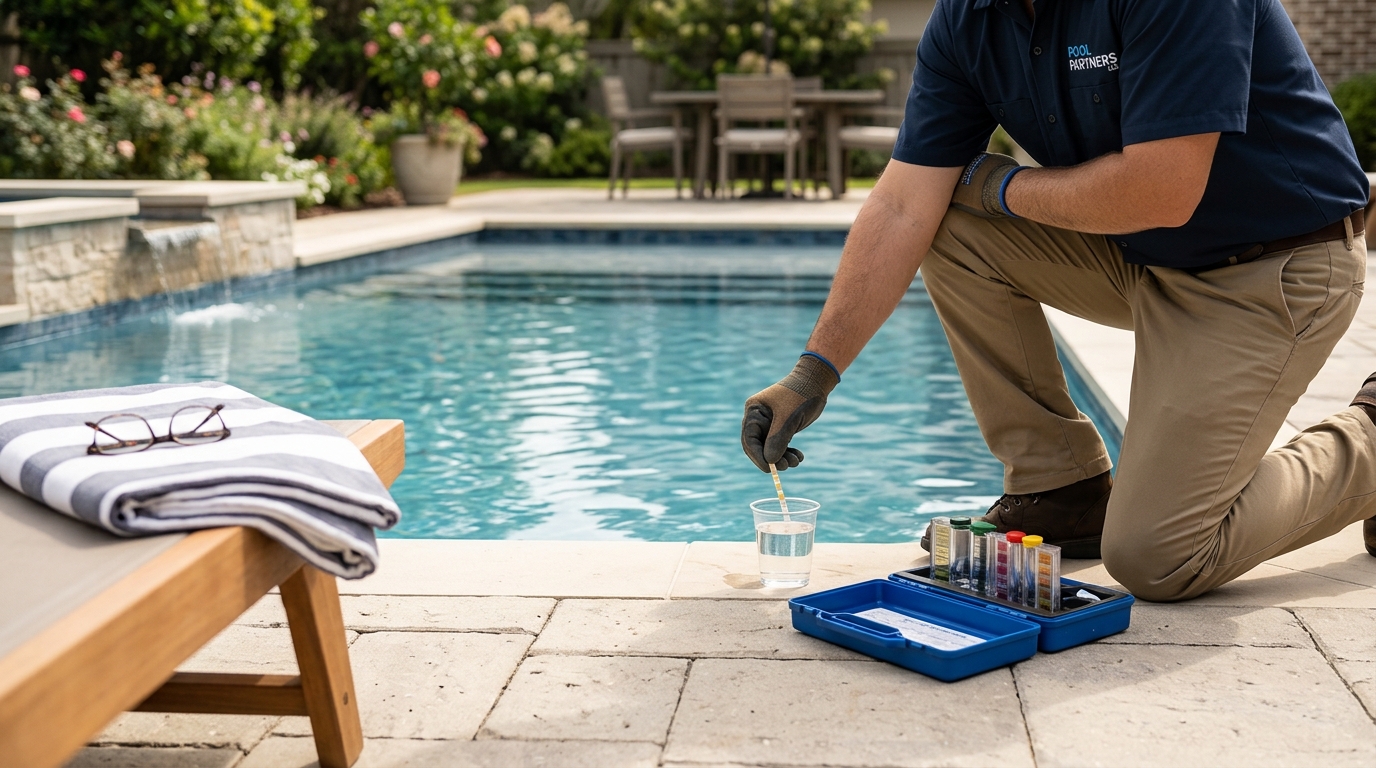
Pool Partners LLC provides professional chemical testing and balancing services for residential pools in Baton Rouge, Louisiana. This guide explains the core water chemistry parameters, the risks of imbalance, and how local professionals manage your pool's health year-round.
Water Chemistry Parameters
Pool water chemistry is the precise balance of chemical elements that keeps water safe, clear, and non-corrosive. Maintaining these levels is the primary responsibility of any pool service provider. In Baton Rouge, the humidity and heat accelerate chemical reactions, making consistent monitoring essential.
Free Chlorine and Sanitation
Free chlorine is the active sanitizer that kills bacteria, viruses, and algae in pool water. It is the first line of defense against waterborne pathogens. Most health guidelines recommend maintaining free chlorine levels between 1 and 3 parts per million (ppm) for residential pools. If levels drop too low, the water becomes unsafe for swimming. If levels are too high, the water can cause skin and eye irritation.
pH Balance and Comfort
pH is a measure of how acidic or basic the water is on a scale from 0 to 14. The ideal pH range for a swimming pool is between 7.2 and 7.8. Water that is too acidic (low pH) can corrode metal equipment and etch plaster surfaces. Water that is too basic (high pH) can cause cloudy water and reduce the effectiveness of chlorine. Proper pH balance ensures that swimmers experience comfortable water that does not sting the eyes.
Alkalinity and Calcium Hardness
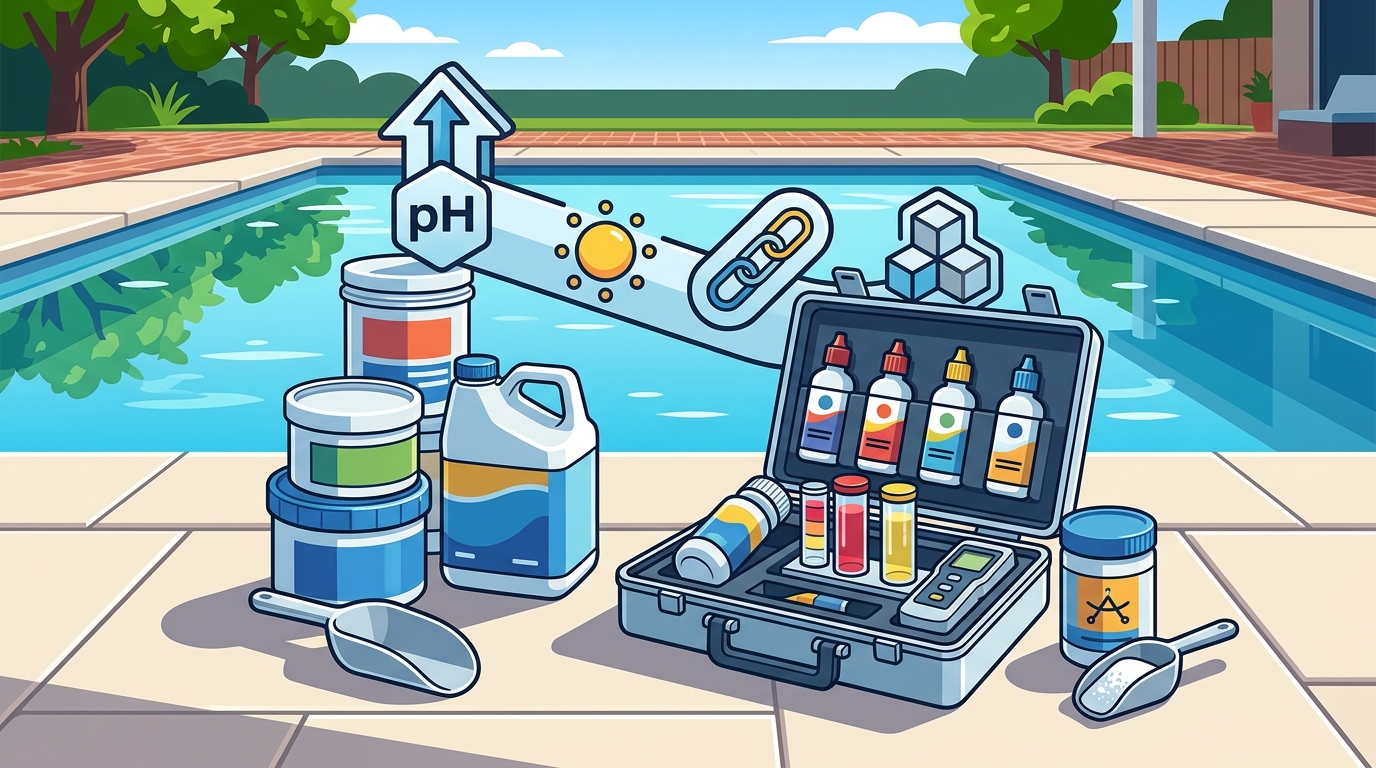
Alkalinity is the measure of the water's ability to buffer against pH changes. It acts as a shock absorber for the pH level. Ideal total alkalinity is typically between 80 and 120 ppm. Calcium hardness is the concentration of dissolved calcium in the water. Levels between 200 and 400 ppm are generally recommended. Low calcium can lead to corrosion, while high calcium causes scale buildup on tiles and equipment.
Why Baton Rouge Climate Matters
Baton Rouge experiences a humid subtropical climate with long, hot summers and mild winters. This environment creates unique challenges for pool owners. High temperatures increase the rate at which chlorine dissipates from the water. Humidity and frequent rainfall can introduce organic matter and dilute chemical concentrations. Local professionals understand these regional factors and adjust their service plans accordingly.
During the peak swimming season, which often extends from April through October in Louisiana, pools require more frequent attention. Rainfall events can lower pH and introduce debris, requiring immediate rebalancing. Pool Partners LLC accounts for these local weather patterns when scheduling chemical balancing visits. This proactive approach prevents minor imbalances from becoming major issues like green pools or equipment failure.
The Professional Testing Process
Professional pool service involves more than just adding chemicals. It requires a systematic approach to testing and adjustment. Technicians use digital or liquid test kits to measure multiple parameters simultaneously. This ensures accuracy and consistency across visits.
Initial Assessment and Testing
The process begins with a comprehensive water test. Technicians measure free chlorine, combined chlorine, pH, total alkalinity, calcium hardness, and cyanuric acid. Cyanuric acid, also known as stabilizer, protects chlorine from breaking down in sunlight. In sunny climates like Baton Rouge, stabilizer levels are critical. If stabilizer is too high, chlorine becomes ineffective. If too low, it dissipates too quickly.
Diagnosis and Adjustment
After testing, the technician diagnoses any imbalances. They calculate the precise amount of chemicals needed to bring the water into range. This calculation considers the pool's volume, current levels, and recent weather conditions. Chemicals are added slowly and evenly to avoid local hot spots that could damage surfaces. The water is then circulated to distribute the chemicals throughout the pool.
Retesting and Verification
Once chemicals are added, the technician retests the water to verify the adjustments. This step is crucial because chemical reactions can take time to stabilize. If levels are still out of range, further adjustments are made. This cycle continues until all parameters are within the ideal range. The technician documents the results and provides a report to the homeowner.
Signs of Chemical Imbalance
Homeowners can often detect chemical imbalances before they become severe. Recognizing these signs early allows for timely intervention. Common indicators include cloudy water, algae growth, and equipment corrosion.
Cloudy or Green Water
Cloudy water usually indicates a pH or alkalinity imbalance. It can also signal the presence of fine particles that the filter cannot remove. Green water is a clear sign of algae growth, which occurs when chlorine levels are too low or pH is too high. Algae can spread rapidly in warm water, turning a clear pool green in a matter of days.
Equipment Corrosion and Scale
Corrosion is a sign of acidic water. It affects metal ladders, lights, and pump components. Scale is a sign of basic water with high calcium hardness. It appears as white or gray deposits on tile lines and equipment. Both corrosion and scale are difficult and expensive to repair. Regular chemical balancing prevents these issues from developing.
Swimmer Discomfort
Swimmers may experience red eyes, dry skin, or a strong chlorine smell. These symptoms indicate that the water is not properly balanced. A strong chlorine smell often means that combined chlorine is high, which occurs when chlorine reacts with organic matter. Proper balancing eliminates these discomforts and makes swimming more enjoyable.
DIY vs. Professional Service
Homeowners often wonder if they should test and balance their own pool or hire a professional. Both approaches have advantages and disadvantages. The following table compares the two options.
| Feature | DIY Maintenance | Professional Service |
|---|---|---|
| Time Commitment | Requires weekly testing and adjustment | Minimal time required from homeowner |
| Accuracy | Depends on test kit quality and user skill | High accuracy using professional-grade equipment |
| Consistency | May vary based on homeowner availability | Consistent weekly or bi-weekly visits |
| Expertise | Requires learning complex chemistry | Trained technicians with local experience |
For most Baton Rouge homeowners, professional service offers peace of mind. It ensures that the pool is always safe and ready for use. Pool Partners LLC provides this level of care with a focus on local conditions and customer satisfaction.
Key Takeaways
- Pool water chemistry is the balance of chlorine, pH, alkalinity, and calcium hardness that ensures safety and clarity.
- Baton Rouge's hot and humid climate accelerates chemical changes, requiring consistent monitoring.
- Free chlorine should be maintained between 1 and 3 ppm to effectively sanitize the water.
- pH levels should stay between 7.2 and 7.8 to prevent corrosion and scale.
- Professional testing involves initial assessment, precise adjustment, and verification retesting.
- Cloudy water, algae growth, and equipment corrosion are common signs of chemical imbalance.
- Professional service provides accuracy, consistency, and expertise that DIY methods may lack.
- Pool Partners LLC offers reliable chemical balancing services tailored to Baton Rouge conditions.
Frequently Asked Questions
How often should pool chemicals be tested in Baton Rouge?
In Baton Rouge, it is recommended to test pool chemicals at least once a week during the swimming season. During periods of heavy use or extreme heat, testing every three to four days may be necessary. Professional services typically visit weekly or bi-weekly to ensure consistent balance.
What is the ideal pH level for a pool?
The ideal pH level for a swimming pool is between 7.2 and 7.8. This range ensures that chlorine is most effective and that the water is comfortable for swimmers. Levels outside this range can lead to equipment damage or reduced sanitation.
Can I balance my pool chemicals myself?
Yes, you can balance your pool chemicals yourself if you have the right test kits and knowledge. However, it requires consistent attention and an understanding of how different chemicals interact. Many homeowners prefer professional service for its convenience and accuracy.
What causes green pool water?
Green pool water is caused by algae growth. This typically occurs when chlorine levels are too low or pH is too high. Algae can spread quickly in warm water, turning the pool green. Professional treatment is often needed to eliminate established algae.
How does humidity affect pool chemistry?
Humidity can introduce organic matter into the pool and dilute chemical concentrations. It also contributes to the overall moisture in the air, which can affect evaporation rates. In Baton Rouge, high humidity requires careful monitoring of alkalinity and pH to maintain balance.
What is cyanuric acid and why is it important?
Cyanuric acid is a stabilizer that protects chlorine from breaking down in sunlight. It is important in sunny climates like Baton Rouge. However, if levels get too high, it can make chlorine ineffective. Regular testing ensures that stabilizer levels remain in the optimal range.
How much does professional pool service cost in Baton Rouge?
The cost of professional pool service in Baton Rouge varies based on pool size, frequency of service, and specific needs. Pool Partners LLC offers customized plans to fit different budgets. Contacting the company for a quote is the best way to determine the exact cost for your pool. according to Baton Rouge Louisiana
What should I do if my pool water is cloudy?
If your pool water is cloudy, first check the pH and alkalinity levels. Adjust them to the ideal range if necessary. You may also need to shock the pool to clear the water. If the cloudiness persists, it may be a sign of a filter issue or high calcium hardness, which requires professional attention.
Conclusion
Maintaining proper pool chemistry is essential for a safe and enjoyable swimming experience. In Baton Rouge, the local climate adds complexity to this task. Pool Partners LLC provides expert chemical testing and balancing services that address these challenges. our team uses professional-grade equipment and local knowledge to keep your pool in pristine condition. By choosing a reliable local provider, you can enjoy your pool without the stress of managing complex chemistry. For more information on our services, visit the chemical balancing page or contact Pool Partners LLC today.