
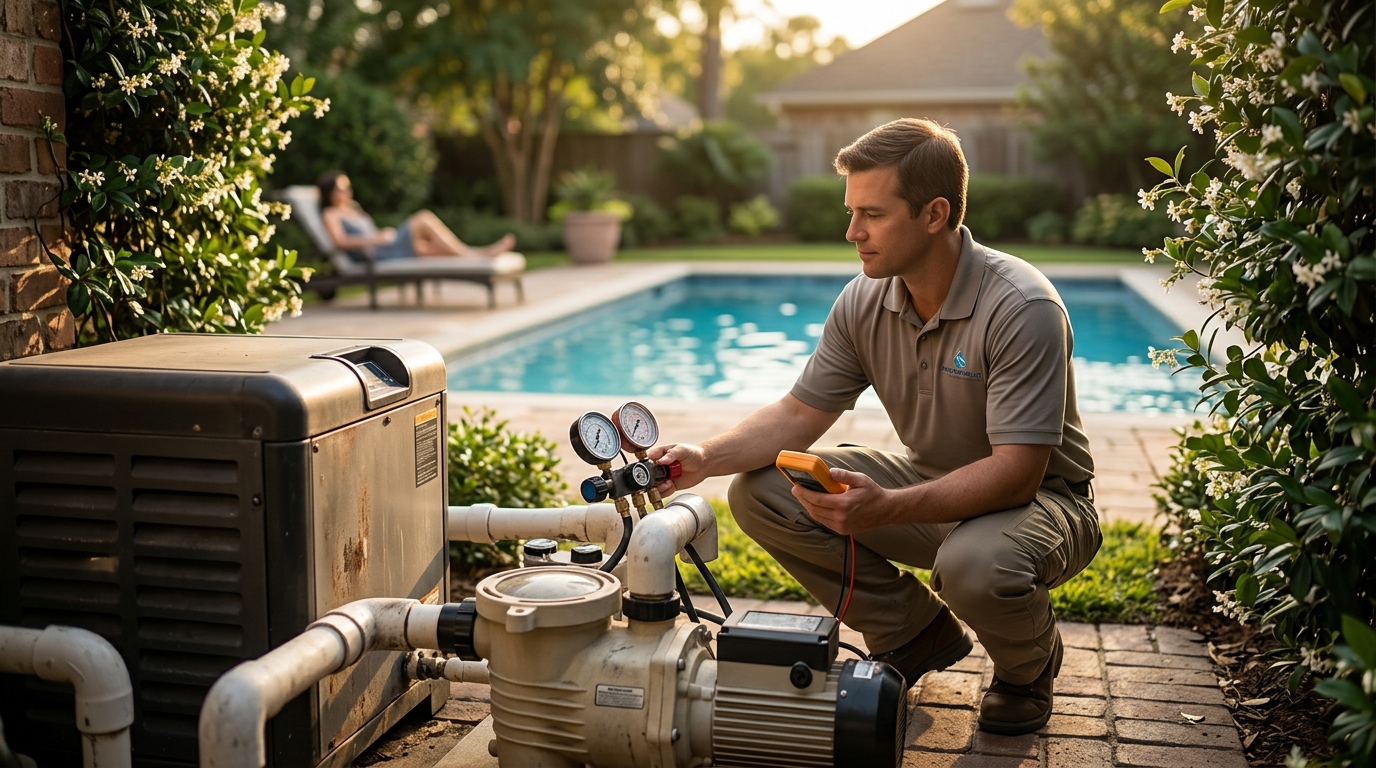
Yes, Pool Partners LLC in Baton Rouge provides expert diagnostics for pool pumps and heaters. We identify root causes of equipment failure to restore safe, clear water. This guide covers pump diagnosis, heater repair, and pump repair specifics for Louisiana homeowners.
Pool Pump Diagnosis
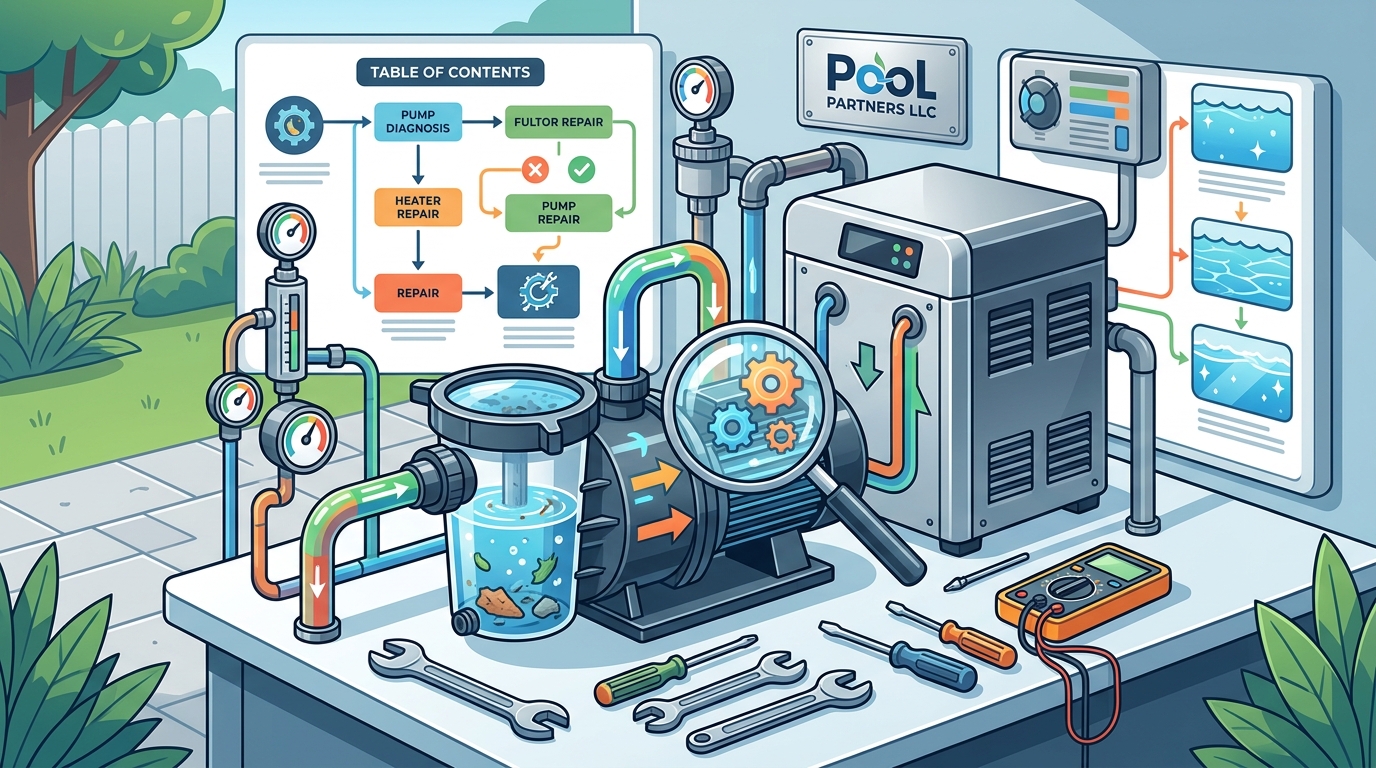
Pool pump diagnosis is the systematic process of identifying why a circulation system fails to move water. In Baton Rouge, high humidity and seasonal debris often clog intake lines or strain motors. A professional assessment begins with a visual inspection of the pump basket and strainer pot. Technicians check for trapped leaves, insects, or mineral buildup that restricts flow. They also listen for unusual noises such as grinding or humming without rotation. These signs indicate mechanical wear or electrical faults.
Common Pump Failure Signs
Homeowners should monitor for specific indicators of pump distress. A pump that runs but produces no water flow suggests a clogged impeller or air leak. If the pump trips the breaker immediately upon startup, the motor windings may be shorted. Excessive vibration during operation points to an unbalanced impeller or loose mounting bolts. Ignoring these symptoms leads to premature motor burnout and costly replacements. For additional details, review the Contact Pool Partners Baton.
Diagnostic Testing Procedures
Professional diagnosis involves multimeter testing to verify voltage and continuity. Technicians measure amperage draw to detect overloaded motors. They inspect the capacitor for swelling or leakage, which is a common failure point in single-phase motors. Water pressure gauges help confirm that the pump generates adequate head pressure. This data-driven approach ensures accurate fault isolation before any repair work begins.
Pool Heater Repair
Pool heater repair addresses malfunctions in gas, electric, or heat pump units that prevent water from reaching the desired temperature. Louisiana summers demand reliable heating for extended swimming seasons. A failing heater often results from scale buildup on heat exchanger tubes. This mineral deposit insulates the tubes, reducing heat transfer efficiency. Technicians inspect the burner assembly, flame sensor, and gas valve for proper operation. They also check for error codes displayed on the control panel.
Heat Exchanger and Scale Issues
Hard water in the Baton Rouge area accelerates calcium scale formation. Scale acts as an insulator, forcing the heater to work harder and consume more energy. Over time, this stress cracks the heat exchanger, causing water leaks. Repair involves descaling the tubes or replacing the entire heat exchanger assembly. Regular water chemistry management prevents this costly damage. Balanced alkalinity and calcium hardness levels protect internal components.
Gas and Electrical System Checks
Gas heaters require a functional ignition system and stable gas supply. Technicians verify that the gas valve opens correctly when the controller calls for heat. They test the flame sensor to ensure it detects the pilot flame. Electrical heaters need proper voltage and intact heating elements. A tripped thermal cutoff indicates overheating, often caused by low water flow. Restoring proper flow through pump and filter maintenance resolves many heater issues.
Pool Pump Repair
Seal Plate and O-Ring Replacement
The seal plate is the primary barrier between the wet end and the motor. It contains multiple O-rings that prevent water from leaking into the electrical housing. When these O-rings dry out or crack, water seeps into the motor compartment. This moisture causes short circuits and motor failure. Technicians replace the entire seal plate assembly to ensure a watertight seal. Proper lubrication with pool-grade silicone grease extends the life of new O-rings.
Impeller and Bearing Maintenance
The impeller is the rotating component that moves water through the pump. A worn or cracked impeller reduces flow and causes vibration. Bearings that support the impeller shaft also wear over time. Worn bearings create noise and excessive play in the shaft. Replacing the impeller and bearings restores smooth operation. Technicians balance the new impeller to prevent vibration damage to the motor housing.
Key Takeaways
- Pool pump diagnosis is the systematic process of identifying why a circulation system fails to move water.
- Pool heater repair addresses malfunctions in gas, electric, or heat pump units that prevent water from reaching the desired temperature.
- Pool pump repair involves restoring a failed circulation unit to full operational capacity.
- Hard water in Baton Rouge accelerates calcium scale formation, which insulates heat exchanger tubes.
- A pump that runs but produces no water flow suggests a clogged impeller or air leak.
- Regular water chemistry management prevents costly damage to heater components.
- Professional diagnosis involves multimeter testing to verify voltage and continuity.
- Ignoring early warning signs leads to premature motor burnout and costly replacements.
Frequently Asked Questions
Why is my pool pump running but not moving water?
This usually indicates a clogged impeller, a broken seal plate, or an air leak in the suction line. Check the strainer basket for debris and inspect the seal plate O-rings for cracks.
How often should I inspect my pool heater?
Annual professional inspections are recommended. Homeowners should also monitor for error codes and reduced heating performance monthly during the swimming season.
Can I repair a pool pump motor myself?
Basic tasks like cleaning the basket are safe for owners. Motor repairs involving electrical components should be handled by certified technicians to avoid safety hazards.
What causes a pool heater to trip the breaker?
How does hard water affect pool equipment?
Hard water deposits calcium scale on heat exchangers and pump components. This scale insulates surfaces, reducing efficiency and causing premature wear.
What is the difference between pump diagnosis and pump repair?
Diagnosis identifies the specific fault causing the failure. Repair is the physical process of fixing or replacing the faulty components to restore function.
Should I replace or repair an old pool pump?
If the motor is burned out, replacement is often more cost-effective. If the issue is a seal plate or impeller, repair is usually the better option.
How do I prevent algae growth during equipment downtime?
Maintain proper chlorine levels and circulation as much as possible. If the pump is down, use a temporary circulation method and monitor water chemistry closely.
Conclusion
Reliable pool equipment is essential for safe and enjoyable swimming in Baton Rouge. Pool Partners LLC provides comprehensive diagnostics and repair services for pumps and heaters. Our team uses advanced testing tools to identify root causes and implement lasting solutions. We prioritize preventative maintenance to extend the life of your equipment. Contact us today to schedule a professional inspection and restore your pool to optimal condition.