Pool Partners LLC provides professional chemical balancing services in Baton Rouge, LA, ensuring your water remains safe and clear. This guide covers the essential water chemistry parameters, the testing process, and how to maintain a healthy swimming environment year-round.
Water Chemistry Parameters
Maintaining the correct chemical balance in your pool is crucial for ensuring a safe and enjoyable swimming experience. Water chemistry is the study of the chemical composition of pool water, including the levels of various substances that affect water quality and safety. At Pool Partners LLC, we focus on several key parameters to keep your pool in optimal condition.
pH Levels
The pH level measures how acidic or basic the water is. The ideal pH range for a swimming pool is between 7.2 and 7.8. If the pH is too high, the water becomes alkaline, which can reduce the effectiveness of chlorine and cause skin and eye irritation. If the pH is too low, the water becomes acidic, which can corrode pool equipment and damage surfaces.
Chlorine Levels
Chlorine is the primary sanitizer used in pools to kill bacteria and algae. The recommended free chlorine level is between 1 and 3 parts per million (ppm). Maintaining the right chlorine level is essential for preventing the growth of harmful microorganisms and ensuring a safe swimming environment.
Alkalinity
Alkalinity refers to the concentration of carbonate, bicarbonate, and hydroxide ions in the water. It acts as a buffer to stabilize pH levels. The ideal total alkalinity range is between 80 and 120 ppm. Proper alkalinity helps prevent rapid pH fluctuations, which can lead to equipment corrosion or scaling.
Calcium Hardness
Calcium hardness measures the amount of dissolved calcium in the water. The ideal range is between 200 and 400 ppm. Low calcium hardness can lead to corrosive water, which can damage pool surfaces and equipment. High calcium hardness can cause scaling and cloudiness in the water.
The Testing Process
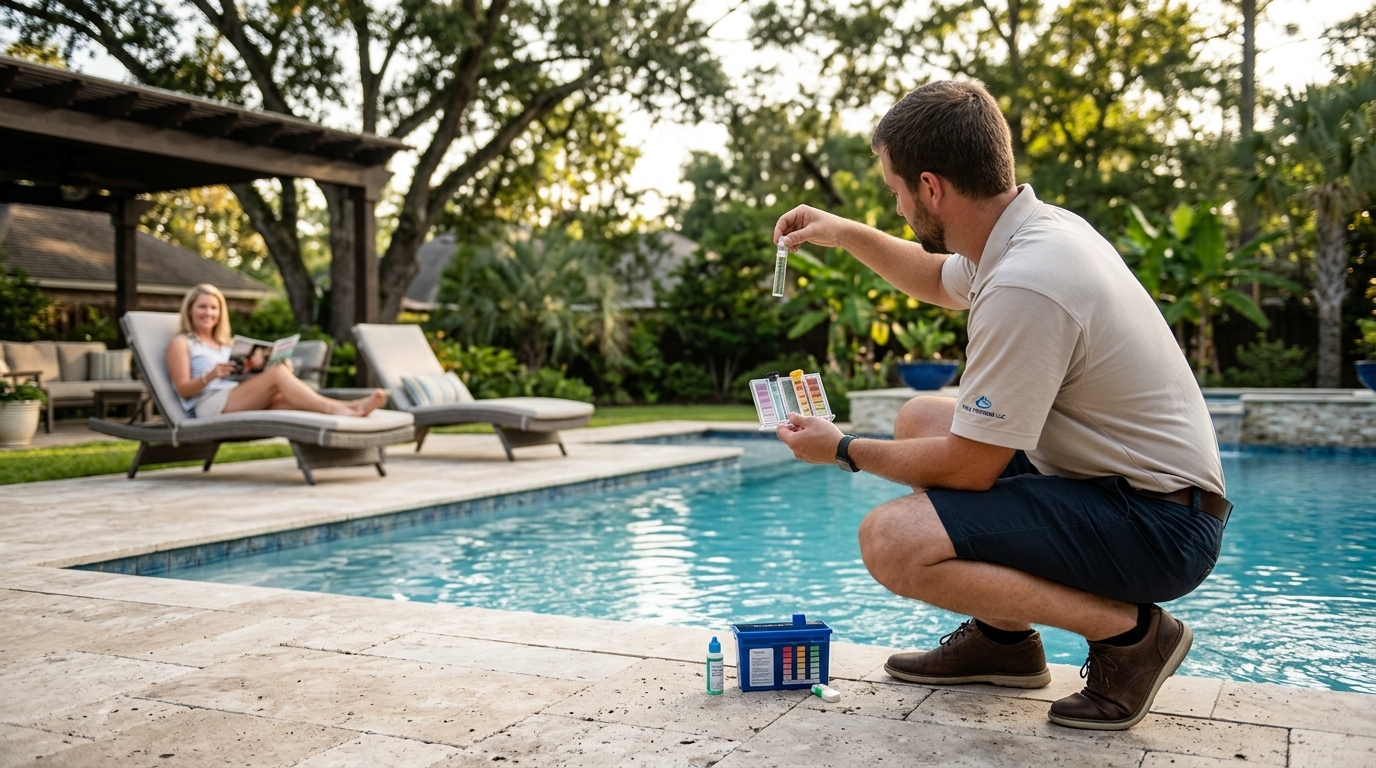
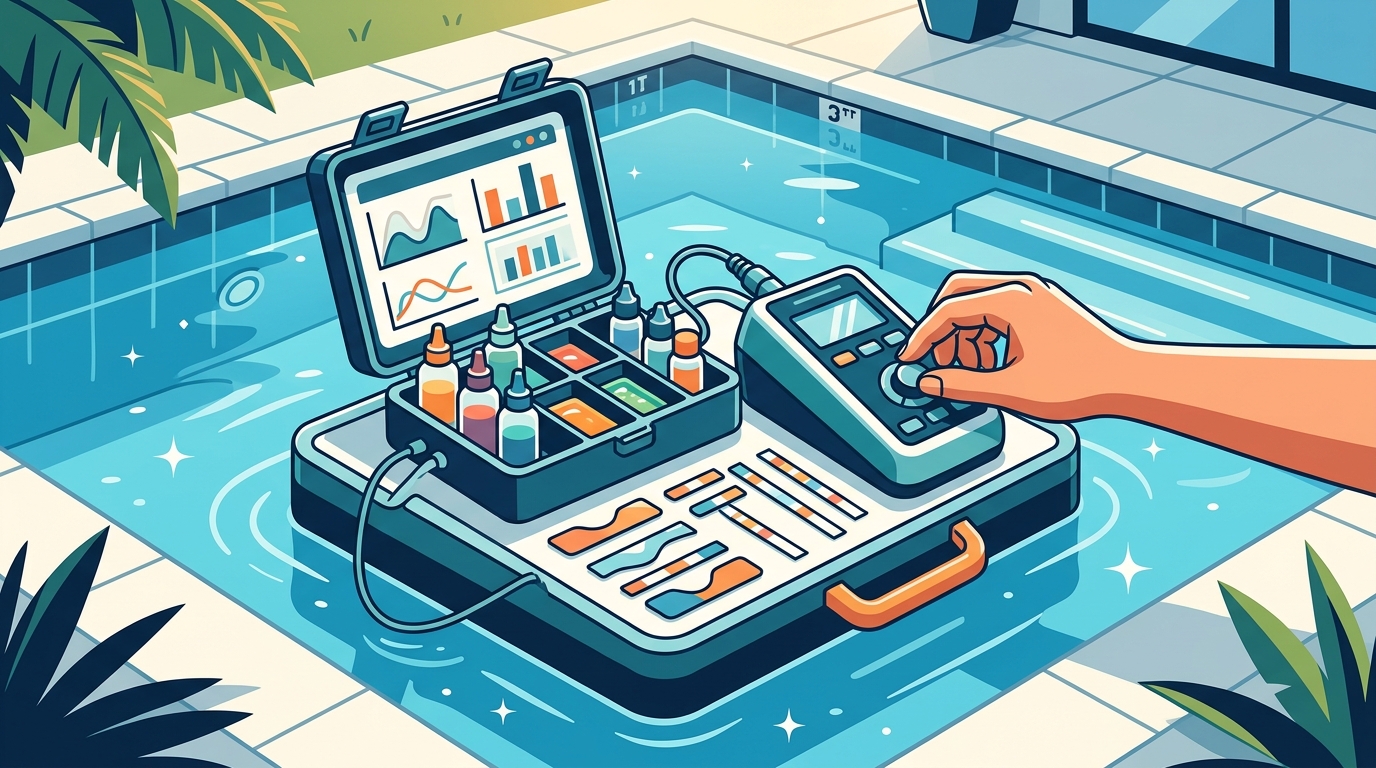
Accurate testing is the foundation of effective pool maintenance. At Pool Partners LLC, we use professional-grade testing equipment to ensure precise readings. The process involves several steps to assess the current state of your pool water.
Initial Water Testing
We begin by testing your pool water to assess current chemical levels, including pH, chlorine, alkalinity, calcium hardness, and cyanuric acid. This comprehensive approach helps us identify any imbalances that may be contributing to water quality issues.
Diagnosis of Imbalances
Based on the test results, we diagnose any chemical imbalances and determine the necessary adjustments. This step is critical because it allows us to tailor our treatment plan to the specific needs of your pool, considering factors such as pool size, usage, and local conditions.
Retesting
After the initial adjustments, we retest the water to ensure that the chemical levels are within the desired range. This step confirms that the adjustments have been effective and that the water is safe for swimming.
Adjustment Strategies
Once we have identified any imbalances, we implement targeted adjustment strategies to bring your pool water back into perfect balance. These strategies are designed to be effective and safe for your pool and its equipment.
Chemical Adjustment
We carefully add the required chemicals to bring your pool water back into perfect balance. This may include adding pH increasers or decreasers, chlorine, alkalinity adjusters, or calcium hardness adjusters. The specific chemicals used depend on the results of the initial testing and diagnosis.
Monitoring and Maintenance
Proper chemical balancing is not a one-time task. It requires ongoing monitoring and adjustments to ensure that your pool’s chemical levels remain consistent throughout the season. We provide regular monitoring and adjustments to maintain the ideal levels of chlorine, pH, alkalinity, and other crucial chemicals.
Common Issues and Solutions
Imbalanced water chemistry can lead to various issues, including skin and eye irritation, equipment damage, and the growth of harmful bacteria and algae. Here are some common issues and how we address them.
Cloudy Water
Cloudy water is often a sign of poor filtration or chemical imbalance. We clean or replace filters as necessary to ensure optimal water circulation and filtration. We also adjust chemical levels to clarify the water.
Algae Growth
Algae growth is a common problem in pools with imbalanced chemistry. We provide professional algae treatment services to eliminate algae and prevent its return. Our treatments are tough on algae but safe for your pool’s surfaces and equipment.
Equipment Corrosion
Corrosive water can damage pool equipment, leading to costly repairs. By maintaining proper chemical balance, we help prevent corrosion and extend the life of your pool equipment.
Key Takeaways
- Proper chemical balancing is essential for a safe and enjoyable swimming experience.
- Key parameters to monitor include pH, chlorine, alkalinity, and calcium hardness.
- Accurate testing is the foundation of effective pool maintenance.
- Targeted adjustment strategies help bring pool water back into balance.
- Ongoing monitoring and adjustments are necessary to maintain consistent chemical levels.
- Common issues like cloudy water, algae growth, and equipment corrosion can be prevented with proper chemical balancing.
- Pool Partners LLC provides professional chemical balancing services in Baton Rouge, LA.
Frequently Asked Questions
How often should I test my pool chemicals?
We recommend testing your pool chemicals at least twice a week. More frequent testing may be necessary during periods of heavy use or extreme weather conditions.
What is the ideal pH level for a pool?
The ideal pH level for a swimming pool is between 7.2 and 7.8.
How do I know if my pool water is imbalanced?
Signs of imbalanced pool water include cloudy water, skin and eye irritation, algae growth, and equipment corrosion.
Can I balance my pool chemicals myself?
While it is possible to balance pool chemicals yourself, it requires knowledge and experience. Professional services like those offered by Pool Partners LLC ensure accurate and effective balancing.
What chemicals are used to balance pool water?
Common chemicals used to balance pool water include pH increasers or decreasers, chlorine, alkalinity adjusters, and calcium hardness adjusters.
How long does it take to balance pool water?
The time it takes to balance pool water depends on the extent of the imbalance. In many cases, visible results can be seen after just one visit.
Conclusion
Maintaining the correct chemical balance in your pool is crucial for ensuring a safe and enjoyable swimming experience. At Pool Partners LLC, we offer precise chemical balancing services in Baton Rouge, LA, designed to keep your pool water clean, clear, and healthy. Our experienced technicians are skilled in managing all aspects of pool chemistry, ensuring your water is always in perfect balance. To schedule a chemical balancing service, today.