What Actually Causes Green Pool Water and How Professionals Fix It
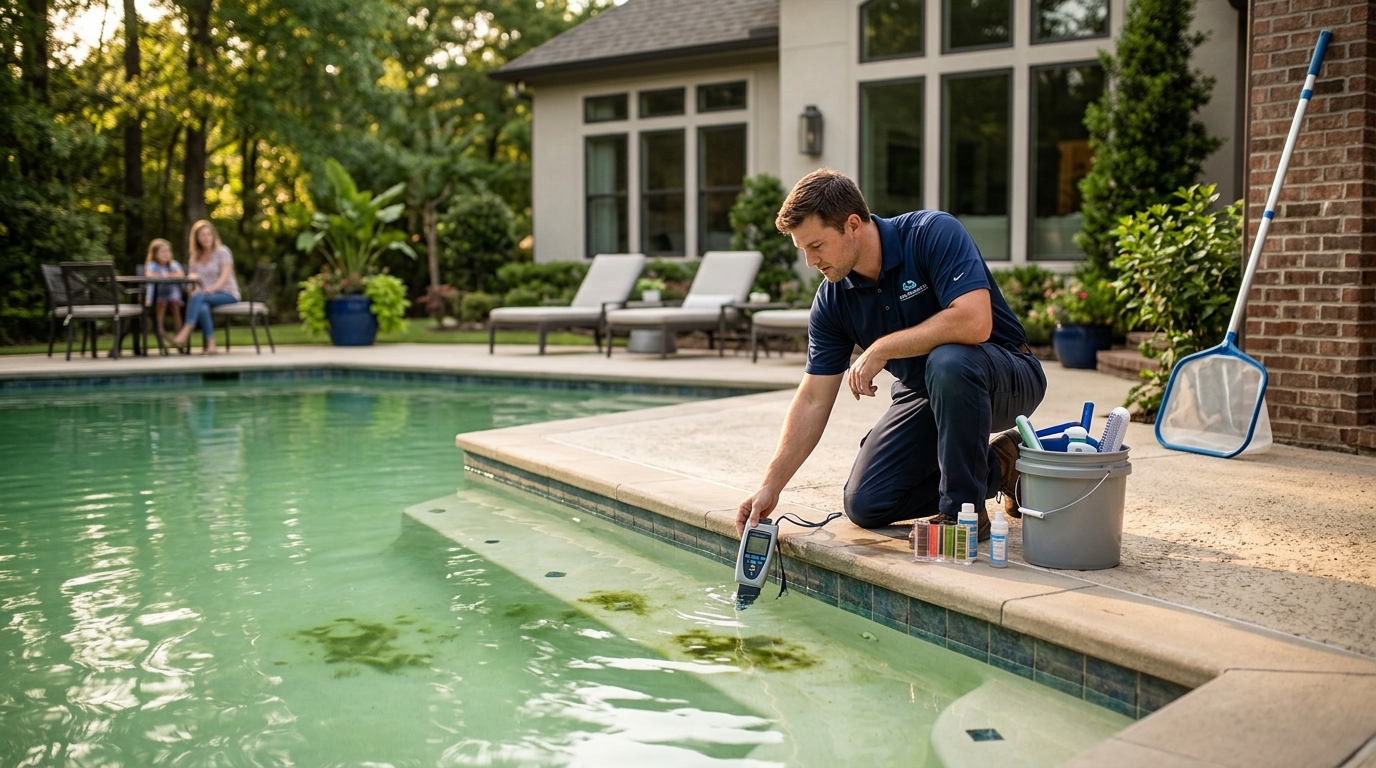
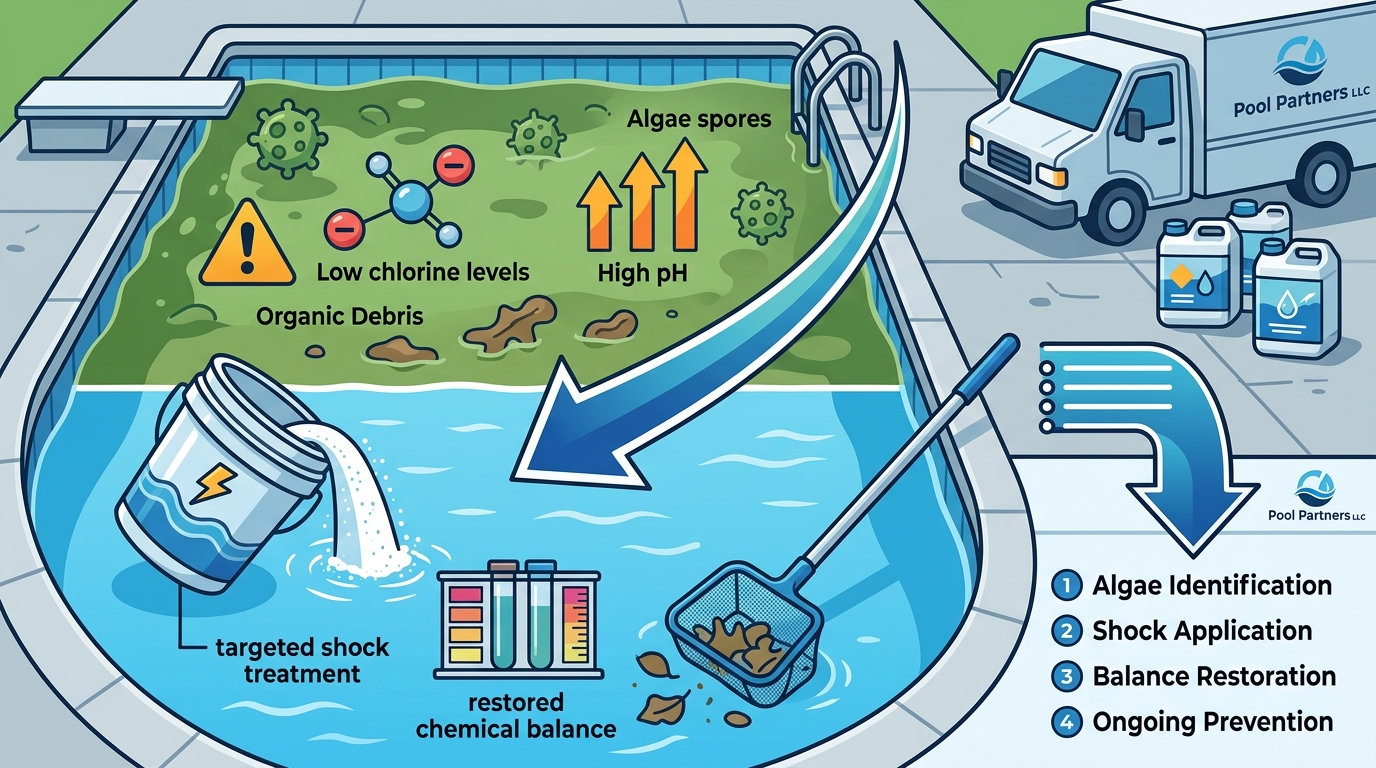
Green pool water is primarily caused by an algae bloom triggered by imbalanced water chemistry, specifically low chlorine levels or high pH. When the sanitizer cannot keep up with organic load, algae spores multiply rapidly, turning the water opaque and green. Professionals fix this by identifying the specific algae type, applying targeted shock treatments, and restoring chemical balance to prevent immediate regrowth.
The Chemistry of Algae Growth
Algae is a microscopic organism that thrives in warm, stagnant water. In the humid climate of Baton Rouge, Louisiana, pools are particularly susceptible to rapid algae multiplication during the summer months. The primary driver of this growth is a failure in the pool's sanitization system. When free chlorine levels drop below 1.0 ppm, or when the pH rises above 7.8, the effectiveness of the chlorine decreases significantly. This creates a window of opportunity for algae spores to colonize the pool surfaces.
It is important to understand that chlorine efficiency is not just about the total amount of chlorine present. Chlorine exists in two forms: hypochlorous acid (HOCl) and hypochlorite ion (OCl-). Hypochlorous acid is the active sanitizer that kills bacteria and algae. However, as pH increases, more chlorine converts into the weaker hypochlorite ion. At a pH of 7.2, roughly two-thirds of the chlorine is in its strong form. At a pH of 7.8, less than one-third remains active. This chemical shift is often the hidden cause of green water, even when test strips show a seemingly acceptable chlorine reading.
Pool Partners LLC technicians in Baton Rouge frequently encounter pools that test "perfect" on a basic strip but still develop algae. This happens because the test strip measures total free chlorine, not the specific ratio of active to inactive forms. By monitoring pH closely and maintaining it in the 7.2 to 7.4 range, pool owners can maximize the sanitizing power of their chlorine and prevent the initial conditions that allow algae to take hold.
Identifying the Algae Type
Not all green water is the same. Professionals distinguish between three main types of algae: green, yellow, and black. Each type requires a different treatment approach. Green algae is the most common and appears as a uniform green tint throughout the water. It is the easiest to treat but also the fastest to spread if ignored. Yellow algae, also known as mustard algae, clings to pool surfaces and is resistant to standard chlorine shock. It often appears in shaded areas or on the pool floor. Black algae is the most difficult to eradicate. It forms dark, stringy colonies in tile grout and etched surfaces, and it has a protective slime layer that prevents chlorine from penetrating the organism.
Identifying the type is the first step in a professional cleanup. If a pool owner attempts to treat black algae with standard green algae protocols, the treatment will fail, and the algae will return within days. Pool Partners LLC assesses the extent of the growth and identifies the specific type present before applying any chemicals. This diagnostic step ensures that the correct treatment is used, saving time and preventing the need for repeated, costly interventions.
The Professional Treatment Process
Once the algae type is identified, the professional treatment process begins. For green algae, the process typically involves a powerful shock treatment to kill the algae, followed by thorough brushing and vacuuming to remove the dead organisms. For yellow and black algae, the process is more complex. It often requires the application of specific algaecides that can penetrate the protective slime layer of the algae. After the treatment, the pool filter must be cleaned or replaced to handle the increased load of debris and dead algae.
The filtration system plays a critical role in the cleanup process. A clogged filter cannot circulate water effectively, which allows algae to settle and regrow. Pool Partners LLC cleans or replaces filters as part of the algae treatment service to ensure optimal water circulation. This step is often overlooked by DIY pool owners, leading to a cycle of treatment and regrowth. By addressing the filtration system, professionals ensure that the water remains clear and that the treatment is effective.
Chemical balancing is the final step in the professional treatment process. After the algae is killed and removed, the pool's chemical levels must be adjusted to prevent regrowth. This includes balancing pH, alkalinity, and calcium hardness. Pool Partners LLC provides ongoing support and guidance on maintaining proper pool conditions to keep algae at bay long after the initial treatment. This comprehensive approach ensures that the pool remains clean, clear, and safe for swimming.
Preventing Future Outbreaks
Preventing algae growth is easier than treating it. The key to prevention is consistent maintenance and monitoring of water chemistry. Pool owners should test their water regularly, at least twice a week, to ensure that chlorine and pH levels are within the recommended ranges. In Baton Rouge, where temperatures and humidity can fluctuate rapidly, more frequent testing may be necessary during the peak swimming season. Regular testing allows pool owners to catch imbalances before they lead to an algae bloom.
In addition to chemical monitoring, physical maintenance is essential. Skimming the pool surface daily to remove leaves and debris reduces the organic load that feeds algae. Brushing the pool walls and floor weekly helps to prevent algae from establishing a foothold. Pool Partners LLC offers weekly pool cleaning and maintenance services in Baton Rouge, which include these critical tasks. By outsourcing these responsibilities to a professional service, pool owners can ensure that their pool is consistently cared for and that potential issues are addressed before they become major problems.
Seasonal adjustments are also important. In the spring, when the pool is opened for the season, a thorough cleaning and chemical balancing are necessary to prepare the water for use. In the fall, when the pool is closed for the winter, proper closing procedures help to protect the pool from the elements and prevent algae growth during the off-season. Pool Partners LLC provides professional pool opening and closing services in Baton Rouge, ensuring that the pool is ready for the season ahead or properly secured for the off-season.
Key Takeaways
- Green pool water is primarily caused by imbalanced water chemistry, specifically low chlorine efficiency due to high pH.
- Chlorine exists in two forms, and its effectiveness depends on the pH level of the water.
- There are three main types of algae: green, yellow, and black, each requiring a different treatment approach.
- Professional treatment involves identifying the algae type, applying targeted chemicals, and cleaning the filtration system.
- Preventing algae growth requires consistent monitoring of water chemistry and regular physical maintenance.
- Seasonal adjustments, such as proper opening and closing procedures, are essential for long-term pool health.
Frequently Asked Questions
Why does my pool turn green even when I add chlorine?
This often happens when the pH is too high. High pH reduces the effectiveness of chlorine, allowing algae to grow despite the presence of sanitizer. Lowering the pH to the 7.2 to 7.4 range can restore chlorine efficiency.
How long does it take to fix a green pool?
The time required depends on the severity of the algae bloom and the type of algae present. Green algae can often be treated in one or two visits, while black algae may require multiple treatments over several weeks.
Can I treat a green pool myself?
Yes, but it requires a thorough understanding of pool chemistry and the specific type of algae present. If you are unsure, it is best to consult a professional to avoid wasting time and chemicals.
What is the role of the filter in algae treatment?
The filter is crucial for removing dead algae and debris from the water. A clogged filter can reduce circulation and allow algae to regrow. Cleaning or replacing the filter is a key step in the treatment process.
How often should I test my pool water?
In Baton Rouge, it is recommended to test your pool water at least twice a week during the summer. More frequent testing may be necessary if you notice any changes in water clarity or color.
Conclusion
Green pool water is a common problem, but it is manageable with the right knowledge and approach. By understanding the chemistry of algae growth, identifying the specific type of algae, and following a professional treatment process, pool owners can restore their pools to a clear and safe condition. Prevention is key, and consistent maintenance and monitoring of water chemistry are essential for long-term pool health. For pool owners in Baton Rouge, Pool Partners LLC offers expert algae treatment services that address the root causes of algae growth and prevent its return. To schedule a service or learn more about how to keep your pool clear, today.