
Stubborn buildup on pool tiles can ruin the aesthetic appeal of your backyard oasis and indicate underlying water chemistry issues. Pool Partners LLC specializes in restoring the pristine appearance of residential pools in Baton Rouge, LA, using advanced techniques to remove scale, stains, and algae. This guide outlines the most effective methods for tackling these persistent surface issues.
1. Acid Washing for Calcium Scale
Acid washing is the most effective method for dissolving hard calcium scale deposits. Calcium scale forms when water is supersaturated with calcium carbonate, often due to high pH levels. This process involves applying a diluted acid solution to the affected areas to dissolve the mineral deposits. It is crucial to use the correct concentration to avoid etching the tile surface or damaging the grout.
2. Metal Stain Removal
Specialized metal stain removers are required to eliminate discoloration caused by iron, copper, or manganese. Metal stains often appear as black, blue, or green spots on tiles and are caused by the oxidation of metals in the water. These stains are resistant to standard chlorine treatments and require chelating agents to bind and remove the metal ions. Proper identification of the metal type is essential for selecting the correct remover.
3. Algae Scrubbing and Shock Treatment
Combining physical scrubbing with a strong shock treatment is the best approach for removing algae stains. Algae can leave behind green or brown stains that are difficult to remove with brushing alone. A high dose of chlorine or non-chlorine shock kills the algae, while vigorous brushing helps lift the pigments from the tile surface. This method is particularly effective for light algae growth before it becomes deeply embedded.
4. Pressure Washing
Pressure washing is a powerful mechanical method for removing loose debris and light surface stains. Using a pressure washer with the appropriate nozzle can blast away dirt, sand, and light mineral deposits without the need for harsh chemicals. It is important to use a low-pressure setting to avoid damaging the tile finish or grout. This method works best as a preliminary step before applying chemical treatments.
5. Enzyme-Based Cleaners
Enzyme-based cleaners are an eco-friendly option for breaking down organic stains and biofilm. These cleaners use natural enzymes to digest organic matter such as body oils, lotions, and algae residues. They are less aggressive than chemical cleaners and are safer for the environment. Enzyme cleaners are ideal for maintaining tile cleanliness and preventing the buildup of organic films that can harbor bacteria.
6. Professional Tile Restoration
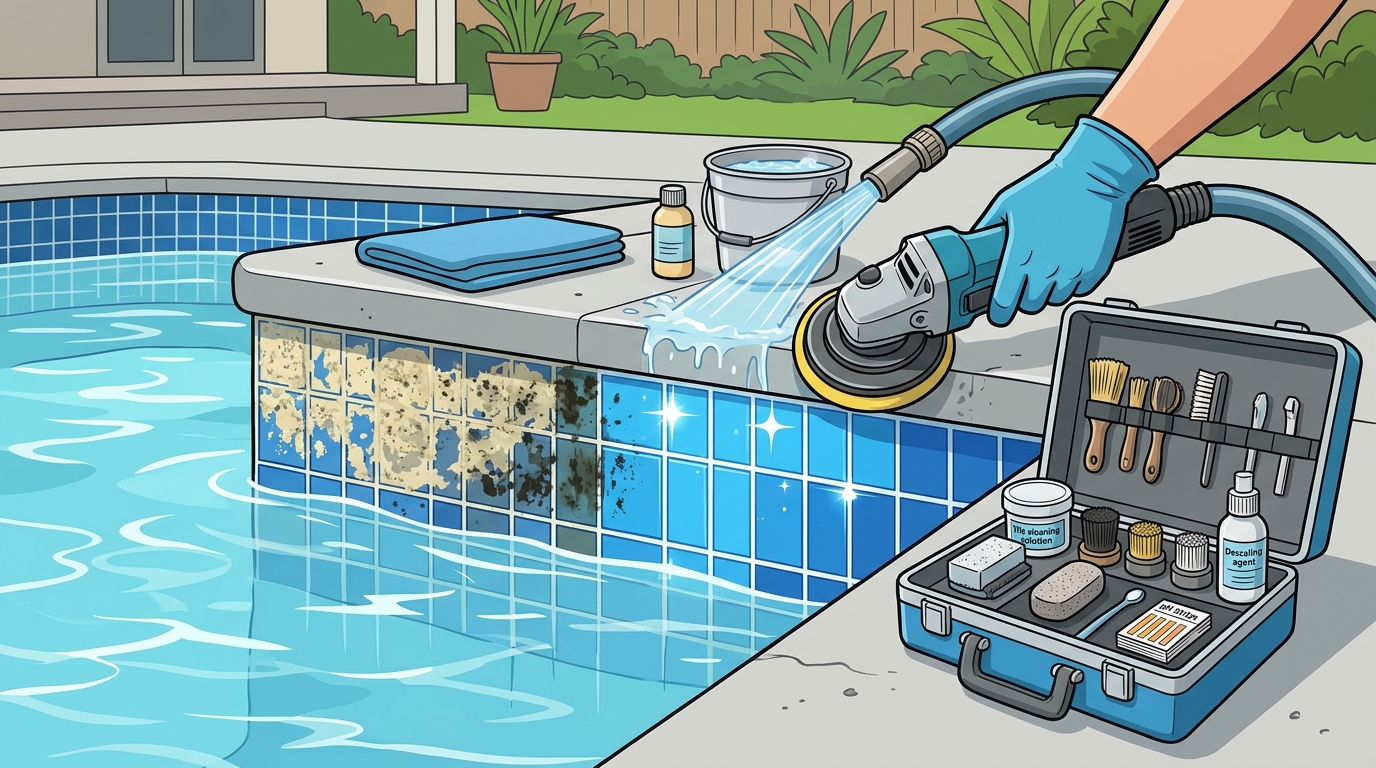
Professional restoration services can repair and refinish damaged or heavily stained tiles. When buildup is too severe for standard cleaning methods, professional restoration may be necessary. This can include grinding down scale, replacing damaged tiles, or applying a protective sealant. Pool Partners LLC offers comprehensive tile and surface cleaning services that restore the original beauty of your pool.
7. Preventative Chemical Balancing
Maintaining proper water chemistry is the best long-term strategy for preventing tile buildup. Regular testing and adjustment of pH, alkalinity, and calcium hardness levels prevent the formation of scale and stains. Pool Partners LLC provides chemical balancing services to ensure your water remains in the ideal range. Consistent maintenance reduces the need for aggressive cleaning methods and extends the life of your pool surfaces.
Choosing the Right Method
Selecting the appropriate method depends on the type of buildup and the condition of your tiles. For calcium scale, acid washing is the go-to solution, while metal stains require specialized removers. Algae stains are best treated with a combination of shock and scrubbing. If you are unsure of the cause of the buildup, a professional assessment can help identify the issue and recommend the best course of action. Pool Partners LLC can evaluate your pool and provide a tailored cleaning plan to restore its clarity and beauty.
Frequently Asked Questions
What causes calcium scale on pool tiles?
Calcium scale is caused by high levels of calcium carbonate in the water, often due to high pH or alkalinity. When the water becomes supersaturated, calcium deposits form on the tile surfaces. Maintaining proper water chemistry is the best way to prevent scale formation.
Can I use household vinegar to remove pool scale?
Household vinegar is a weak acid and may not be strong enough to remove heavy calcium scale. It can be effective for light deposits, but for stubborn buildup, a commercial acid cleaner is recommended. Always dilute acid cleaners according to the manufacturer's instructions to avoid damaging the tiles.
How often should I clean my pool tiles?
Regular cleaning is essential to prevent buildup. Skim and vacuum your pool weekly, and brush the tiles at least once a week. More frequent cleaning may be necessary if you have high bather load or poor water chemistry. Professional cleaning services can help maintain your pool's appearance year-round.
Are acid washers safe for all pool tiles?
Acid washers are generally safe for most pool tiles, but they can damage certain materials if used incorrectly. Always test the cleaner on a small, inconspicuous area first. If you are unsure, consult a professional to ensure the safety of your pool surfaces.
How can I prevent metal stains in my pool?
Metal stains are caused by the oxidation of metals in the water. To prevent them, use a metal sequestrant to bind metal ions and keep them in solution. Regular testing for metals and maintaining proper water chemistry can help prevent stain formation. If stains do appear, use a specialized metal stain remover. Learn more: Contact Pool Partners Baton.