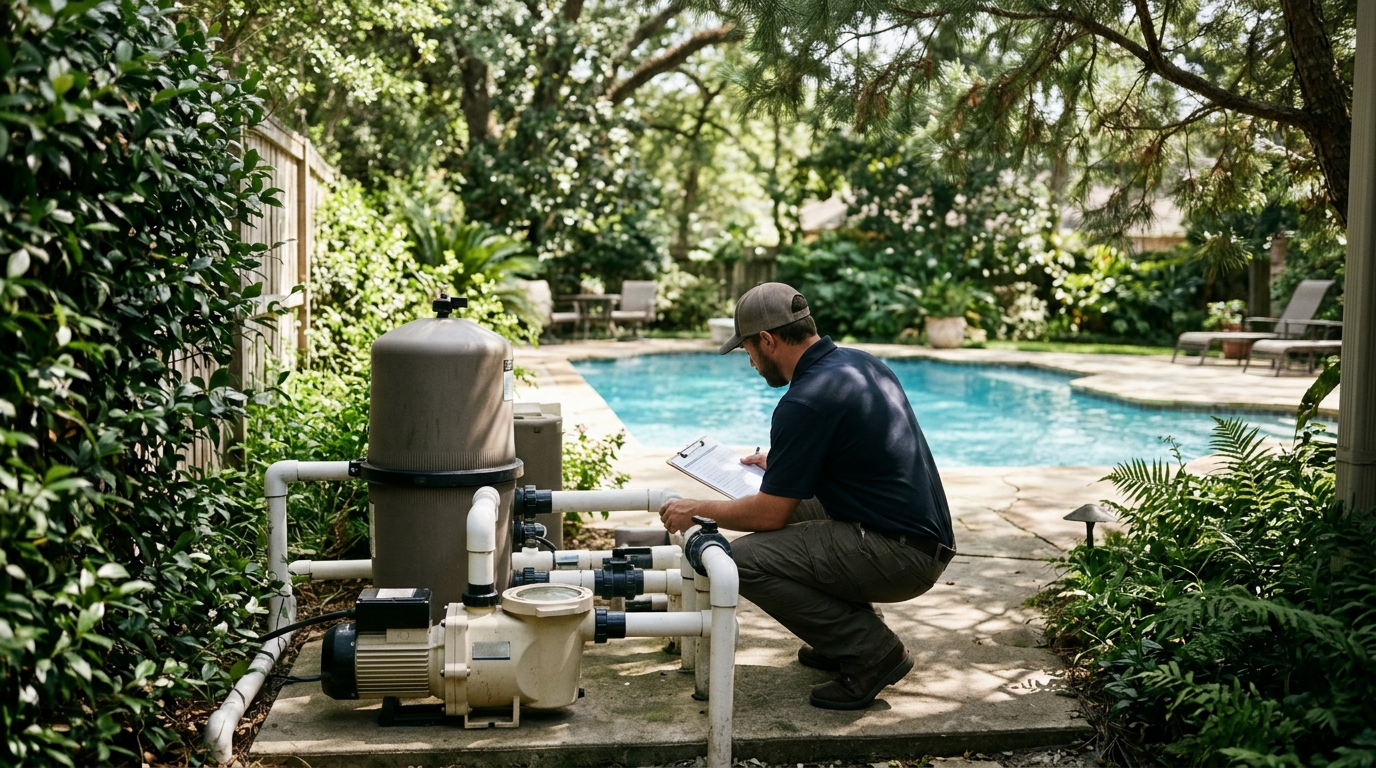
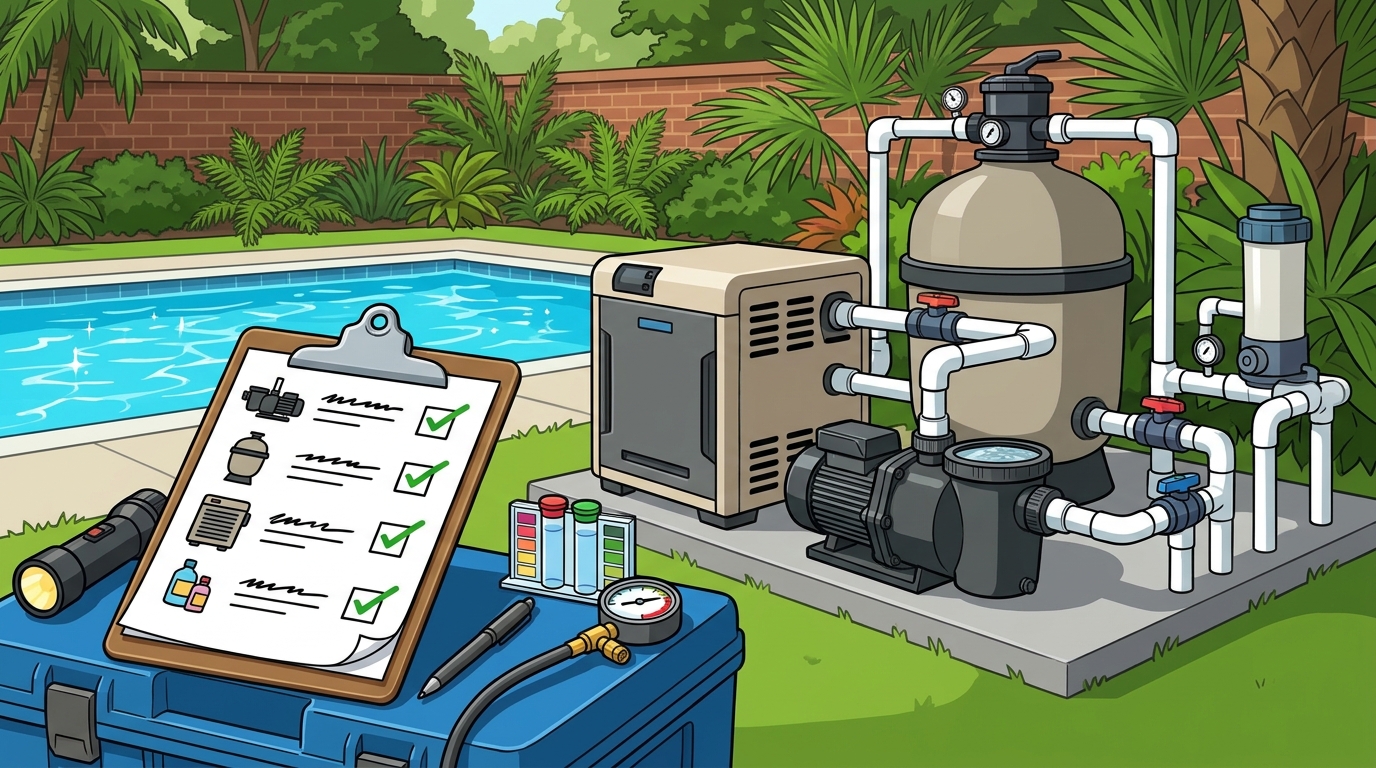
Professional pool services in Baton Rouge inspect pumps, filters, heaters, and chemical systems during every visit. This routine check identifies wear, leaks, and efficiency drops before they cause costly failures. Pool Partners LLC uses these inspections to keep your water safe and your equipment running smoothly throughout the humid Louisiana season.
Pumps and Circulation Systems
The pump is the heart of your pool's circulation. It moves water through the filter and back into the pool. If the pump fails, water stagnates, and algae can bloom rapidly. Technicians listen for unusual noises, such as grinding or humming, which indicate bearing wear or a failing motor. They also check the pump basket for debris that can restrict flow and strain the motor.
In Baton Rouge, high humidity and heat can cause pump seals to dry out or crack. A leaking seal can waste water and damage the pump housing. Inspectors verify that the pump is running at the correct speed and that the pressure gauge reads within the normal range. This ensures the system is moving enough water to sanitize effectively.
Filtration Systems and Pressure
Pool filtration is the process of removing physical debris from the water. The filter traps dirt, leaves, and microscopic particles that the pump pushes through it. A clogged filter causes high pressure, which forces the pump to work harder. This increased strain can lead to premature motor failure. Technicians monitor the pressure gauge closely during each visit.
Depending on the filter type, maintenance varies. Sand filters require backwashing when pressure rises too high. Cartridge filters need the elements removed, rinsed, and reinstalled. DE filters may need grid cleaning or replacement. Pool Partners LLC ensures the filter is clean and operating at peak efficiency. This keeps the water clear and protects the pump from unnecessary wear.
Heaters and Chemical Systems
Pool heaters and chemical feeders are critical for maintaining comfortable water temperatures and proper sanitation. Heaters can develop scale buildup or heat exchanger leaks. Technicians inspect the burner, flame sensor, and heat exchanger for signs of corrosion or blockage. In Baton Rouge, where pools are used year-round, heater efficiency directly impacts energy costs.
Chemical systems, such as chlorinators and salt cells, also require regular checks. Salt cells can accumulate calcium scale, reducing their ability to generate chlorine. Chlorinators may have clogged orifices or worn diaphragms. Inspectors verify that chemical levels are being maintained automatically and that the equipment is not leaking. This prevents chemical imbalances that can irritate swimmers or damage pool surfaces.
Plumbing, Valves, and Connections
Valves are often the first point of failure in a pool system. They can become stiff or leak due to age and chemical exposure. Inspectors test each valve to ensure it opens and closes smoothly. They also look for signs of corrosion on the valve handles and stems. Early detection of these issues prevents major plumbing repairs and water waste.
Electrical Components and Safety
Electrical safety is a top priority in pool equipment inspection. Technicians check the control panel for loose connections, burnt marks, or tripped breakers. They also inspect the ground fault circuit interrupter (GFCI) outlets near the pool. A faulty GFCI can pose a serious shock hazard to swimmers.
Wiring and junction boxes are examined for moisture intrusion. Water in electrical components can cause short circuits or fires. Inspectors ensure that all equipment is properly grounded and that the electrical system meets local safety codes. This protects both the pool owner and the equipment from electrical damage.
Key Takeaways
- Pumps should be checked for noise, seal leaks, and correct pressure readings.
- Filtration systems require regular cleaning to prevent high pressure and motor strain.
- Heaters and chemical feeders need inspection for scale buildup and proper function.
- Plumbing valves and connections must be tested for leaks and smooth operation.
- Electrical components, including GFCI outlets, must be verified for safety and grounding.
- Regular professional inspections prevent minor issues from becoming costly repairs.
Frequently Asked Questions
How often should pool equipment be inspected?
Pool equipment should be inspected during every regular maintenance visit. For most residential pools in Baton Rouge, this means weekly or bi-weekly checks. This frequency ensures that any developing issues are caught early before they cause significant damage.
What are the signs of a failing pool pump?
Common signs include unusual grinding or humming noises, water leaking from the pump housing, and a pressure gauge reading that is too high or too low. If the pump trips the breaker or runs hot to the touch, it needs immediate professional attention.
Why is filter pressure important?
Filter pressure indicates how much resistance the water encounters as it passes through the filter. High pressure means the filter is clogged, which forces the pump to work harder. This can lead to motor burnout and reduced water clarity. Maintaining normal pressure is essential for system longevity.
Do saltwater pools require different equipment inspections?
Yes, saltwater pools require inspection of the salt cell and the control board. The salt cell can accumulate calcium scale, which reduces chlorine production. Technicians clean or replace the cell as needed to ensure consistent sanitization.
Can I inspect my own pool equipment?
Homeowners can perform basic checks, such as cleaning the pump basket and checking the pressure gauge. However, detailed inspections of heaters, electrical systems, and internal plumbing require professional tools and expertise. Pool Partners LLC provides comprehensive inspections to ensure all components are safe and efficient.
Conclusion
Regular equipment inspection is the foundation of a healthy pool. By checking pumps, filters, heaters, plumbing, and electrical systems, you prevent minor issues from becoming major problems. Pool Partners LLC provides thorough equipment inspections as part of our regular maintenance services in Baton Rouge. To schedule a visit and ensure your pool is in top condition, contact our team.