Keeping your pool's water chemistry balanced year-round requires managing the interaction between pH, alkalinity, and chlorine efficiency, not just hitting individual target numbers. In Baton Rouge, fluctuating temperatures and humidity accelerate chemical shifts, making consistent monitoring essential. Pool Partners LLC emphasizes that stable water is a system of equilibrium where every chemical supports the others. When one variable drifts, the entire sanitization process weakens, leading to algae growth or equipment corrosion. Understanding these dynamics allows you to maintain a safe, clear swimming environment throughout the Louisiana seasons.
The Critical Link Between pH and Chlorine
Many pool owners assume that a chlorine reading of 3 to 4 ppm guarantees a sanitized pool. This is a dangerous misconception because chlorine exists in two distinct forms with vastly different effectiveness. Hypochlorous acid is the active sanitizer that kills bacteria and algae, while hypochlorite ion is a weaker form that contributes little to sanitization. The ratio between these two forms is dictated almost entirely by your pool's pH level. At a pH of 7.2, roughly two-thirds of your chlorine is in its strong, active form. However, as the pH rises to 7.8, less than one-third remains effective. This means a pool with a high pH and a "perfect" chlorine reading is actually significantly under-sanitized.
In the humid climate of Baton Rouge, aeration and evaporation naturally drive pH levels upward over time. If you do not actively manage this drift, your chlorine becomes inefficient. You may find yourself adding more and more chlorine to maintain the same reading, yet the water still turns cloudy or develops algae. This phenomenon is known as chlorine demand. The solution is not to add more chlorine, but to lower the pH to restore the efficiency of the sanitizer you already have. Pool Partners LLC technicians prioritize pH stability to ensure that every drop of chlorine works at its maximum potential.
Alkalinity: The Shock Absorber for Your Water
Alkalinity is the measure of the buffering capacity of your pool water, acting as a shock absorber for pH changes. Without adequate alkalinity, pH levels will swing wildly, making it nearly impossible to maintain a stable environment. If alkalinity is too low, the water becomes corrosive, potentially damaging your pool's plaster, tile, and metal equipment. If it is too high, the water becomes scale-forming, leading to cloudy water and a "soft" feel. The ideal range for total alkalinity is typically between 80 and 120 ppm. Maintaining this buffer is the first step in any successful chemical balancing strategy.
When you adjust pH, you are essentially changing the alkalinity. This is why professionals often adjust alkalinity first before fine-tuning pH. If you only adjust pH without addressing the underlying alkalinity, the correction will be temporary. The water will quickly revert to its previous state. By establishing a solid alkalinity baseline, you create a stable foundation for all other chemical adjustments. This approach saves time and reduces the frequency of chemical additions required to keep the water in balance.
Managing Seasonal Shifts in Louisiana
Pool chemistry is not static; it changes with the seasons. In Baton Rouge, the transition from summer to fall brings cooler temperatures, which can slow down chemical reactions and alter the behavior of sanitizers. During the hot summer months, high temperatures accelerate the growth of algae and bacteria, requiring more frequent monitoring. As the weather cools, the focus shifts to preventing scale and managing the effects of reduced aeration. Even in the off-season, water chemistry continues to evolve. A pool that is covered and not in use is still subject to chemical changes, particularly if the water is not properly winterized.
Seasonal adjustments are not just about adding chemicals; they are about understanding how environmental factors impact your pool. Rainfall in Louisiana can introduce organic matter and lower pH levels, while high winds can increase aeration and raise pH. Pool Partners LLC provides seasonal guidance to help homeowners anticipate these changes. By adjusting your maintenance routine to match the season, you can prevent the common issues that arise from seasonal transitions, such as green pools in the spring or scale buildup in the fall.
Calcium Hardness: Preventing Scale and Corrosion
Calcium hardness is the concentration of dissolved calcium in your pool water. It is a critical factor in preventing both scale and corrosion. If calcium hardness is too low, the water becomes aggressive and will leach calcium from your pool's surfaces, leading to etching and damage. If it is too high, the water becomes supersaturated and will deposit calcium on surfaces, forming hard scale that is difficult to remove. The ideal range for calcium hardness depends on the type of pool surface, but generally falls between 200 and 400 ppm. Maintaining this balance is essential for the long-term health of your pool.
Unlike pH and alkalinity, calcium hardness does not fluctuate rapidly. It changes slowly over time as water evaporates and chemicals are added. This makes it easy to overlook, but its long-term effects are significant. Regular testing of calcium hardness is a simple but vital part of year-round maintenance. By keeping this level within the recommended range, you protect your investment and ensure that your pool remains in pristine condition for years to come.
The Equilibrium Approach to Maintenance
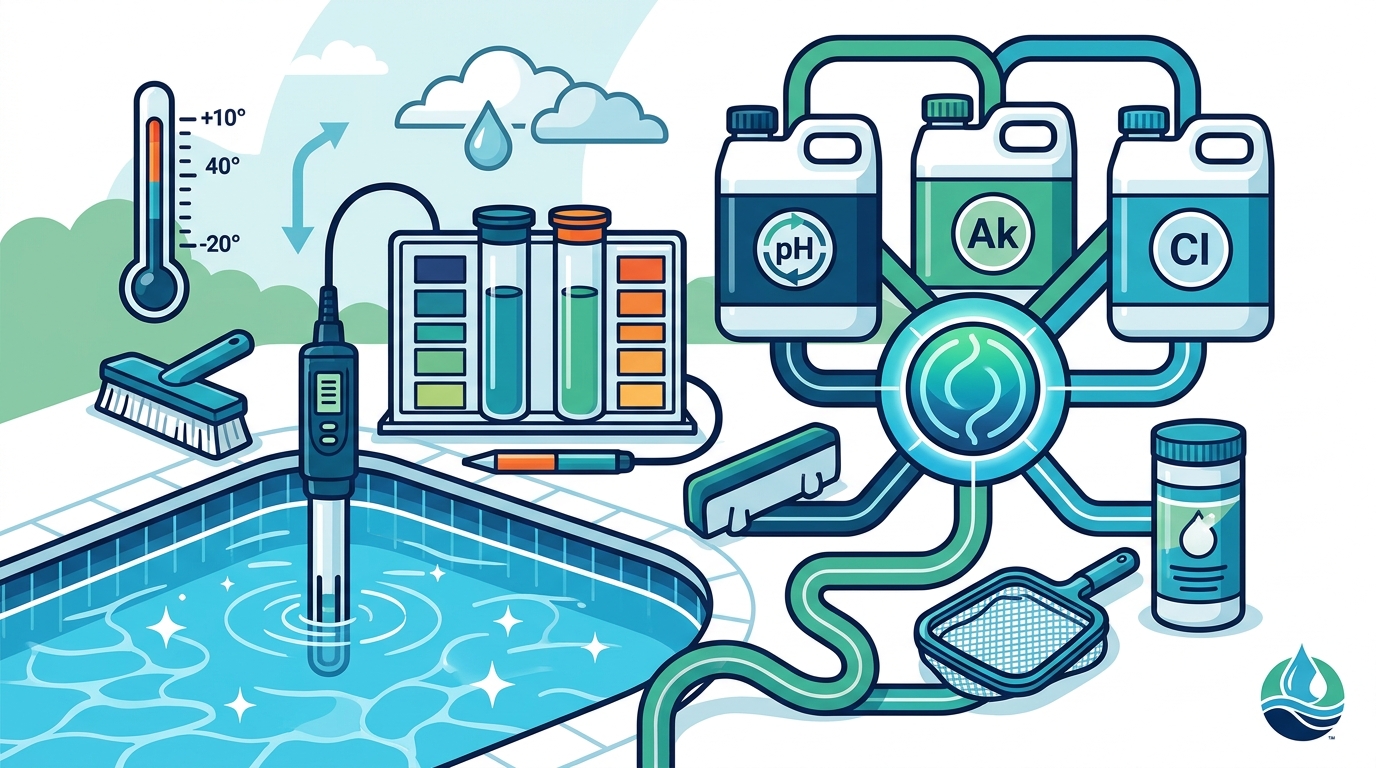
True water balance is not about chasing individual numbers; it is about maintaining chemical stability. When chlorine, pH, alkalinity, and calcium hardness are working together, the pool becomes self-regulating to a degree. Chlorine sanitizes faster, less chlorine is required, and combined chlorine remains low. This stability reduces the stress on your pool equipment and improves water clarity. The goal is to create an environment where the water is not just clean, but chemically stable. This approach requires a deeper understanding of how these variables interact, but it pays off in reduced maintenance effort and better long-term results.
Pool Partners LLC uses this equilibrium approach in all of its maintenance services. Our technicians do not just test and adjust; they analyze the entire chemical profile to identify underlying imbalances. This proactive method prevents the common issues that arise from reactive maintenance. By focusing on stability rather than just immediate corrections, we help our clients enjoy a pool that is consistently clean, clear, and safe. This is the difference between managing a pool and truly maintaining it.
Key Takeaways
- pH determines chlorine efficiency; a high pH renders a significant portion of your chlorine ineffective.
- Alkalinity acts as a buffer for pH; stabilize alkalinity before adjusting pH for lasting results.
- Seasonal changes in Baton Rouge require proactive adjustments to prevent algae and scale.
- Calcium hardness must be balanced to prevent both corrosion and scale formation.
- Water balance is a system of equilibrium, not a set of isolated numbers.
- Regular professional monitoring helps identify subtle imbalances before they become major problems.
Frequently Asked Questions
Why does my pool water turn cloudy even when chlorine levels are normal?
Cloudy water often indicates a pH imbalance or high alkalinity. If the pH is too high, chlorine becomes less effective, allowing fine particles to remain suspended. Adjusting the pH to the optimal range usually resolves this issue.
How often should I test my pool water chemistry?
For a residential pool, testing at least twice a week is recommended. During periods of heavy use or extreme weather, daily testing may be necessary to maintain stability.
What is the ideal pH range for a pool?
The ideal pH range is between 7.2 and 7.6. This range maximizes chlorine efficiency while minimizing irritation to swimmers' eyes and skin.
Can I balance my pool water myself?
Yes, with the right tools and knowledge. However, professional services like those offered by Pool Partners LLC can provide a more comprehensive analysis and prevent long-term issues.
How does temperature affect pool chemistry?
Higher temperatures accelerate chemical reactions and algae growth, requiring more frequent monitoring. Cooler temperatures slow these processes but can still lead to scale if calcium hardness is high.
What is the role of cyanuric acid in pool water?
Cyanuric acid stabilizes chlorine by protecting it from UV degradation. However, high levels can reduce chlorine effectiveness, so it must be kept within a specific range.
Maintain Your Pool's Health with Pool Partners LLC
Achieving and maintaining year-round water balance is a continuous process that requires attention to detail and a deep understanding of chemical interactions. By focusing on the equilibrium between pH, alkalinity, and calcium hardness, you can prevent the common issues that plague pool owners in Baton Rouge. Pool Partners LLC is dedicated to helping you navigate these complexities with professional expertise and reliable service. Our team provides comprehensive chemical balancing services that go beyond simple testing to address the root causes of imbalance. We also offer pool maintenance that includes regular equipment inspections to ensure your entire system is functioning optimally. If you are struggling with cloudy water, algae, or equipment issues, our pool cleaning services can restore your pool to its former glory. For those facing more severe problems, our green to clean services provide a rapid solution to algae infestations. We also specialize in filter cleaning and replacement to ensure your filtration system is working at peak efficiency. To discuss your pool's specific needs, today for a personalized assessment.