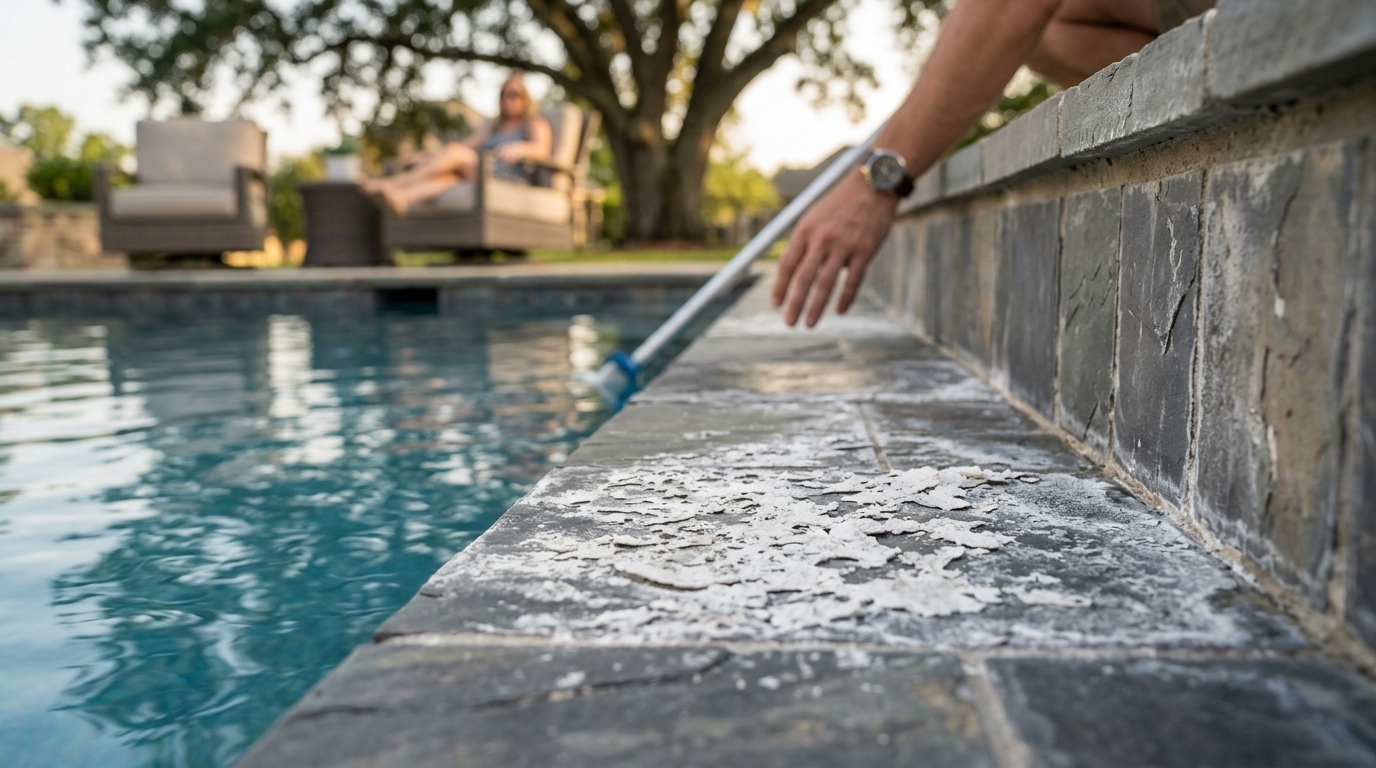
White buildup on pool tile is primarily caused by calcium scale, which forms when water chemistry is imbalanced. This mineral deposit occurs when calcium hardness and pH levels are too high, leading to precipitation on surfaces. Preventing it requires consistent chemical balancing and regular maintenance. Pool Partners LLC specializes in restoring tile surfaces in Baton Rouge by addressing the root causes of scaling.
The Chemistry Behind Calcium Scale Formation
Calcium scale is a hard, white mineral deposit that forms when water is supersaturated with calcium carbonate. This process is driven by three key factors: calcium hardness, pH, and total alkalinity. When these levels exceed recommended ranges, calcium ions bond with carbonate ions to create solid scale. Understanding this chemistry is the first step in prevention.
Why pH Matters Most
pH is the most critical factor in scale formation. When pH rises above 7.8, water becomes more aggressive toward calcium precipitation. Even if calcium hardness is within normal limits, a high pH can trigger scaling. Maintaining pH between 7.2 and 7.6 helps keep calcium in solution rather than on your tile.
The Role of Alkalinity
Total alkalinity acts as a buffer for pH. If alkalinity is too high, it makes pH harder to control, leading to fluctuations that promote scale. Low alkalinity, conversely, can cause pH to swing wildly, also contributing to surface damage. Stable alkalinity between 80 and 120 ppm provides the best protection against white buildup.
Identifying Scale Versus Other White Deposits
Not all white deposits are calcium scale. Some may be efflorescence, which is a salt residue that appears after water evaporation. Others could be plaster dust or poor surface finish from new construction. Distinguishing between these types ensures you use the correct cleaning method. Misidentifying the deposit can lead to ineffective treatments or surface damage.
How to Test for Scale
A simple test involves applying a small amount of muriatic acid to the white area. If the deposit fizzes and dissolves, it is likely calcium scale. If it remains unchanged, it may be a different type of mineral or surface defect. This test helps determine whether chemical adjustment or physical cleaning is needed.
Visual Cues for Homeowners
Scale typically appears as a rough, chalky layer on tile, especially near the waterline. It often feels gritty to the touch. Efflorescence, by contrast, is usually powdery and can be wiped away easily. Observing these visual and tactile differences helps homeowners identify the problem before it spreads.
Preventive Maintenance Strategies
Preventing white buildup is far easier than removing it. Consistent monitoring of water chemistry is the most effective strategy. Regular testing and adjustment keep calcium in solution and prevent precipitation. This proactive approach saves time, money, and effort in the long run.
Establishing a Testing Routine
Test your pool water at least twice a week during heavy use periods. Use a reliable liquid test kit or digital meter for accuracy. Record your results to identify trends over time. This data helps you anticipate chemical needs before problems arise.
Adjusting Calcium Hardness
If calcium hardness is above 300 ppm, consider diluting the pool or using a calcium reducer. If it is below 200 ppm, add calcium chloride to prevent corrosive water. Maintaining calcium hardness between 200 and 400 ppm provides the best balance for scale prevention.
Using Scale Inhibitors
Scale inhibitors are chemicals that prevent calcium from bonding to surfaces. They work by coating tile and equipment with a protective layer. Use these products according to manufacturer instructions and in conjunction with proper chemical balancing. They are a useful tool but not a substitute for good water chemistry.
Professional Cleaning and Restoration
When scale has already formed, professional cleaning is often necessary. Pool Partners LLC offers specialized tile and surface cleaning services in Baton Rouge. Our technicians use advanced techniques to safely remove scale without damaging the underlying surface. This service restores the aesthetic appeal of your pool and prevents further buildup.
The Cleaning Process
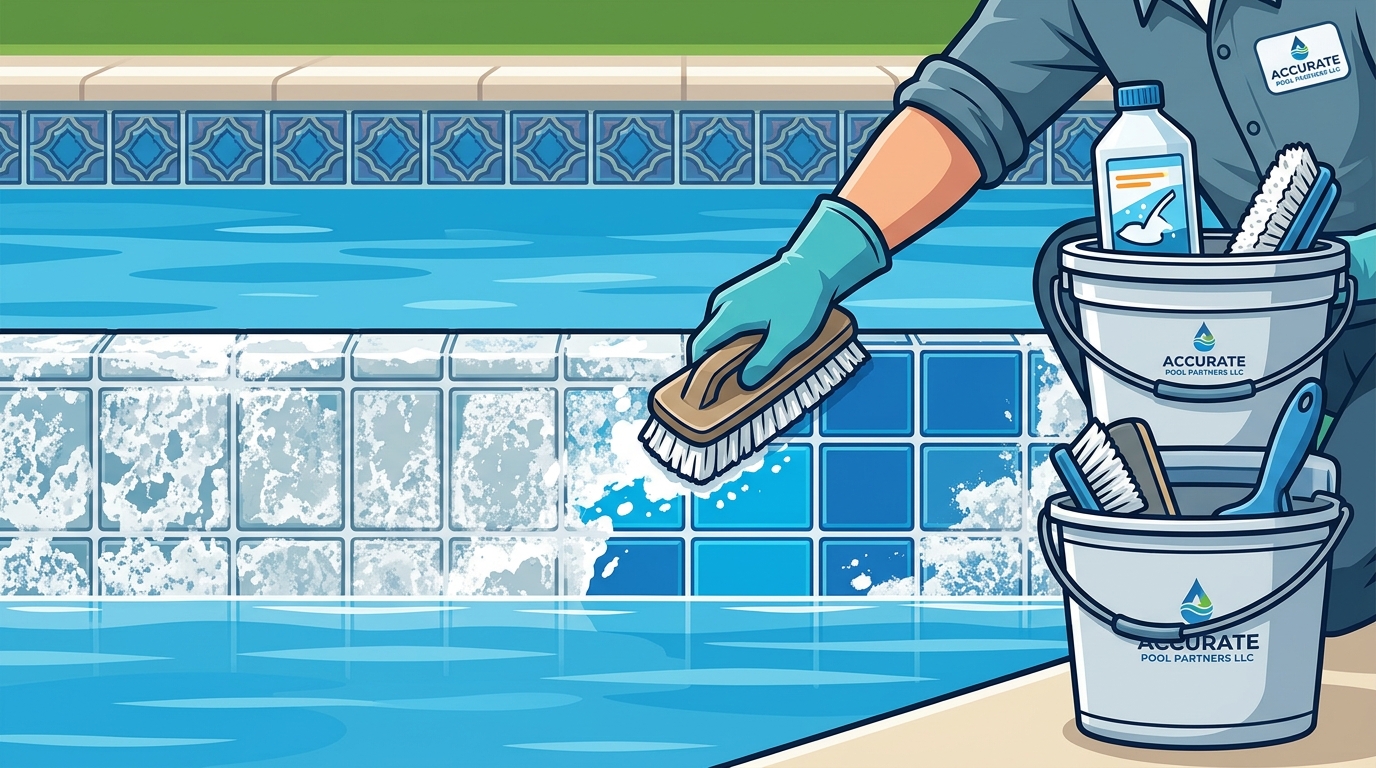
Our process begins with a thorough inspection to assess the extent of the buildup. We then apply specialized cleaning solutions to dissolve the scale. Stubborn areas are brushed and scrubbed to ensure complete removal. Finally, we apply protective treatments to help prevent future staining.
Why DIY Can Be Risky
Attempting to remove scale with harsh acids or abrasive tools can damage pool surfaces. This can lead to etching, discoloration, or even structural issues. Professional cleaning uses calibrated solutions and techniques that are safe for your specific pool materials. Trusting experts ensures a safe and effective result.
Long-Term Protection for Your Investment
A pool is a significant investment, and protecting its surfaces is essential. Regular maintenance not only prevents scale but also extends the life of your pool equipment. Balanced water chemistry reduces wear on pumps, filters, and heaters. This comprehensive approach ensures your pool remains a safe and enjoyable space for years to come.
Seasonal Considerations
Water chemistry can shift with seasonal changes in temperature and usage. In warmer months, higher evaporation rates can concentrate minerals, increasing scale risk. In cooler months, lower temperatures can affect chemical reactions. Adjusting your maintenance routine seasonally helps maintain consistent water quality.
Monitoring Equipment Health
Scale buildup can also affect pool equipment, reducing efficiency and increasing energy costs. Regular inspection of filters, pumps, and heaters helps identify early signs of scaling. Addressing these issues promptly prevents costly repairs and maintains optimal pool performance.
Key Takeaways
- White buildup on pool tile is usually calcium scale caused by imbalanced water chemistry.
- pH above 7.8 and high alkalinity are the primary drivers of scale formation.
- Consistent testing and adjustment of calcium hardness, pH, and alkalinity prevent scale.
- Scale inhibitors can provide additional protection but are not a replacement for proper balancing.
- Professional cleaning is the safest way to remove existing scale without damaging surfaces.
- Regular maintenance extends the life of pool equipment and protects your investment.
Frequently Asked Questions
What is the fastest way to remove white scale from pool tile?
The fastest and safest method is professional cleaning using specialized acid solutions. DIY methods can be slow and risk damaging the surface. Pool Partners LLC offers efficient scale removal services in Baton Rouge.
Can I use vinegar to remove pool scale?
Vinegar is too weak to effectively remove hardened calcium scale. It may work on very light deposits but is not recommended for significant buildup. Use proper pool chemicals or hire a professional for best results.
How often should I test my pool water for scale prevention?
Test your water at least twice a week during peak swimming season. Increase testing frequency if you notice changes in water clarity or surface appearance. Consistent monitoring is key to preventing scale.
Does scale buildup affect pool equipment?
Yes, scale can accumulate on pumps, filters, and heaters, reducing their efficiency. This can lead to higher energy bills and premature equipment failure. Regular maintenance helps prevent these issues.
Is it safe to use muriatic acid on pool tile?
Muriatic acid can be used to remove scale, but it must be diluted and applied carefully. Improper use can etch or damage the tile surface. Professional technicians are trained to use these chemicals safely.
How do I know if my pool has high calcium hardness?
Use a liquid test kit or digital meter to measure calcium hardness. Levels above 300 ppm are considered high and increase the risk of scale. Adjust levels as needed to maintain a safe range.
Can scale come back after professional cleaning?
Yes, scale can return if water chemistry is not properly balanced. Preventive maintenance is essential to keep scale from reforming. Regular testing and adjustment are the best long-term solutions.Where can I find professional pool tile cleaning in Baton Rouge?
Pool Partners LLC provides expert tile and surface cleaning services in Baton Rouge, LA. Our team uses advanced techniques to restore your pool's appearance and prevent future buildup. Contact us for a consultation.