
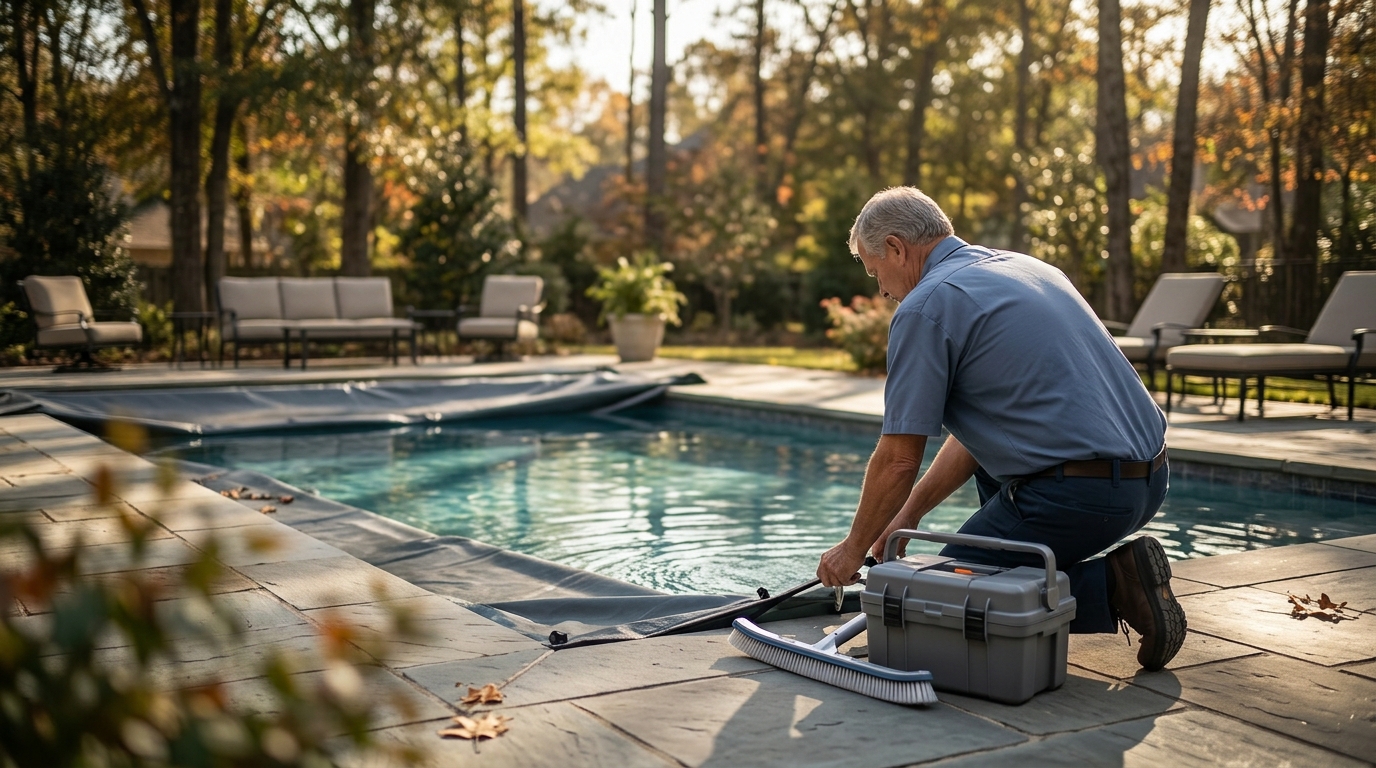
Closing your pool for the season involves a structured process of draining, cleaning, balancing chemicals, and securing the water surface. This preparation protects your equipment from freezing damage and prevents algae growth during the off-season. Pool Partners LLC in Baton Rouge, LA, guides homeowners through this critical transition to ensure your investment remains safe and ready for the next spring.
The Initial Assessment and Drainage
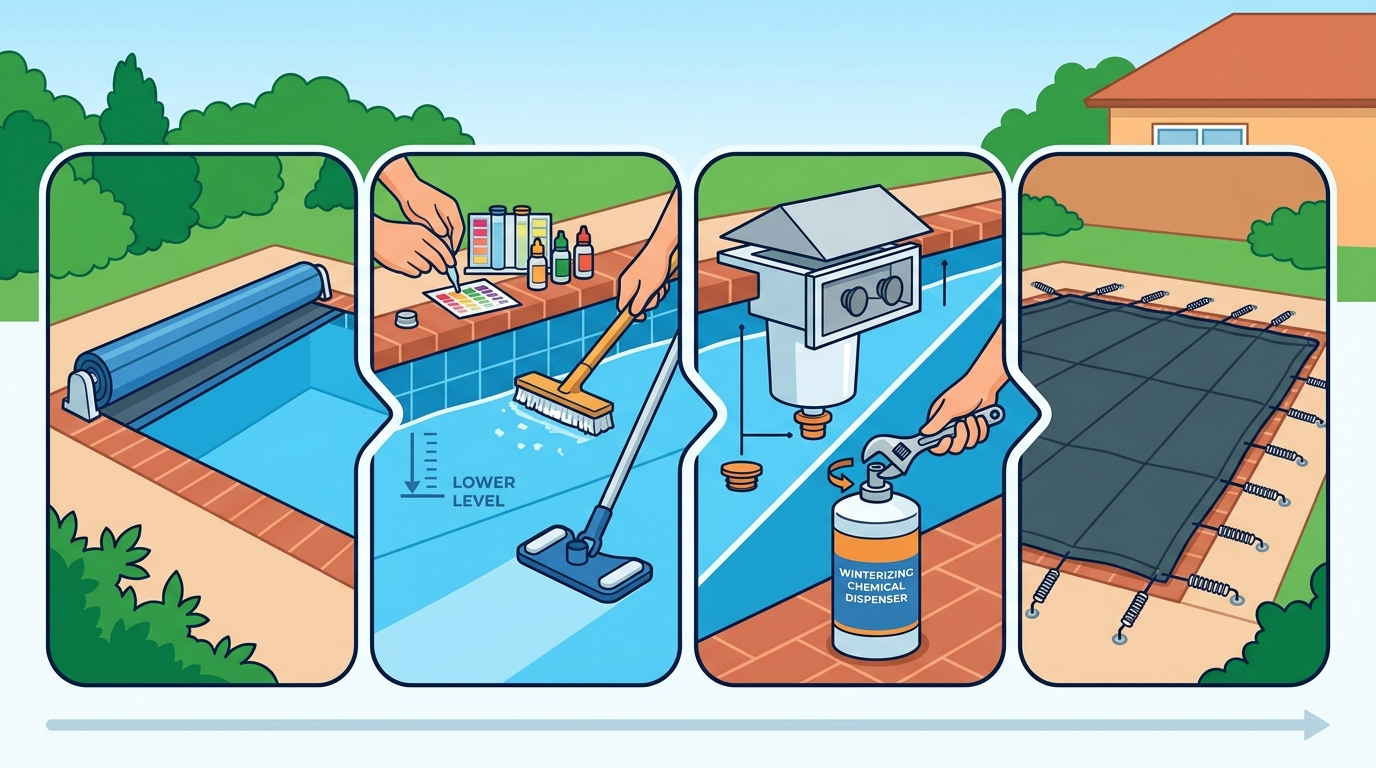
The first step in the closing process is a thorough inspection of the pool's current condition. Technicians assess the water level, checking for any immediate issues such as leaks or structural concerns. Pool closing is the process of preparing a swimming pool for inactivity by adjusting water levels and securing the system. In Baton Rouge, where temperatures can drop significantly, lowering the water level is essential to prevent freeze damage to the plumbing.
Technicians typically lower the water to just below the skimmer line. This specific level ensures that the skimmer and main drain lines are fully drained, preventing ice from forming inside the pipes. If water remains in these lines, it can expand when frozen, causing cracks that require expensive repairs. This step is critical for the longevity of your pool's infrastructure.
Deep Cleaning and Surface Preparation
Before the pool is covered, the water must be completely clear and the surfaces spotless. Any debris, leaves, or organic matter left in the pool will decompose over the winter, creating a breeding ground for bacteria and algae. Pool Partners LLC performs a deep clean, which includes vacuuming the floor and brushing the walls and steps. This ensures that no hidden contaminants remain to cause issues later.
Surface preparation is vital because algae spores can survive in small amounts of organic material. By removing all debris and scrubbing the surfaces, you eliminate the food source for these organisms. A clean pool at the start of the off-season is much easier to open in the spring. This proactive approach saves time and effort when you are ready to swim again.
Chemical Balancing and Winterization
Water chemistry plays a crucial role in keeping a closed pool safe. Pool chemical balancing is the adjustment of pH, alkalinity, and sanitizer levels to maintain water stability. When closing a pool, technicians add winterizing chemicals that are designed to protect the water and equipment during the cold months. These chemicals help prevent corrosion and scale buildup, which can occur when water sits stagnant for months.
The pH level is typically adjusted to a slightly higher range than during the swimming season. This helps to neutralize any acidic conditions that could damage the pool's surface or equipment. Additionally, a shock treatment may be applied to eliminate any remaining bacteria or algae. Proper chemical balancing ensures that the water remains clear and safe when you open the pool in the spring.
Equipment Protection and Cover Installation
Protecting the pool equipment is a key part of the closing process. Pumps, filters, and heaters must be drained and secured to prevent freeze damage. Pool equipment inspection is a detailed check of all mechanical components to ensure they are in good working order before being shut down. Technicians will drain the pump and filter, and may add antifreeze to the plumbing lines. This prevents the equipment from cracking due to ice expansion.
Once the equipment is secured, a winter cover is installed over the pool. The cover protects the water from debris, rain, and snow. It also helps to maintain the water level and prevents animals from entering the pool. A properly installed cover is essential for keeping the pool clean and safe during the off-season. This final step completes the closing process and ensures your pool is ready for the next season.
Key Takeaways
- Lower the water level to just below the skimmer line to prevent freeze damage.
- Perform a deep clean to remove all debris and organic matter before covering.
- Balance the water chemistry with winterizing chemicals to protect the pool surface.
- Drain and secure all equipment to prevent cracks from ice expansion.
- Install a winter cover to protect the water from debris and animals.
- Regular maintenance during the off-season can help prevent issues when opening.
Frequently Asked Questions
How long does it take to close a pool?
Closing a pool typically takes a few hours, depending on the size of the pool and the condition of the equipment. The process involves draining, cleaning, balancing chemicals, and installing the cover.
Do I need to drain the pool completely?
No, you do not need to drain the pool completely. You should lower the water level to just below the skimmer line to prevent freeze damage to the plumbing.
What chemicals should I use when closing my pool?
You should use winterizing chemicals that are designed to protect the water and equipment during the cold months. These chemicals help prevent corrosion and scale buildup.
How often should I check my pool during the winter?
You should check your pool periodically during the winter to ensure the cover is secure and the water level is appropriate. This helps to prevent any issues from developing.
Can I open my pool early in the spring?
Yes, you can open your pool early in the spring if the weather allows. However, it is best to wait until the risk of freezing has passed to avoid damage to the equipment.
What should I do if my pool freezes?
If your pool freezes, do not try to break the ice. Instead, contact a professional to safely thaw the ice and assess any potential damage to the equipment.
How do I know if my pool is ready to be closed?
Your pool is ready to be closed when the water is clear, the surfaces are clean, and the equipment is in good working order. A professional inspection can help ensure everything is prepared correctly.Do I need to remove the pool cover in the spring?
Yes, you need to remove the pool cover in the spring when you are ready to open the pool. This allows you to inspect the water and equipment for any issues that may have developed during the off-season.