
White buildup on pool tiles is a common issue for homeowners in Baton Rouge, often caused by mineral deposits, calcium scaling, or chemical imbalances. At Pool Partners LLC, we understand that restoring the aesthetic appeal of your pool is just as important as maintaining water safety. This guide outlines the most effective techniques for eliminating these stubborn stains, ensuring your pool looks pristine and inviting. By understanding the root causes and applying the right cleaning methods, you can protect your investment and extend the life of your pool surfaces.
1. Acid Washing for Calcium Scale
Acid washing is the most effective method for dissolving hard calcium scale. When water chemistry is unbalanced, calcium can precipitate out of the water and bond to tile surfaces, creating a white, chalky residue. This process involves applying a diluted acid solution, typically hydrochloric acid or muriatic acid, to the affected areas. It is crucial to dilute the acid properly and rinse it thoroughly to prevent damage to the tile finish or grout.
2. Mechanical Scrubbing with Stiff Brushes
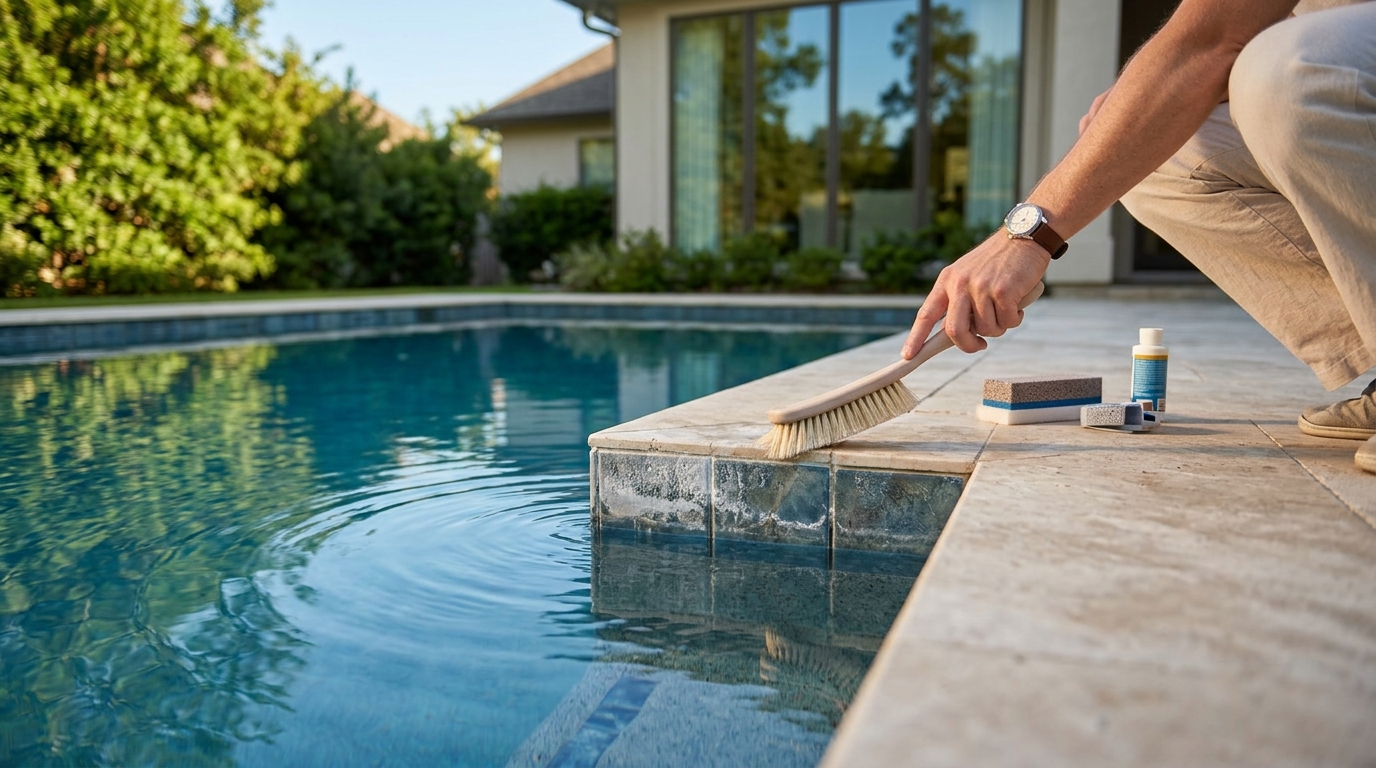
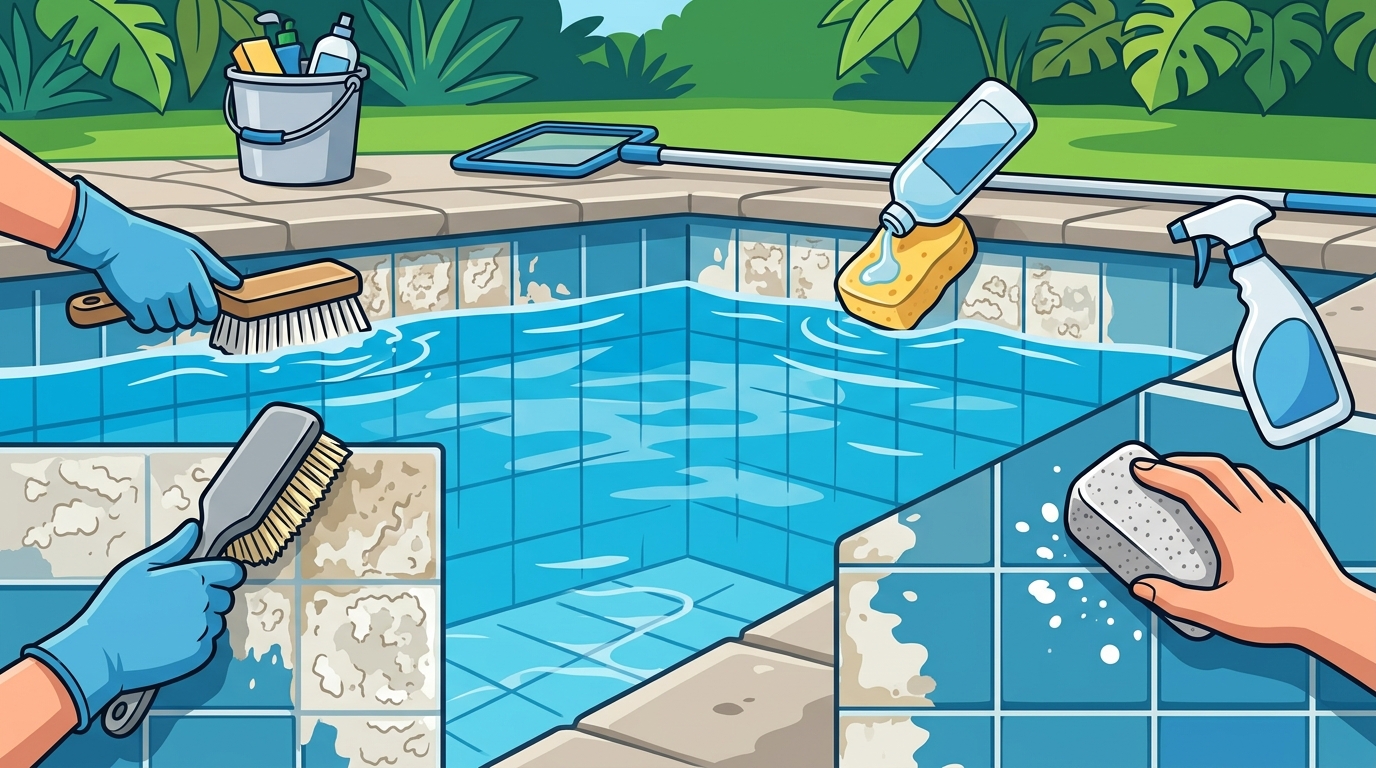
Physical agitation is essential for loosening loose mineral deposits before chemical treatment. Using a stiff-bristled brush or a dedicated pool tile scrubber helps break the bond between the buildup and the tile surface. This method is particularly useful for light to moderate buildup where the scale has not yet hardened completely. Always brush in a circular motion to avoid scratching the tile surface, and ensure the brush is clean to prevent introducing new debris into the water.
3. Commercial Tile Cleaners and Descalers
4. Pressure Washing with Low PSI Settings
Low-pressure water jets can blast away stubborn buildup without damaging the tile. While high-pressure washers can easily crack or chip pool tiles, a pressure washer set to a low PSI (under 1,500) with a wide nozzle can effectively remove thick layers of scale. This method is best used after chemical treatment to rinse away dissolved minerals. Keep the nozzle at least 12 inches away from the surface to prevent etching or discoloration of the tile.
5. Vinegar and Baking Soda Paste for Light Stains
A natural paste of vinegar and baking soda is a gentle option for light mineral stains. This combination creates a mild abrasive and acidic mixture that can dissolve light calcium deposits without the harshness of commercial acids. Apply the paste to the affected tiles, let it sit for 15 to 20 minutes, and then scrub gently with a soft brush. This method is ideal for maintenance cleaning or addressing small spots before they become severe.
6. Professional Tile Restoration Services
Professional services provide advanced tools and expertise for severe or widespread buildup. When white buildup covers large areas or has penetrated the tile surface, DIY methods may be insufficient. Professional technicians use industrial-grade equipment and specialized chemicals to restore the tile to its original condition. They can also identify underlying issues, such as poor water circulation or chemical imbalances, that are causing the buildup to return. For homeowners in Baton Rouge, hiring a local expert ensures the job is done safely and effectively.
7. Preventative Chemical Balancing
Preventing buildup is easier and cheaper than removing it once it has formed. Maintaining proper water chemistry, particularly calcium hardness and pH levels, is the most effective long-term strategy. Regular testing and adjustment of these parameters prevent minerals from precipitating out of the water and bonding to tiles. Consistent monitoring ensures that the water remains balanced, reducing the frequency of deep cleaning sessions and protecting the integrity of your pool surfaces.
Choosing the Right Method
Selecting the best method depends on the severity of the buildup and your comfort level with chemical handling. For light stains, natural pastes or commercial cleaners are sufficient. For heavy scale, acid washing or professional services are recommended. Always prioritize safety and proper dilution when using chemicals, and consider consulting a local expert for persistent issues.
Frequently Asked Questions
Is white buildup on pool tiles dangerous?
White buildup itself is not toxic, but it can harbor bacteria and algae if not cleaned properly. It also indicates an imbalance in water chemistry, which can lead to equipment corrosion and skin irritation if left unaddressed.
Can I use household bleach to remove white scale?
No, bleach is not effective against mineral deposits like calcium scale. It is designed to kill organic matter like algae and bacteria. Using bleach on scale will not remove it and may waste time and resources.
How often should I clean white buildup from my pool tiles?
Regular maintenance, such as brushing tiles weekly, can prevent buildup from becoming severe. Deep cleaning with descalers or acid washing should be done as needed, typically once or twice a year, depending on water chemistry and usage.
Will acid washing damage my pool tiles?
If done correctly, acid washing should not damage properly sealed or glazed tiles. However, improper dilution or prolonged exposure can etch the surface. Always follow manufacturer guidelines and rinse thoroughly after application.
How can I prevent white buildup from returning?
Maintain balanced water chemistry by regularly testing and adjusting calcium hardness, pH, and alkalinity levels. Consistent filtration and circulation also help prevent minerals from settling on tile surfaces.