
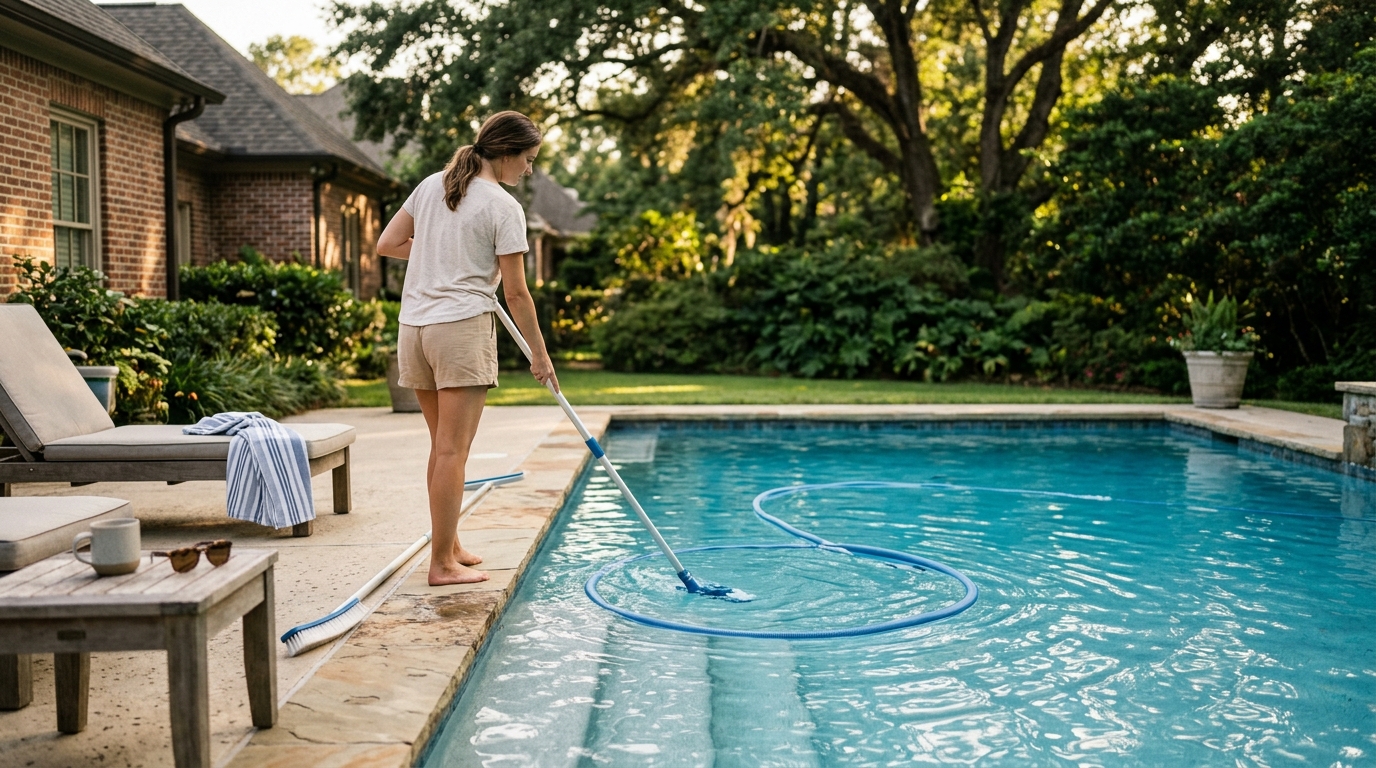
Consistent vacuuming and brushing are the backbone of a healthy swimming environment. These two tasks remove physical debris and prevent biological buildup that chemical balancing alone cannot fix. Pool Partners LLC provides pool cleaning services in Baton Rouge, LA, and surrounding areas.
1. Brush the Walls and Steps Before Vacuuming
Always brush before you vacuum to dislodge trapped particles. Algae and dirt cling tightly to pool surfaces, especially on steps and in corners. Brushing first breaks the bond between the debris and the tile, allowing the vacuum to pick it up effectively. Skipping this step often results in a vacuumed pool that still looks dirty because the debris was never actually removed from the walls.
2. Use the Right Brush for Your Surface Type
Match your brush to your pool material to avoid damage. Vinyl liner pools require soft-bristle brushes to prevent tearing, while plaster and pebble finishes can handle medium or stiff bristles. Using a stiff brush on a vinyl liner can cause permanent damage, whereas a soft brush may be ineffective on rough plaster. Selecting the appropriate tool ensures you clean thoroughly without risking costly repairs.
3. Vacuum in a Systematic Pattern
Move in a slow, overlapping grid to ensure full coverage. Rushing through the floor often leaves streaks of debris behind. A systematic approach, such as moving in straight lines with slight overlaps, guarantees that every inch of the pool floor is cleaned. This method also helps you identify problem areas, such as spots where debris tends to accumulate due to poor water circulation.
4. Focus on Low Circulation Zones
Pay extra attention to corners and areas behind ladders. Water flow is weakest in corners and behind fixtures, making these spots prime targets for debris and algae. These areas often require manual vacuuming even if the rest of the pool is clean. Regularly checking these dead zones prevents small issues from turning into large, stubborn stains or algae blooms.
5. Clean Your Filter After Vacuuming
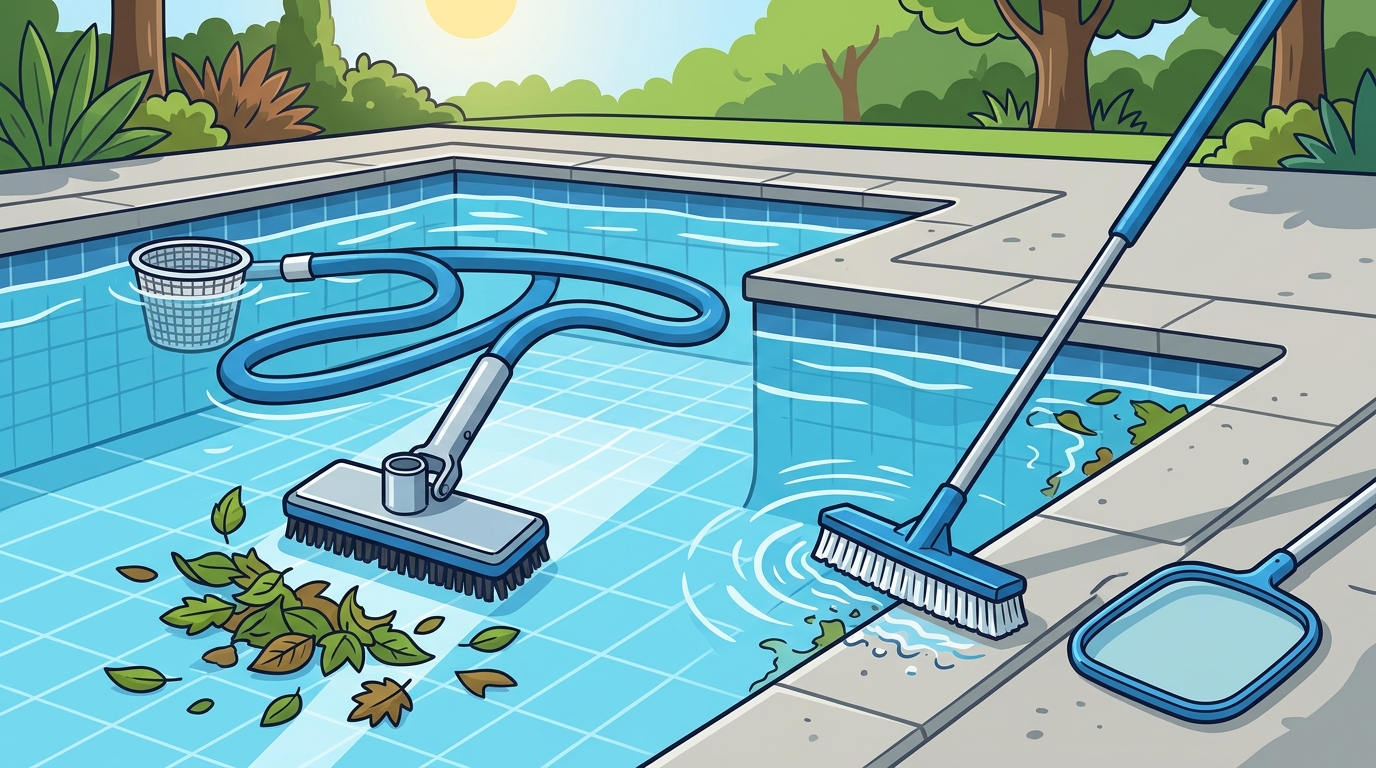
Backwash or clean your filter immediately after a heavy vacuum session. Vacuuming sends a large amount of debris into your filtration system. If you do not clean the filter afterward, it can become clogged, reducing water flow and clarity. Maintaining a clean filter ensures that the water you are circulating is actually being filtered effectively, completing the cleaning cycle.
6. Adjust Your Vacuum Head for Different Surfaces
Use the correct vacuum head for floors versus walls. Most vacuum heads are designed for the pool floor and may not adhere well to vertical surfaces. For walls, a specialized wall vacuum or a manual brush is often more effective. Using the right tool for each surface ensures that you are not wasting time or missing spots that require different techniques.
7. Keep a Log of Your Cleaning Routine
Track your weekly tasks to maintain consistency. A simple log helps you remember which areas need extra attention and when you last performed a deep clean. Consistency is key to preventing algae and debris buildup. By tracking your routine, you can identify patterns in your pool's cleanliness and adjust your schedule as needed to keep the water pristine.
Choosing the Right Approach
Selecting the right combination of tools and techniques depends on your specific pool type and condition. For most residential pools in Baton Rouge, a consistent routine of brushing followed by systematic vacuuming is the most effective strategy. If you are unsure about the best tools for your pool, consulting a professional can help you avoid common mistakes.
Frequently Asked Questions
How often should I brush my pool?
You should brush your pool at least once a week, or more frequently if you notice algae or debris buildup. In warmer climates like Baton Rouge, brushing twice a week may be necessary to prevent algae from taking hold.
Can I vacuum my pool without brushing first?
While you can vacuum without brushing, it is less effective. Brushing dislodges debris from the walls and steps, which the vacuum can then pick up. Skipping brushing often leaves debris behind on vertical surfaces.
What type of brush should I use for a vinyl liner pool?
Use a soft-bristle brush for vinyl liner pools to avoid damaging the liner. Stiff brushes can tear or scratch the vinyl, leading to leaks and costly repairs.
How do I know if my filter needs cleaning after vacuuming?
Check your filter pressure gauge. If the pressure is significantly higher than the clean baseline, it is time to backwash or clean the filter. A clogged filter reduces water flow and clarity.
Is it better to vacuum with the filter or waste setting?
Use the filter setting for routine cleaning to keep the water clear. Use the waste setting only when removing large amounts of debris, such as leaves, to prevent clogging the filter.
How long should a weekly vacuuming session take?
A thorough vacuuming session typically takes 20 to 30 minutes, depending on the size of the pool. Brushing may add another 10 to 15 minutes. Consistency is more important than speed.