Step-by-Step Process for Restoring a Green Pool to Crystal Clear Water
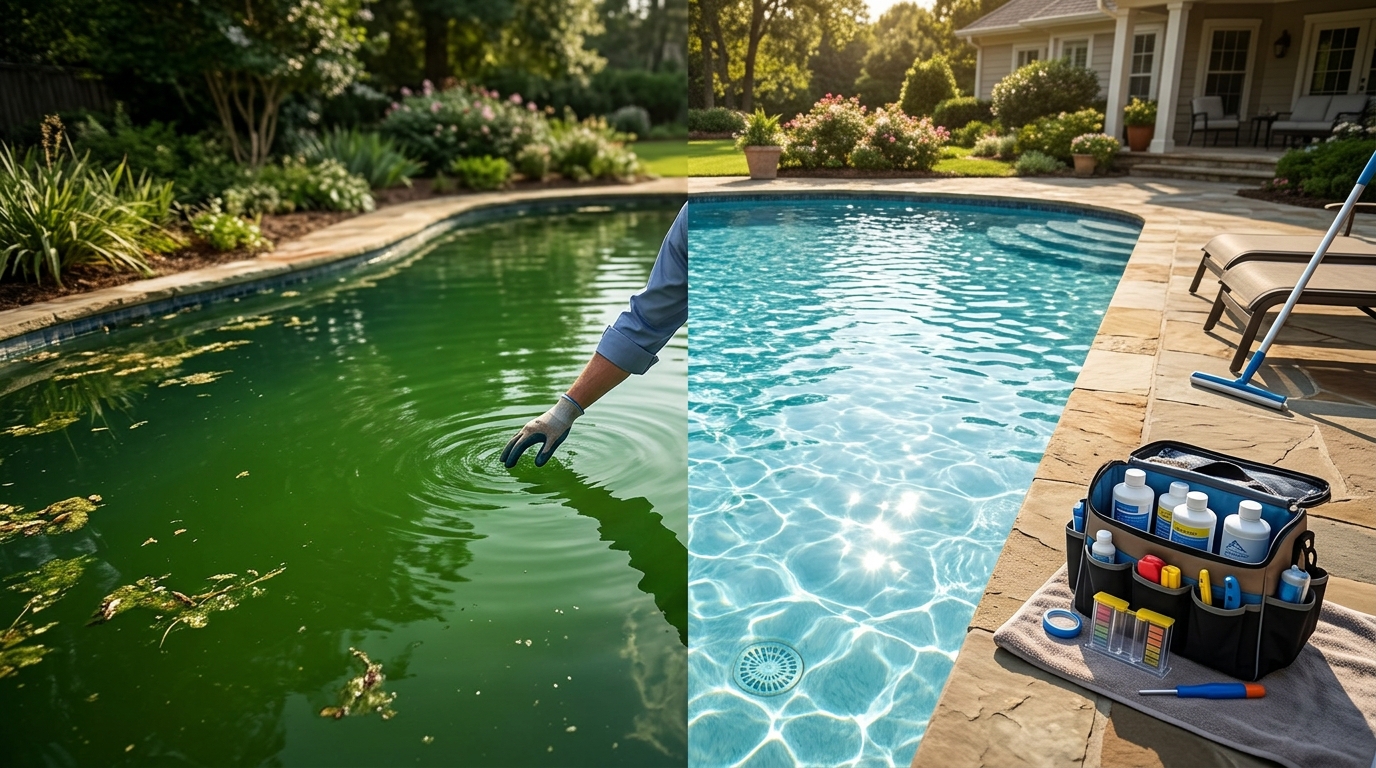
Restoring a green pool to crystal clear water requires a systematic approach involving shock treatment, filtration, and chemical balancing. Pool Partners LLC in Baton Rouge, LA, specializes in this recovery process, ensuring your pool is safe and inviting again. This guide outlines the precise steps professionals use to eliminate algae and restore water clarity efficiently.
1. Assessing the Severity of Algae Growth
Before applying any chemicals, you must determine the type and extent of the algae infestation. Algae is a microscopic organism that thrives in warm, stagnant water with imbalanced chemistry. Identifying whether you have yellow, green, or black algae dictates the specific treatment protocol. Yellow algae is the most common and easiest to treat, while black algae requires aggressive scraping and specialized chemicals.
Pool Partners LLC begins every green pool rescue with a thorough inspection. We check for visible algae blooms, test the water chemistry, and inspect the filtration system for clogs. This assessment phase is critical because applying the wrong chemicals can waste time and money. For example, treating black algae with standard chlorine shock will not work; it requires a specific algaecide and physical removal.
2. Cleaning and Preparing the Filtration System
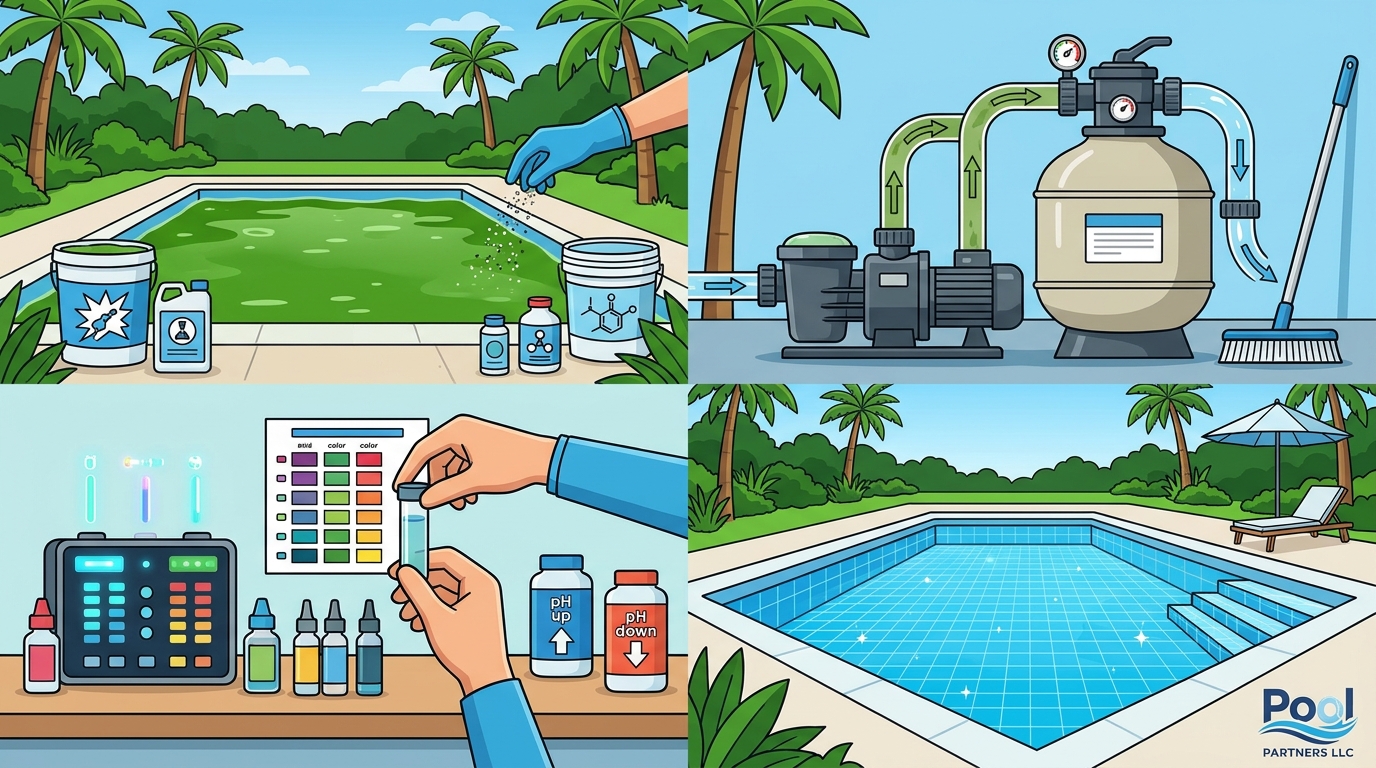
A clogged filter is the primary reason pools turn green. When the filter cannot process water effectively, algae spores remain suspended in the pool. Cleaning the filter is the first physical step in the recovery process. For sand filters, this involves backwashing. For cartridge filters, it requires removing and washing the cartridges with a garden hose.
Pool Partners LLC provides comprehensive filter cleaning and replacement services to ensure optimal flow rates. If the filter is too old or damaged, replacing it is often more cost-effective than repeated cleaning. A healthy filter system is the backbone of clear water. Without proper filtration, chemical treatments will have limited success because the water cannot be circulated effectively.
3. Shocking the Pool to Kill Algae
Once the filter is clean, the next step is to shock the pool. Pool shocking is the process of adding a high dose of chlorine to kill algae and bacteria. This step requires precise calculation based on the pool's volume and current chlorine levels. You must raise the chlorine level to 10-20 parts per million (ppm) to effectively kill algae.
At Pool Partners LLC, we use professional-grade shock treatments tailored to your specific pool size and algae type. We monitor the chlorine levels closely during this phase. It is important to keep the pool running continuously during the shock treatment. The water will likely remain cloudy or green for 24 to 48 hours as the dead algae breaks down. This is a normal part of the process and does not indicate failure.
4. Vacuuming and Removing Dead Algae
After the shock treatment, dead algae will settle on the pool floor. You must vacuum this debris to waste, not to the filter. Vacuuming to the filter will clog the system and release dead algae back into the water. This step is labor-intensive but essential for clear water. Use a pool vacuum with a hose connected to the skimmer or a dedicated vacuum port.
Pool Partners LLC handles this tedious task as part of our pool cleaning services. We ensure all dead algae is removed from the floor, walls, and steps. Missing even small patches of algae can lead to a regrowth cycle. Thorough vacuuming prevents the need for repeated shock treatments. This step often takes several hours depending on the severity of the infestation.
5. Balancing Water Chemistry for Long-Term Clarity
With the algae removed, the final step is to balance the water chemistry. Algae growth often indicates underlying issues with pH, alkalinity, or calcium hardness. You must test and adjust these levels to prevent future outbreaks. Ideal pH levels are between 7.2 and 7.6. Total alkalinity should be between 80 and 120 ppm. Calcium hardness should be between 200 and 400 ppm.
Pool Partners LLC offers chemical balancing services to ensure your water is stable and safe. We use precise testing kits to measure these parameters and add the correct chemicals. Balanced water is less prone to algae growth and is gentler on swimmers and pool equipment. This step transforms the pool from a recovery state to a maintenance state.
Key Takeaways
- Assess the algae type before treating; black algae requires different chemicals than yellow algae.
- Clean or replace the filter before shocking to ensure effective circulation.
- Shock the pool with high-dose chlorine to kill algae, keeping the filter running continuously.
- Vacuum dead algae to waste to prevent clogging the filter and regrowth.
- Balance pH, alkalinity, and calcium hardness to prevent future algae outbreaks.
- Regular maintenance is the best defense against green pools.
Frequently Asked Questions
How long does it take to clear a green pool?
It typically takes 3 to 7 days to fully clear a green pool. The timeline depends on the severity of the algae bloom and the condition of the filtration system. Professional services can often accelerate this process by using industrial-grade equipment and chemicals.
Can I use regular pool chlorine to shock a green pool?
Yes, but you need a much higher dose than for routine maintenance. Standard chlorine levels are 1-3 ppm, but shocking requires 10-20 ppm. Using the wrong dose may kill some algae but not all, leading to regrowth.
Why did my pool turn green in the first place?
Pools turn green due to a combination of warm temperatures, stagnant water, and imbalanced chemistry. Algae spores are always present in the environment. When conditions are right, they multiply rapidly. Regular maintenance prevents these conditions from developing.
Do I need to drain the pool to fix a green pool?
No, draining the pool is rarely necessary for algae removal. Chemical treatment and filtration are sufficient in most cases. Draining is only required if there is significant tile damage or a structural issue, which is unrelated to algae.
How can I prevent my pool from turning green again?
Prevention involves regular cleaning, consistent chemical balancing, and proper filtration. Weekly service by a professional provider like Pool Partners LLC ensures that minor issues are addressed before they become major problems. Consistency is key to maintaining clear water.
Conclusion
Restoring a green pool to crystal clear water is a multi-step process that requires patience and precision. By assessing the algae, cleaning the filter, shocking the water, vacuuming debris, and balancing chemistry, you can return your pool to a safe and enjoyable state. Pool Partners LLC in Baton Rouge, LA, provides expert green pool rescue services to help you achieve this goal. Contact us today for a free quote and let our team handle the heavy lifting.