
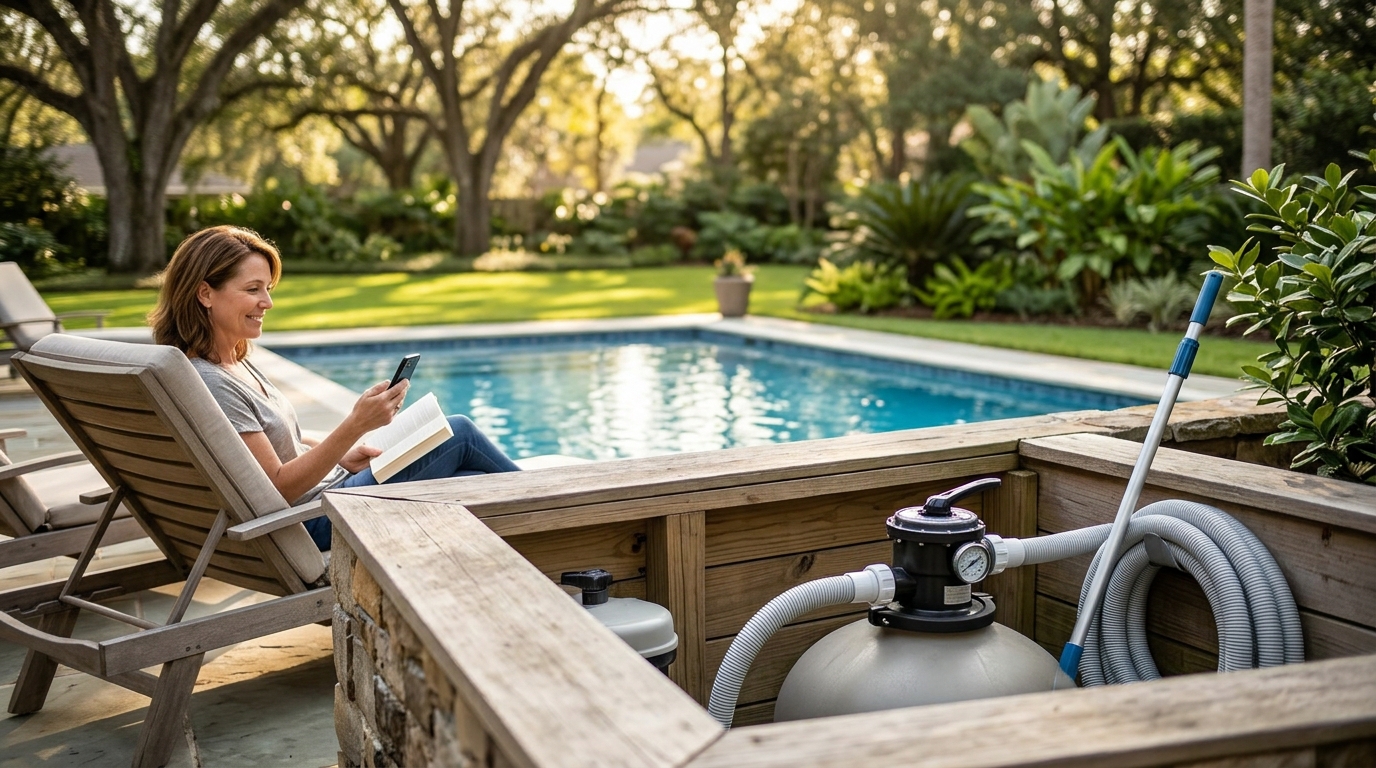
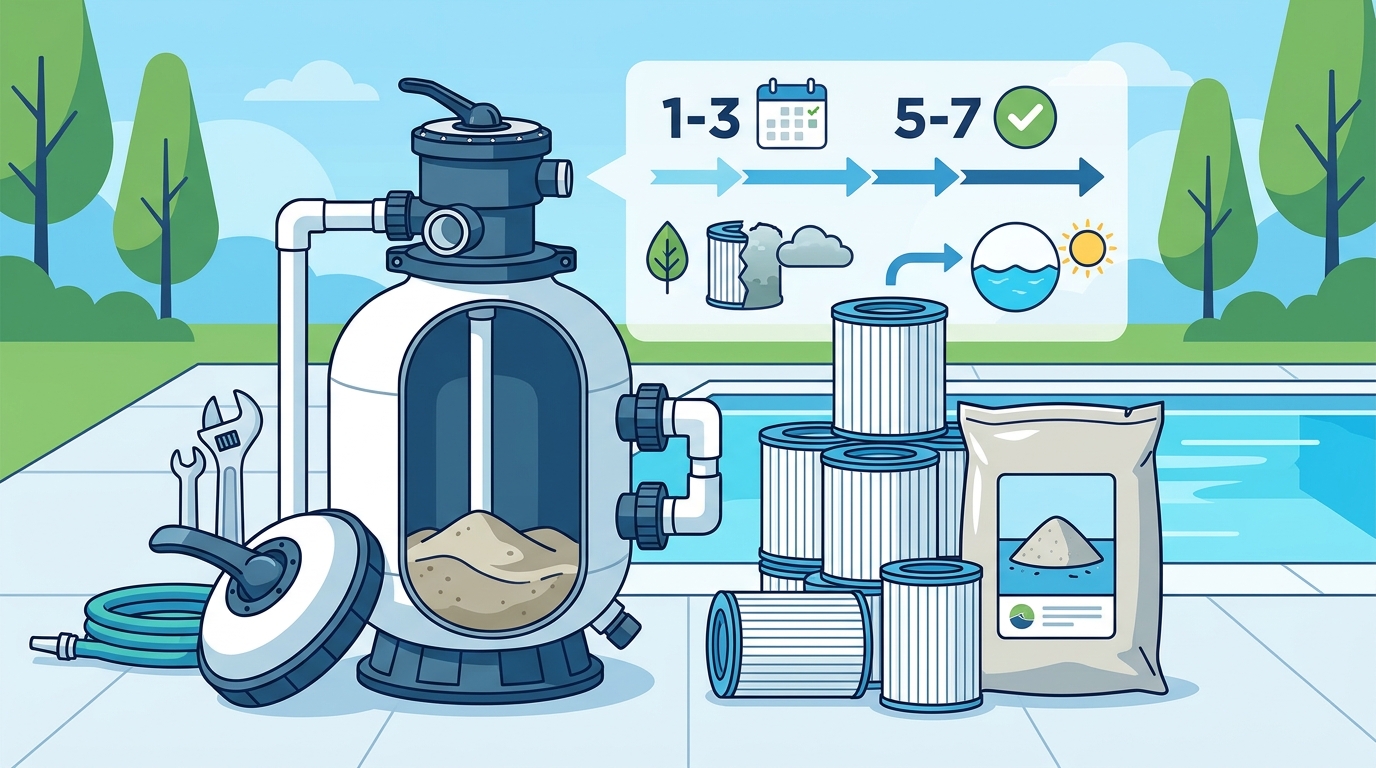
Replace your pool filter when it no longer maintains water clarity despite regular cleaning, or when it is past its manufacturer's recommended lifespan. For most residential pools, this means replacing cartridge filters every 1 to 3 years and sand or DE filters every 5 to 7 years. Pool Partners LLC in Baton Rouge, LA, helps homeowners identify these signs and manage the replacement process efficiently.
Signs Your Pool Filter Needs Replacement
Pool filter degradation is a gradual process that often goes unnoticed until water quality suffers. The most obvious sign is persistent cloudiness or poor circulation even after you have cleaned the filter elements. If you are backwashing a sand filter or rinsing a cartridge filter and the water remains cloudy, the filter media itself may be compromised.
Another critical indicator is a significant drop in water flow. A clogged or damaged filter restricts the movement of water through the system, causing the pump to work harder and potentially leading to equipment failure. Homeowners should monitor their pool's flow rate regularly. If the flow has dropped by more than 20% from its baseline, it is time to investigate the filter.
Physical damage is another clear signal. For cartridge filters, look for tears, holes, or a warped frame. For sand filters, check for cracks in the tank or a broken laterite. These structural issues cannot be fixed by cleaning and require a full replacement to ensure safe and effective filtration.
Understanding Filter Lifespans by Type
Pool filter is a component that has a finite lifespan depending on its construction and the local water conditions. In Baton Rouge, the warm climate and high usage rates can accelerate wear. Understanding the expected life of your specific filter type helps in planning maintenance budgets.
Cartridge filters typically last between 1 and 3 years. The pleated media can degrade over time, losing its ability to trap fine particles. Even with regular rinsing, the fibers break down, allowing debris to pass through. Sand filters generally last longer, often 5 to 7 years. The sand media itself can last up to 10 years, but the tank and internal components may fail earlier due to pressure and chemical exposure.
Diatomaceous Earth (DE) filters are known for their superior filtration but have a shorter lifespan for the grid elements, usually 3 to 5 years. The grids can crack or corrode, which is a safety hazard because broken glass shards can enter the pool. Regular inspection of DE grids is essential to prevent this issue.
The Filter Replacement Process
Replacing a pool filter is a technical task that requires specific tools and knowledge. The process involves draining the system, disconnecting plumbing, and installing the new unit. Pool Partners LLC technicians handle this process to ensure proper sealing and alignment, preventing leaks that can damage the pool deck or equipment pad.
The first step is isolating the filter from the pump and plumbing. Technicians must relieve pressure in the system before opening any connections. For sand filters, this involves draining the tank completely. For cartridge and DE filters, the housing is opened to remove the old media. The new filter is then installed, and all gaskets and seals are replaced to ensure a watertight connection.
After installation, the system is primed to remove air from the lines. The pump is then started, and the filter is tested for leaks and proper flow. This final check ensures that the new filter is operating at its full capacity and that the pool water is being filtered correctly.
Why Professional Installation Matters
Additionally, professional services include a thorough inspection of the surrounding equipment. Technicians check the pump, valves, and plumbing for wear and tear that may have been hidden by the old filter. This proactive approach helps prevent future breakdowns and extends the life of the entire pool system. Pool Partners LLC provides this comprehensive service to ensure that your pool remains in optimal condition.
Key Takeaways
- Replace cartridge filters every 1 to 3 years and sand or DE filters every 5 to 7 years.
- Persistent cloudiness and a drop in water flow are primary signs of filter failure.
- Physical damage such as tears in cartridges or cracks in tanks requires immediate replacement.
- Professional installation ensures proper sealing, alignment, and system priming.
- Regular inspection of DE grids is necessary to prevent glass shard contamination.
- Pool Partners LLC offers expert filter replacement services in Baton Rouge, LA.
Frequently Asked Questions
How often should I replace a cartridge pool filter?
Cartridge filters should be replaced every 1 to 3 years, depending on usage and water conditions. Regular rinsing can extend their life, but the media eventually degrades.
Can I just replace the sand in a sand filter?
Yes, the sand in a sand filter can be replaced every 5 to 7 years. However, if the tank or internal components are damaged, the entire filter unit may need to be replaced.
What are the signs that a DE filter grid is broken?
Signs include a sudden drop in flow, cloudy water despite backwashing, and visible cracks or corrosion on the grid. Broken grids can release glass shards into the pool.
Is it difficult to replace a pool filter myself?
Replacing a pool filter requires draining the system, disconnecting plumbing, and ensuring proper sealing. While possible for experienced DIYers, professional installation is recommended to avoid leaks and ensure correct alignment.
Does Pool Partners LLC handle all types of pool filters?
Yes, Pool Partners LLC services and replaces cartridge, sand, and DE filters for residential pools in Baton Rouge, LA, and surrounding areas.
Conclusion
Knowing when to replace your pool filter is essential for maintaining water clarity and protecting your pool equipment. By monitoring flow rates, inspecting for physical damage, and adhering to recommended lifespans, you can ensure your pool remains safe and enjoyable. Pool Partners LLC provides expert filter replacement services in Baton Rouge, LA, ensuring that your pool system operates at peak efficiency. Contact us today to schedule an inspection and keep your pool in pristine condition.