
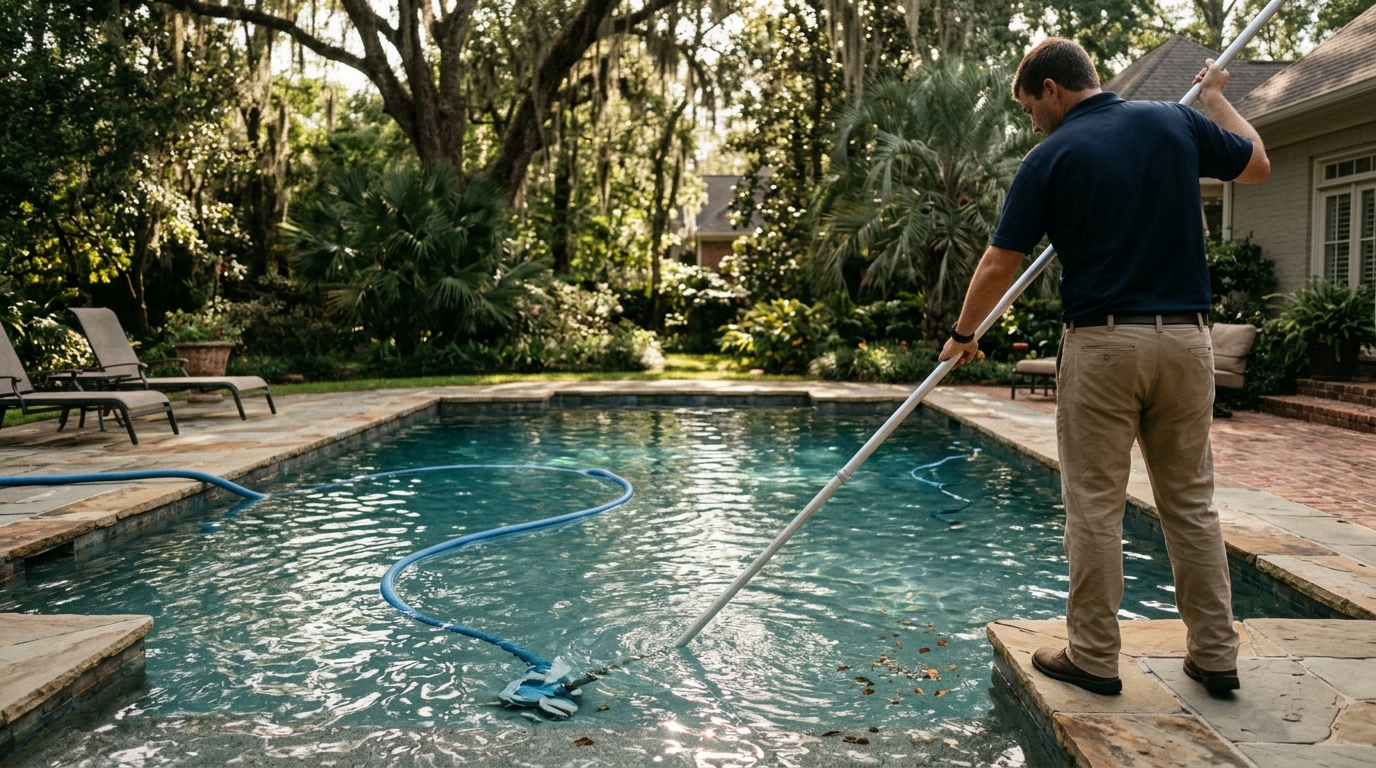
Pool vacuuming is the process of removing settled debris from the bottom and walls of your swimming pool. For Baton Rouge homeowners, this task is critical because local humidity and seasonal leaf drop create heavy sediment loads that standard skimming cannot reach. Neglecting this step leads to cloudy water, algae growth, and equipment strain. Consistent vacuuming protects your investment and ensures a safe swimming environment.
Why does Baton Rouge weather impact pool vacuuming needs?
Baton Rouge’s climate creates unique challenges for pool owners. The region experiences high humidity and distinct seasonal changes that affect water chemistry and debris accumulation. During the fall, local trees release significant amounts of leaves and organic matter into the pool. This organic load settles at the bottom, creating a layer of sediment that traps bacteria and nutrients.
When this sediment is not removed, it decomposes and releases ammonia, which consumes chlorine. This process, known as chloramine formation, reduces the water's sanitizing power. Homeowners often find that their chlorine levels drop rapidly after heavy leaf fall. Regular vacuuming prevents this chemical imbalance before it starts. It keeps the water clear and the chemical load manageable for your filtration system.
What are the different types of pool vacuums available?
There are three primary categories of pool vacuums: manual, automatic, and robotic. Each type serves a different purpose and fits different maintenance schedules. Understanding these options helps you choose the right tool for your specific pool size and usage patterns.
Manual Pool Vacuums
Manual vacuums are handheld tools that connect to your pool's suction side. They are inexpensive and effective for spot cleaning. You control the movement, which is useful for targeting specific stains or debris piles. However, they require physical effort and time to clean the entire pool floor.
Automatic Suction-Side Cleaners
These devices attach to the suction line and move around the pool using water pressure. They are good for daily or weekly maintenance. They rely on your pool's pump to function, so they add load to your equipment. They are generally less expensive than robotic models but may not clean as thoroughly.
Robotic Pool Cleaners
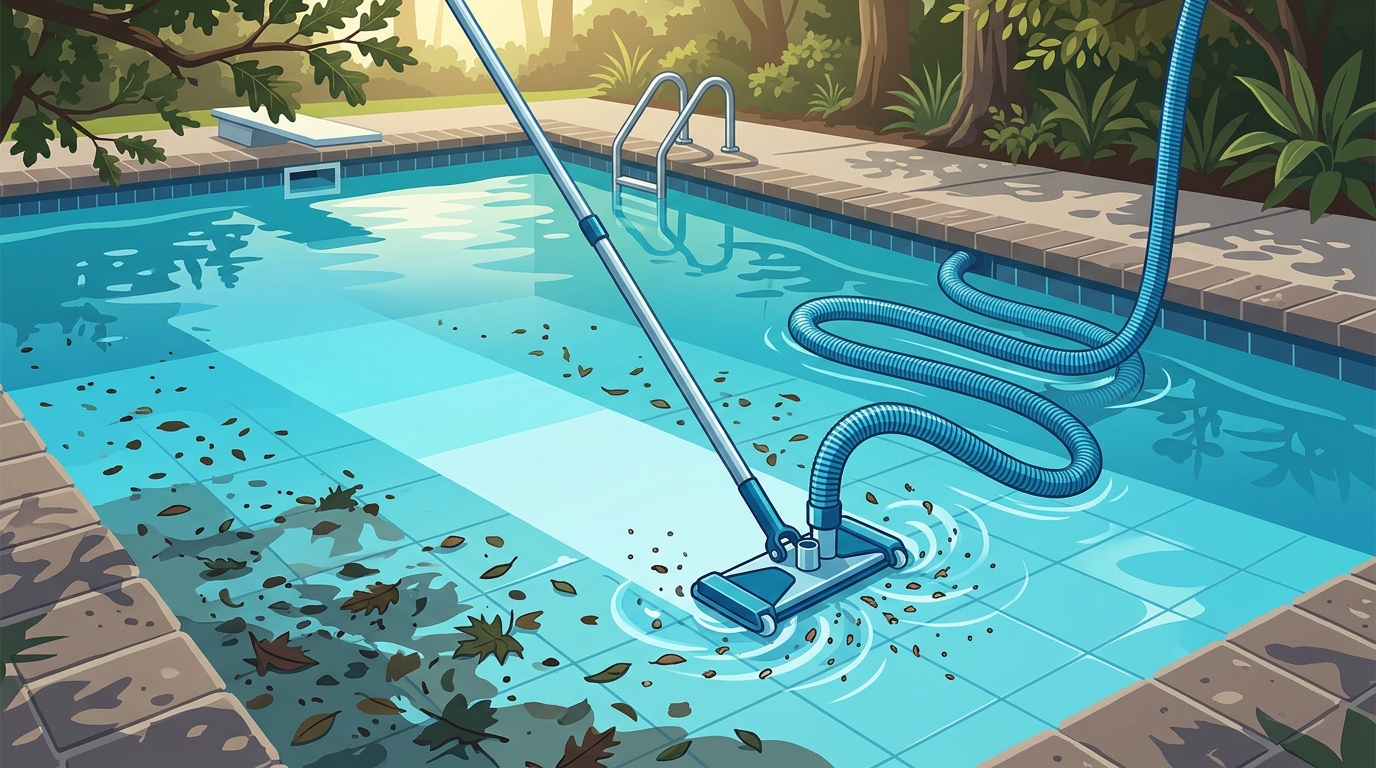
Robotic cleaners are self-contained units with their own pumps and filters. They operate independently of your pool's main pump. This reduces strain on your equipment and allows for longer cleaning cycles. They are the most effective option for deep cleaning and maintaining water clarity in larger pools.
How often should you vacuum your pool in Louisiana?
The frequency of vacuuming depends on your pool's location and usage. In Baton Rouge, most homeowners should vacuum their pools at least once a week during the active swimming season. This baseline ensures that settled debris does not accumulate to problematic levels. If your pool is surrounded by trees, you may need to vacuum more frequently, especially after storms or heavy leaf drop.
During the off-season, you can reduce the frequency. However, you should still perform a thorough vacuuming before closing the pool for the winter. This removes any remaining sediment that could cause staining or algae growth during the dormant period. Consistency is key. Skipping vacuuming sessions allows debris to settle and harden, making it much harder to remove later.
What is the correct technique for vacuuming a pool?
Proper technique ensures you remove all debris without damaging your pool surfaces. Start by checking your filter pressure. A clogged filter reduces suction and makes vacuuming ineffective. Clean or backwash your filter before you begin. Next, set your multiport valve to the correct position. For manual and suction-side cleaners, set the valve to "Filter." For robotic cleaners, the valve setting depends on the specific model, so consult your manual.
Move the vacuum head slowly and steadily. Rushing reduces suction and leaves debris behind. Overlap each pass by about 50% to ensure complete coverage. Pay special attention to the pool steps and corners, where debris tends to collect. If you notice a specific stain, use a manual vacuum with a brush to agitate the area before vacuuming. This helps lift the stain from the surface.
How does vacuuming protect your pool equipment?
Settled debris is not just a cosmetic issue; it is a mechanical hazard. When debris accumulates at the bottom, it can be sucked into your pool's skimmer or main drain. This can clog your pump basket and filter. A clogged filter forces your pump to work harder, increasing energy consumption and wear on the motor. Over time, this strain can lead to premature equipment failure.
Regular vacuuming keeps your filtration system running efficiently. It ensures that your pump and filter are handling only water, not heavy sediment loads. This extends the life of your equipment and saves you money on repairs. Pool Partners LLC emphasizes this connection in their maintenance services. Their team ensures that vacuuming is integrated into a broader care plan that protects all components of your pool system.
Key Takeaways
- Baton Rouge's humidity and seasonal leaf drop create high sediment loads that require regular vacuuming.
- Settled debris decomposes and consumes chlorine, leading to water quality issues.
- Choose a vacuum type that fits your schedule: manual for spot cleaning, suction-side for weekly maintenance, or robotic for deep cleaning.
- Vacuum at least once a week during the active season in Louisiana.
- Proper technique involves slow, overlapping passes and a clean filter.
- Regular vacuuming protects your pump and filter from clogs and strain.
Frequently Asked Questions
Can I vacuum my pool if the filter is dirty?
No, you should clean or backwash your filter before vacuuming. A dirty filter reduces suction, making it difficult to pick up debris. It also increases the risk of clogging the system further. Always start with a clean filter for the best results.
What should I do if I see black spots on the pool floor?
Black spots are often a sign of black algae. This type of algae is difficult to remove with standard vacuuming. You may need to brush the area and apply a specialized algaecide. If the spots persist, contact a professional for treatment. Pool Partners LLC offers algae treatment services to address these issues effectively.
Does vacuuming remove all types of debris?
Vacuuming removes settled debris from the bottom and walls. It does not remove floating debris, which is handled by skimming. It also does not remove dissolved contaminants, which are addressed by chemical balancing. A complete cleaning routine includes skimming, vacuuming, and brushing.
Ready for Professional Pool Care?
Consistent vacuuming is a cornerstone of pool maintenance, but it is just one part of the equation. Pool Partners LLC provides comprehensive pool cleaning services in Baton Rouge, ensuring that every aspect of your pool is cared for. Our team handles vacuuming, skimming, brushing, and chemical balancing to keep your pool pristine. To schedule a service or learn more about our maintenance plans, contact our team today. Learn more: Contact Pool Partners Baton.